








































The United States has conducted a military operation that resulted in the capture of Venezuelan President Nicolás Maduro, marking a dramatic shift in the political landscape of the oil-rich nation. Early on March 9, 2024, U.S. forces seized Maduro from his residence at a military installation in Caracas, alongside his wife, Cilia Flores. They were subsequently transported aboard the U.S. Navy warship Iwo Jima toward New York, where they are expected to face serious criminal charges related to narco-terrorism.
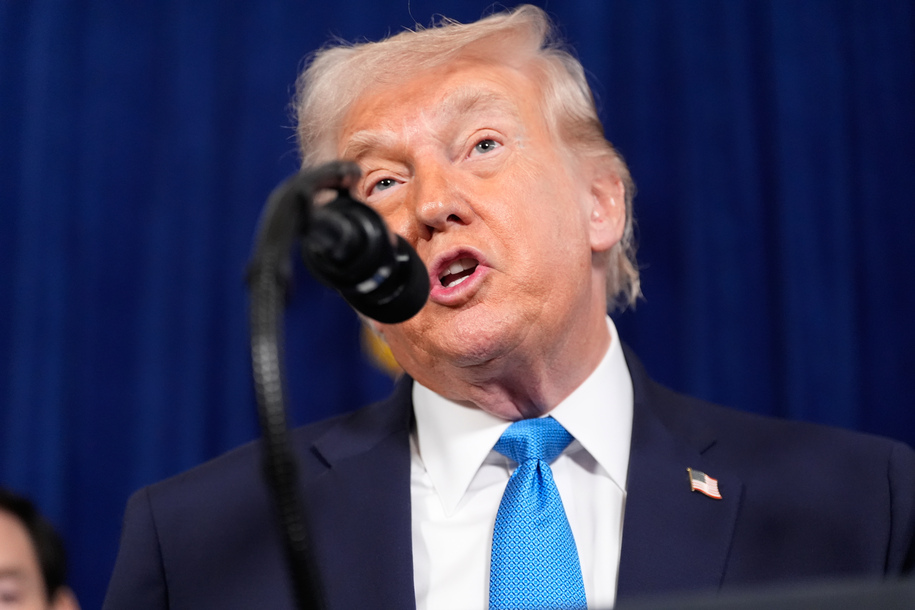
During a news conference, President Donald Trump stated that the U.S. is prepared to manage Venezuela until a proper transition of power can be established. He asserted, “We’re going to run the country until such time as we can do a safe, proper and judicious transition.” Trump’s comments highlight the U.S. government’s long-standing opposition to Maduro’s administration, which it does not recognize.
The legal authority for this military operation remains unclear, drawing parallels to the U.S. invasion of Panama in the 1990s that resulted in the capture of leader Manuel Antonio Noriega. The U.S. Justice Department previously indicted Maduro and Flores on charges related to a narco-terrorism conspiracy in 2020, and a newly released indictment was made public following the operation. U.S. Attorney General Pam Bondi vowed that the couple would “soon face the full wrath of American justice on American soil in American courts.”
Military Action and Response
The military operation involved multiple explosions and low-flying aircraft, which lasted less than 30 minutes. The Venezuelan government quickly condemned the U.S. actions as an “imperialist attack,” urging citizens to protest in the streets. Vice President Delcy Rodríguez reported that some civilians and military personnel were killed during the operation, although she did not provide specific numbers. Trump noted that some U.S. forces sustained injuries but believed there were no American fatalities.
Videos from Caracas showed tracer fire and smoke rising over the city, while explosions lit up the night sky. Witnesses reported a chaotic scene, with residents rushing into the streets as the blasts occurred. Maduro was reportedly captured at his home within the Ft. Tiuna military base, which was also struck during the operation.
The U.S. had ramped up military pressure on Venezuela in the months preceding the attack, including a significant deployment of naval forces in the surrounding waters. Last week, a drone strike attributed to the CIA targeted a location believed to be used by Venezuelan drug cartels. According to Trump, the U.S. is engaged in an “armed conflict” with these cartels and has justified its military actions as necessary to combat drug trafficking.
Domestic and International Reactions
The capture of Maduro has elicited polarized reactions within Venezuela. Proponents of the Maduro government took to the streets to demand his return, with protests reported in Caracas. Mayor Carmen Meléndez joined demonstrators chanting, “Maduro, hold on, the people are rising up!” Meanwhile, in other parts of the city, streets were eerily quiet as residents grappled with the implications of the military strike.
In contrast, celebrations broke out among the Venezuelan expatriate community in Doral, Florida, where crowds waved flags and chanted “Liberty! Liberty! Liberty!” The operation has also drawn international condemnation from allies of the Maduro regime. Cuban President Miguel Díaz-Canel Bermúdez described the U.S. actions as a “criminal attack,” calling for a unified response from the international community. Iran’s Foreign Ministry echoed similar sentiments, condemning the military operation.
As the situation unfolds, the political future of Venezuela remains uncertain. Under Venezuelan law, Vice President Rodríguez would succeed Maduro if he is deemed unable to serve, but confirmation of such a transition has yet to emerge. Lawmakers in the U.S. Congress have expressed concern over the legality of the military action, with some demanding clarity on the administration’s strategy and legal justification for the operation.
The developments in Venezuela could have significant implications for U.S.-Latin America relations and the ongoing issues of drug trafficking and governance in the region.
























