








































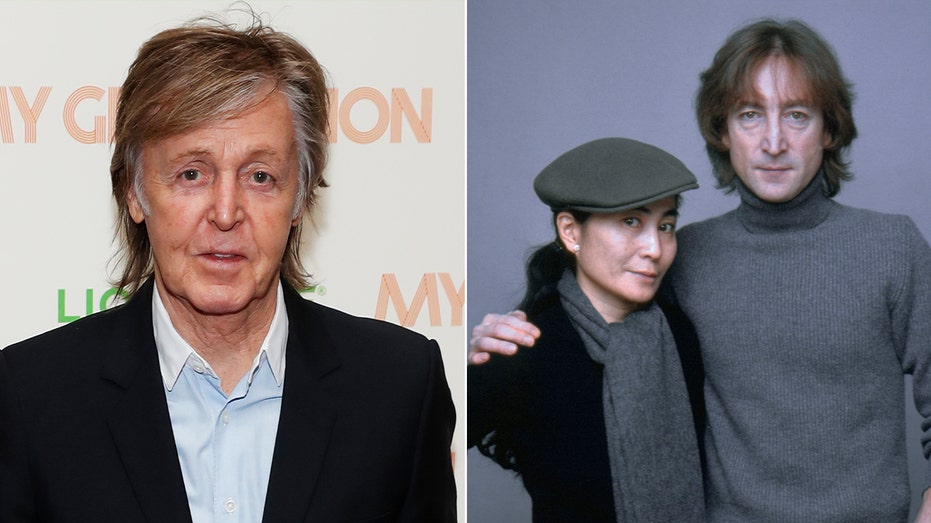
During a recent interview, Paul McCartney disclosed a surprising claim made by Yoko Ono regarding the late John Lennon. Ono, who was married to Lennon for over a decade before his tragic death in 1980, reportedly suggested that her husband “might have been gay.” McCartney recounted this conversation during an interview with Vanity Fair, which took place shortly after Lennon’s murder.
In the interview, McCartney stated, “I swear [Ono] rang me shortly after John died and said, ‘You know, I think John might have been gay.’” Initially taken aback, McCartney responded, “I’m not sure. I said, ‘I don’t think so. Certainly not when I knew him.’” He emphasized their experiences in the 1960s, noting their interactions with numerous women, which led him to dismiss Ono’s claim.
Reflections on Lennon and His Relationships
The interview resurfaced recently alongside McCartney’s new documentary, “Man on the Run,” where he delves into the history of The Beatles. He shared memories of traveling with Brian Epstein, the band’s openly gay manager, in 1963, and how rumors about Lennon’s sexuality circulated during that period. McCartney recalled, “But I saw that as a power play, which was very John. Brian would ask him as a homosexual thing – a good-looking boy who Brian fancied.”
Despite the rumors, McCartney stated, “I personally didn’t think anything had happened. Certainly never heard about anything happening.” He perceived Lennon’s interactions with Epstein as an attempt to assert his standing within the band.
Lennon’s marriage to Ono faced challenges, particularly during what is known as his “Lost Weekend” from late 1973 to 1974. During this tumultuous period, Lennon was separated from Ono, who had asked him to leave after an incident involving infidelity. McCartney played a pivotal role in advising Lennon during this separation.
The Role of McCartney in Lennon and Ono’s Reunion
Elliot Mintz, a close friend of the couple, provided insights into McCartney’s efforts to help Lennon reconcile with Ono. Mintz revealed that McCartney offered to speak to Lennon while he was in Los Angeles, and Ono expressed gratitude for McCartney’s willingness to intervene.
Mintz recounted McCartney’s advice to Lennon, emphasizing the importance of demonstrating his commitment. “You can’t just say that you’ve changed. You have to show it,” he advised Lennon. “You have to bring her flowers, you have to take her out for dinners. You have to show her how important she is to you in your world.”
According to Mintz, Lennon took this advice seriously, leading to a reconciliation with Ono. “Yoko accepted him back in their home, and they resumed their relationship,” Mintz explained, reflecting on the struggles Lennon faced during the “Lost Weekend.”
McCartney’s influence proved significant, as he encouraged Lennon to reconnect with Ono, ultimately helping to mend their relationship. This period in Lennon’s life, marked by both personal turmoil and creative expression, remains a poignant chapter in the story of one of music’s most iconic figures.
The revelations from McCartney and the insights into his relationship with Lennon and Ono add another layer to the enduring legacy of The Beatles, showcasing the complexities of their personal lives alongside their monumental musical achievements.
























