








































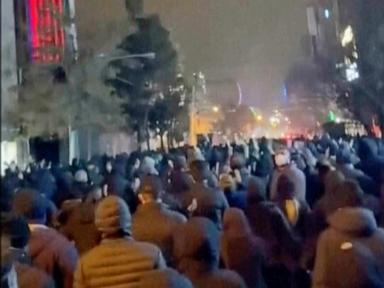
Nationwide protests in Iran, which began on December 28, 2023, have intensified, resulting in a tragic death toll of at least 116 people according to the U.S.-based Human Rights Activists News Agency. Demonstrators have taken to the streets in the capital, Tehran, and other major cities, challenging the country’s theocratic regime. As the protests enter their third week, reports indicate that around 2,600 individuals have been detained amid increasing violence.
With the Iranian government cutting off internet access and phone lines, it has become increasingly difficult to assess the situation from outside the country. Activists and international observers express concern that this information blackout could embolden hard-liners within Iran’s security forces to launch a more severe crackdown on dissent.
On social media, U.S. President Donald Trump expressed solidarity with the demonstrators, stating, “Iran is looking at FREEDOM, perhaps like never before. The USA stands ready to help!!!” Reports from The New York Times and The Wall Street Journal indicate that military options for a strike on Iran were presented to Trump, although no final decision has been made.
Protests and Government Response
Online videos, allegedly transmitted via Starlink satellite technology, show protesters gathering in various neighborhoods of Tehran, including Punak. Demonstrators have been seen waving lit mobile phones, banging metal objects, and setting off fireworks. In Mashhad, Iran’s second-largest city, footage reportedly depicts confrontations between protesters and security forces, with road blockages caused by flaming debris.
In a notable display of defiance, the protests in Mashhad are particularly significant due to the city being home to the Imam Reza shrine, the holiest site in Shiite Islam. Demonstrations have also been reported in Kerman, located approximately 800 kilometers (500 miles) southeast of Tehran.
In a stark warning, Iran’s attorney general, Mohammad Movahedi Azad, declared that individuals participating in the protests would be classified as “enemies of God,” a term that carries the possibility of the death penalty. This statement highlights the government’s intent to suppress dissent amid rising tensions.
Despite the government’s attempts to control the narrative, Iranian state television has been broadcasting reports from various cities, showcasing calm areas while omitting coverage of the protests in Tehran and Mashhad. Coverage has included pro-government demonstrations in Qom and Qazvin.
Historical Context and Future Implications
The protests initially erupted in response to the dramatic collapse of the Iranian rial, which now trades at over 1.4 million to $1. This economic crisis, exacerbated by international sanctions linked to Iran’s nuclear program, has fueled widespread dissatisfaction with the theocratic leadership.
Former Iranian Crown Prince Reza Pahlavi, who has called for protests, encouraged demonstrators to reclaim public spaces and display national symbols from the pre-revolution era. His messages have spurred mixed reactions, as some demonstrators express nostalgia for the era before the 1979 Islamic Revolution.
As the situation develops, the international community remains watchful, particularly regarding the Iranian government’s approach to handling the unrest. The focus now shifts to how the protests will evolve and the potential consequences for Iran’s political landscape.
























