








































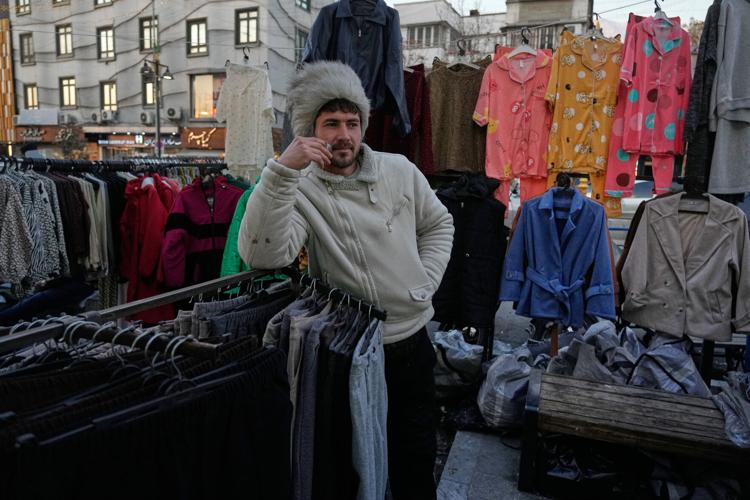
Tensions escalated in the Middle East as Iranian officials expressed concerns over a potential U.S. military strike on Iran, following a month of widespread protests that triggered a violent crackdown. The protests, which began on December 28, 2022, have reportedly resulted in at least 6,221 deaths, according to the U.S.-based Human Rights Activists News Agency. In response, both Saudi Arabia and the United Arab Emirates have declared they will not permit their airspace to be used for any military action against Iran.
The United States has increased its military presence in the region, deploying the USS Abraham Lincoln and several guided missile destroyers, capable of launching strikes from the sea. U.S. President Donald Trump has established two significant red lines regarding Iran: the killing of peaceful demonstrators and the potential mass execution of detainees. Despite the heightened military readiness, the White House has not yet indicated a definitive course of action.
Trump emphasized the urgency of negotiations, stating on his Truth Social platform, “Hopefully Iran will quickly ‘Come to the Table’ and negotiate a fair and equitable deal—NO NUCLEAR WEAPONS—one that is good for all parties. Time is running out, it is truly of the essence!” He referenced previous U.S. military actions against Iran and warned that future attacks could be more severe.
Iran’s Foreign Minister, Abbas Araghchi, responded to Trump’s remarks, asserting that Iran is prepared for dialogue based on mutual respect but will defend itself if provoked. Araghchi’s comments came amid ongoing communication with regional and global leaders aimed at reducing tensions.
Egypt’s Foreign Ministry reported that its top diplomat spoke with both Araghchi and U.S. Middle East envoy Steve Witkoff to promote stability and prevent further escalation. Witkoff, a billionaire real estate developer and known associate of Trump, previously engaged in negotiations over Iran’s nuclear program. The discussions, however, have not led to any public acknowledgment from the White House.
In a bid to foster dialogue, Turkish Foreign Minister Mevlüt Çavuşoğlu also reached out to Araghchi, expressing concerns that intervention in Iran could lead to broader instability and a refugee crisis. Meanwhile, Crown Prince Mohammed bin Salman of Saudi Arabia reassured Iranian President Masoud Pezeshkian that the kingdom would not allow any military actions against Iran from its territory or airspace.
Reports indicate that the Iranian government has labeled protesters as “terrorists” and continues to restrict access to global news sources amid a sustained internet blackout that has lasted over two weeks. This blackout has limited the flow of information regarding the protests, which initially focused on economic grievances but have since escalated into broader calls for political change.
Activists within Iran are striving to document the human toll of the crackdown, which has seen over 42,300 arrests according to the Human Rights Activists News Agency. The agency verified each death and arrest through a network of activists on the ground, highlighting that the reported fatalities include at least 5,858 protesters.
Despite the Iranian government’s assertion that only 3,117 people have died—including both civilians and security forces—the reported numbers reflect the most severe unrest in Iran in decades, reminiscent of the turmoil surrounding the 1979 Islamic Revolution.
On the same day, Iran executed Hamidreza Sabet, who was convicted of espionage for allegedly collaborating with Israel, marking the 13th execution of individuals accused of spying since June. As Iran navigates these complex dynamics, many citizens remain anxious about the future as economic conditions deteriorate and governmental crackdowns continue.
As diplomatic efforts unfold, the situation in Iran remains fluid, with regional leaders seeking to mediate tensions while the Iranian populace endures the consequences of ongoing unrest.
























