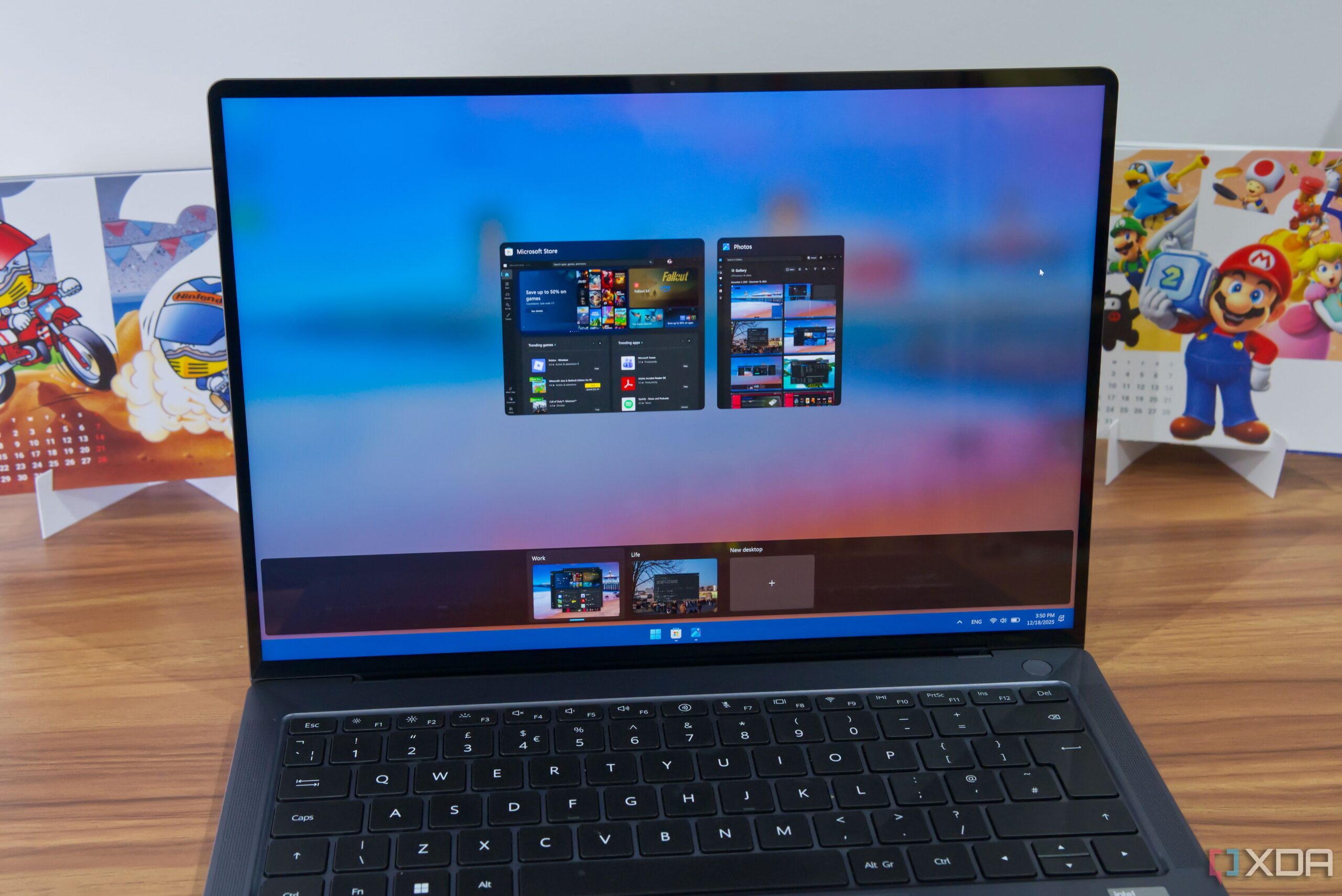
UPDATE: New reports confirm that Windows 11 virtual desktops are setting a new standard, outperforming Linux workspaces in several critical areas. As of October 2023, users are finding that Windows offers a more intuitive and user-friendly experience for managing multiple applications.
Why does this matter? As remote work and multitasking become the norm, the efficiency of virtual desktops is crucial for productivity. The ability to seamlessly switch between applications can significantly enhance workflow. Windows 11’s features are proving to be more accessible and practical for everyday users compared to various Linux distributions.
Windows 11 allows for distinct virtual desktops where each workspace is clearly separated, displaying only the active apps. Users can customize their experience by renaming workspaces and setting unique backgrounds for each desktop, a feature currently lacking in many Linux environments. For instance, only KDE Plasma among Linux options offers a similar renaming feature.
Moreover, Windows 11 enhances multitasking with built-in tools like Snap Layouts and Snap Assist. Users can easily arrange their windows into predefined layouts with simple drag-and-drop actions. In contrast, Linux desktop environments like GNOME have limited capabilities, only allowing app snapping to screen edges and lacking the flexibility of Windows’ layout suggestions.
Another key advantage is the consistent user experience across Windows 11, making it easier for users to navigate between virtual desktops. While switching between workspaces on Linux can vary dramatically from one distribution to another, Windows provides a unified approach that enhances usability. For example, some Linux environments do not support touchpad gestures for switching desktops, adding complexity to the user experience.
However, Linux is not without its advantages. Certain Linux desktop environments allow for unique configurations, such as creating separate workspaces for multiple monitors. Additionally, experienced users may find more customizable options in Linux, but this often requires additional effort and technical knowledge to set up.
In summary, as more users seek efficient solutions for multitasking, Windows 11 is emerging as the go-to choice for its out-of-the-box functionality and user-friendly design. Microsoft has effectively addressed many common pain points that arise with Linux workspaces, making it a compelling option for both new and experienced users alike.
What’s next? As Windows continues to evolve, users can expect further enhancements to virtual desktop capabilities. Meanwhile, Linux distributions are likely to innovate in response, making this an ongoing area to watch in the tech world.
Stay tuned for more updates as this story develops. Share your experiences with Windows 11 and Linux workspaces on social media and let us know which platform works best for your needs.