UPDATE: The federal government is poised to intervene in the housing market, with new bailouts on the horizon that could stabilize home prices and prevent a crash. This urgent development comes as home affordability reaches critical lows, raising concerns for buyers nationwide.
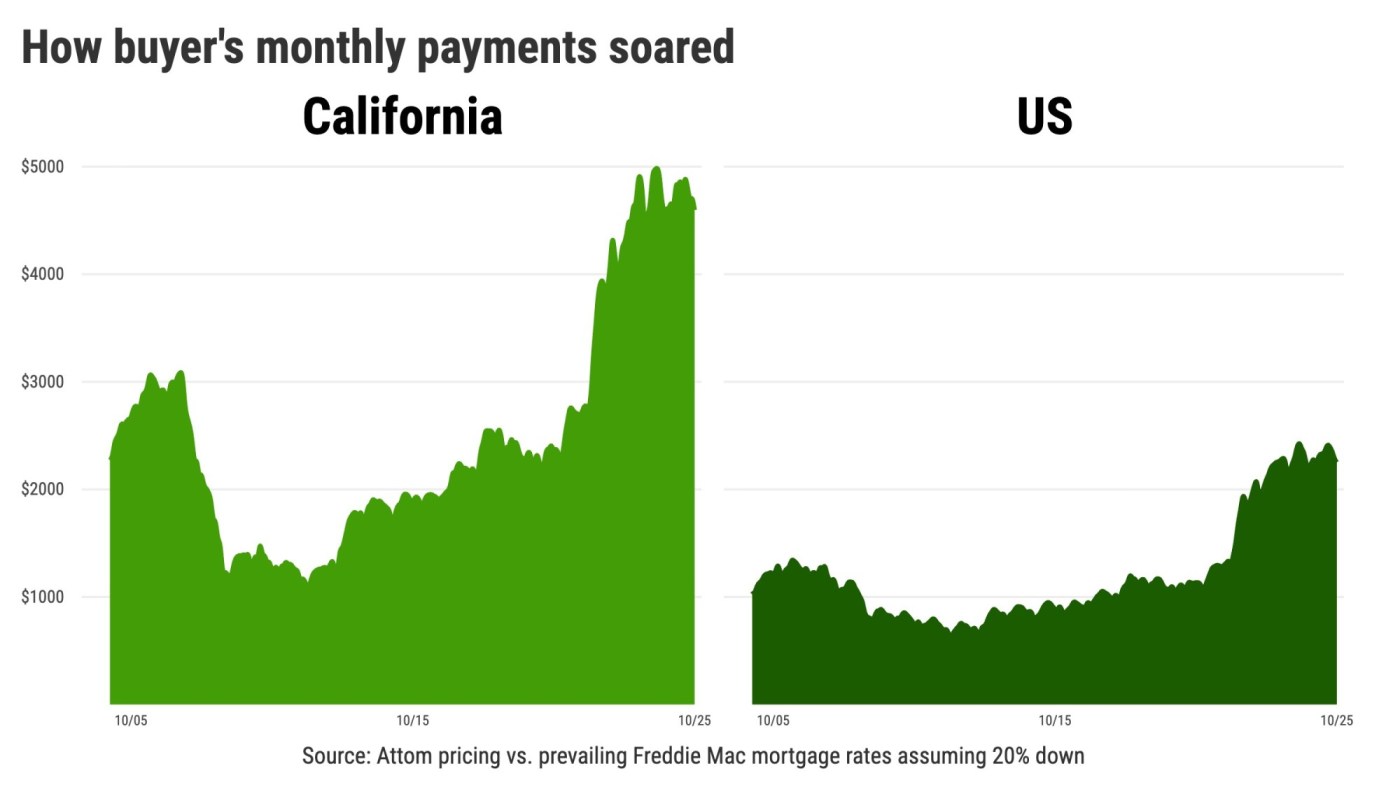
Homeowners and potential buyers are bracing for significant changes in the market, as experts predict that the government will introduce measures to avert a steep decline in housing prices. Current data indicates that the monthly payment for a median-priced home, now at $360,000, reached $2,251 in October 2023. This figure has surged 99% over the past five years and is 198% higher since 2010.
In California, the situation is even more dire. The October monthly payment for a median-priced home at $735,000 stands at $4,597, reflecting a staggering 267% increase since 2010. As the burden of high payments weighs heavily on homeowners, the government’s intervention is seen as a necessary lifeline.
The proposed measures include innovative financial solutions such as the introduction of 50-year mortgages to ease the financial strain on buyers. Additionally, two federal mortgage-buying agencies are reportedly working to lower mortgage rates by holding certain guaranteed loans, thus taking on risks that private investors typically manage.
Moreover, financial inducements, particularly for first-time buyers, may also be introduced to stimulate demand in a market that has been sluggish. Homeowners who have profited significantly from their properties benefit from tax breaks, and increasing these incentives could motivate older homeowners to sell, thereby enhancing housing supply.
However, experts warn that these government interventions could distort an already unbalanced market. Recent data shows that home sales have plummeted, down 26% nationally and 31% in California from previous years. As mortgage rates rise, the pace of transactions has slowed, raising questions about the sustainability of these interventions.
Real estate industry insiders are optimistic about the short-term boost these bailouts might provide, but concerns linger about the long-term implications. The pressure to maintain affordability in the housing market is at an all-time high, yet many argue that true market correction requires allowing prices to fall.
As the housing market braces for these potential changes, stakeholders are encouraged to stay informed on developments. The urgency surrounding these bailouts reflects a critical moment for home buyers, sellers, and investors alike.
Expect to see further announcements from officials in the coming weeks as the government finalizes its plans to address the housing crisis. For those affected, these measures could mean the difference between homeownership and continued financial struggle.
Stay tuned for more updates as this story develops.