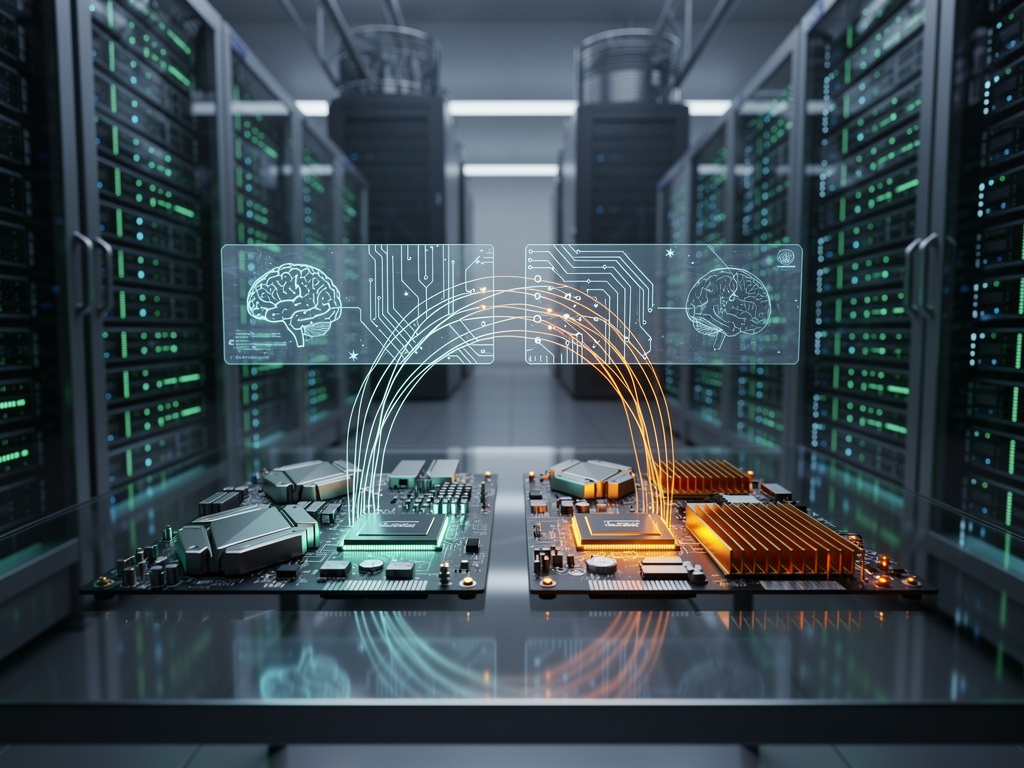
URGENT UPDATE: In a groundbreaking move, Nvidia Corp. has just announced a monumental $20 billion deal with AI chip startup Groq, shaking the foundations of Silicon Valley. This landmark agreement focuses on asset acquisition and technology licensing, marking Nvidia’s largest transaction to date and underscoring the fierce competition in the AI chip industry.
The deal, confirmed earlier today, allows Nvidia to integrate Groq’s innovative inference technology into its own product lineup, enhancing its capabilities in processing AI tasks. Nvidia aims to leverage Groq’s specialized advances to deliver rapid responses from AI models, a critical factor as demand for efficient processing surges globally.
Details from multiple sources reveal that rather than a full buyout, Nvidia will purchase key assets and enter a non-exclusive licensing agreement for Groq’s language processing unit (LPU) technology. This strategic maneuver allows Nvidia to boost its dominance in AI inference computing while potentially sidestepping regulatory challenges associated with a complete merger.
Founded in 2016 by former Google engineer Jonathan Ross, Groq has gained recognition for its chips that promise lower latency and higher throughput than traditional graphics processing units (GPUs). With increasing pressure from competitors like AMD and Intel, this acquisition places Nvidia in a stronger position to fend off rival startups eager to capture a share of the rapidly growing AI market.
The financial implications of this deal are staggering. Groq, which recently raised $750 million at a valuation of $6.9 billion, is set to see its backers reap substantial rewards, with payouts reportedly exceeding $500 million for some investors. This transaction highlights the urgency and high stakes in AI inference as the industry races to scale generative AI services.
Nvidia’s deal also includes the hiring of key Groq executives, including CEO Jonathan Ross, whose expertise from Alphabet Inc. could propel Nvidia’s ambitions in custom silicon development. This trend of “acqui-hiring” reflects a broader strategy in tech, allowing giants to absorb innovative talent without full integration, which often dilutes startup agility.
The structure of this deal, described by Groq as “non-exclusive,” aims to accelerate the global adoption of AI inference technology. However, concerns have emerged over whether Nvidia’s market power might stifle broader access, as some analysts suggest. Mixed reactions on social media platforms like X (formerly Twitter) reveal a blend of excitement and apprehension regarding this strategic consolidation.
From a regulatory perspective, by opting for licensing over full acquisition, Nvidia may navigate a smoother approval process amid heightened scrutiny from agencies like the Federal Trade Commission. This approach, termed “regulatory arbitrage” by critics, raises questions about the balance of power within the AI market.
Nvidia’s stock reacted positively to the announcement, demonstrating investor confidence in this defensive strategy against growing competition. Analysts note that this acquisition not only fortifies Nvidia’s estimated 80% share in AI chips but also sets a precedent for future tech mergers focused on talent and innovation.
Looking ahead, the integration of Groq’s low-latency chips could revolutionize sectors like healthcare and finance, where rapid data processing is essential. Nvidia’s enhanced product offerings may appeal to cloud providers and enterprises seeking cost-effective AI solutions, potentially reshaping the competitive landscape.
As the dust settles, the implications of this $20 billion transaction will be closely monitored. Nvidia stands poised to leverage Groq’s technological innovations, pushing the boundaries of what AI can achieve. The unfolding dynamics in AI chip manufacturing could signal a new era of innovation and competition that will resonate throughout the tech industry.
Stay tuned for more updates as this story develops, reflecting the transformative changes underway in the world of artificial intelligence.