BREAKING: North Korea is intensifying its nuclear weapons program in response to recent U.S. and Israeli airstrikes on Iran, which are raising alarms over regional security. Reports indicate that North Korean leader Kim Jong Un closely monitored military exercises and missile tests this week, signaling a significant escalation in Pyongyang’s military ambitions.
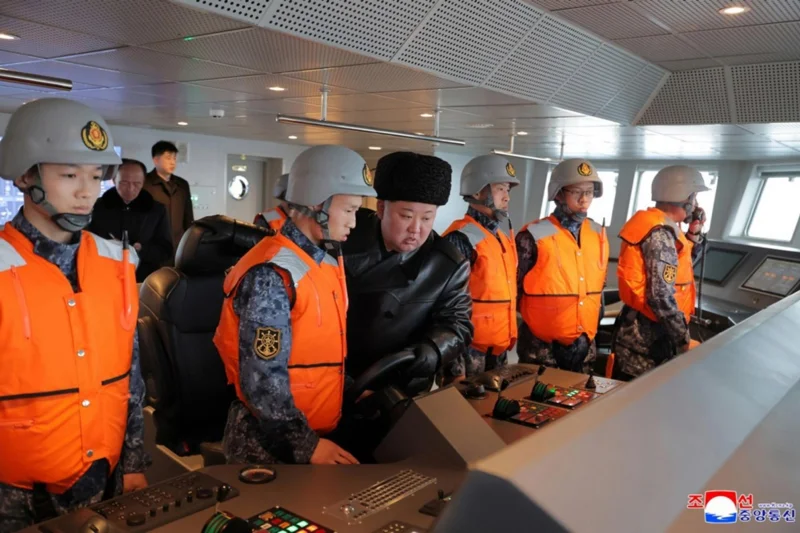
According to North Korean state television, Kim observed the launch of ship-to-ground strategic cruise missiles from the newly constructed 5,000-ton destroyer Choe Hyon during inspections on March 5 and 6. Images released show multiple missiles being fired, believed to be part of the Hwasal series, which North Korea asserts can carry tactical nuclear warheads. This development underscores a continuing commitment to integrate nuclear capabilities into its naval forces.
The International Atomic Energy Agency (IAEA) confirmed that uranium enrichment operations at facilities in Yongbyon and Kangson remain active. Additionally, IAEA reports indicate that a new nuclear facility at Yongbyon appears to be fully constructed, further complicating the denuclearization dialogue with North Korea.
North Korea is estimated to possess over 100 nuclear warheads and is focusing on enhancing delivery systems. Military experts assert that submarine-launched ballistic missiles (SLBMs) are crucial for maintaining a reliable nuclear deterrent, as they are harder to detect than land-based launches.
The recent airstrikes in Iran reportedly led to the deaths of several high-ranking officials, including Supreme Leader Ali Khamenei. Analysts suggest that these developments may reinforce North Korea’s perception that nuclear armament is essential for regime survival. The implications for South Korea are dire, as this situation complicates its efforts to enhance deterrence.
Concerns are also rising within South Korea regarding the potential revival of certain aspects of the 2018 inter-Korean military agreement, including limitations on surveillance flights near the border. Critics argue that such moves could undermine South Korea’s intelligence and reconnaissance capabilities during a time of heightened tension and rapid advancements in North Korea’s military technology.
Security experts emphasize that lessons from recent conflicts highlight the importance of advanced intelligence gathering and military technologies. They advocate for bolstering cyber capabilities and electronic warfare tools to disrupt missile systems before launch, viewing these strategies as equally vital as traditional military deterrence.
This developing story underscores the urgent need for international attention and action. As North Korea accelerates its nuclear ambitions, the geopolitical landscape in East Asia remains precarious, with the potential for significant ramifications affecting regional and global security.
Stay tuned for updates as this situation unfolds, with further developments expected in the coming days.