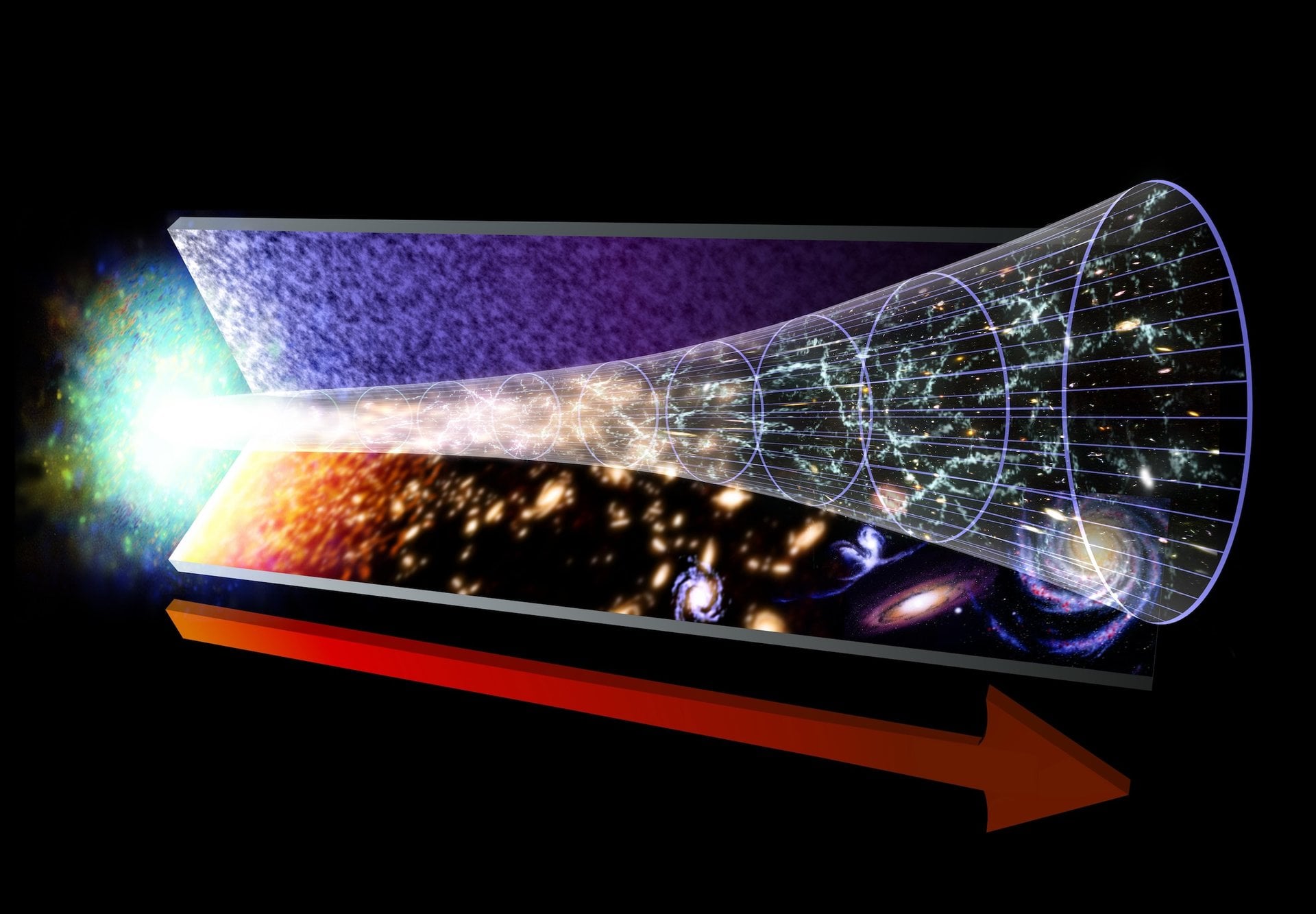
A recent study has unveiled a potential interaction between dark matter and neutrinos, two of the universe’s most enigmatic components. Researchers led by Lei Zu propose that these interactions could play a significant role in addressing the Hubble tension, a discrepancy in the measurements of the universe’s expansion rate.
Dark matter constitutes approximately 27% of the universe, while neutrinos, which are subatomic particles, are considered a hot form of dark matter due to their rapid movement. Traditional models suggest that dark matter is cold and does not interact with itself or light, leading to questions about the nuances of its behavior. This new research, published in Nature Astronomy, challenges the prevailing understanding by suggesting a subtle yet impactful interaction between these two entities.
Exploring Cosmic Shear and Its Implications
The study focuses on cosmic shear, a phenomenon that describes the distortion of light from distant galaxies due to gravitational lensing. Ideally, if galaxies were perfectly spherical, the light from lensed objects would appear circular. However, the irregular shapes of galaxies result in distorted light patterns, particularly noticeable in larger structures containing multiple galaxies.
By analyzing data from the Dark Energy Survey, conducted over three years using the Blanco Telescope in northern Chile, the researchers measured cosmic shear and sought to understand the large-scale structure of the universe. Their findings indicated a potential interaction rate between dark matter and neutrinos of approximately 1 part in 10,000. While this suggests a connection, the statistical significance of their results stands at only 3σ, which is not definitive proof.
Future Research Directions
The implications of this study could be profound. Should further research confirm these findings, astronomers may need to reassess the standard cosmological model, which has long held that dark matter does not interact with itself. Future cosmic shear surveys, particularly those utilizing data from the upcoming Rubin Observatory, could refine these measurements and either substantiate or challenge the current hypotheses.
For now, the quest to unravel the mysteries of dark matter and its relationship with neutrinos continues. The potential for new insights into the fundamental workings of the universe remains tantalizing, but it is clear that more observational evidence is necessary before any conclusions can be drawn. As the study concludes, the enigma surrounding dark matter persists, inviting both skepticism and intrigue in the scientific community.