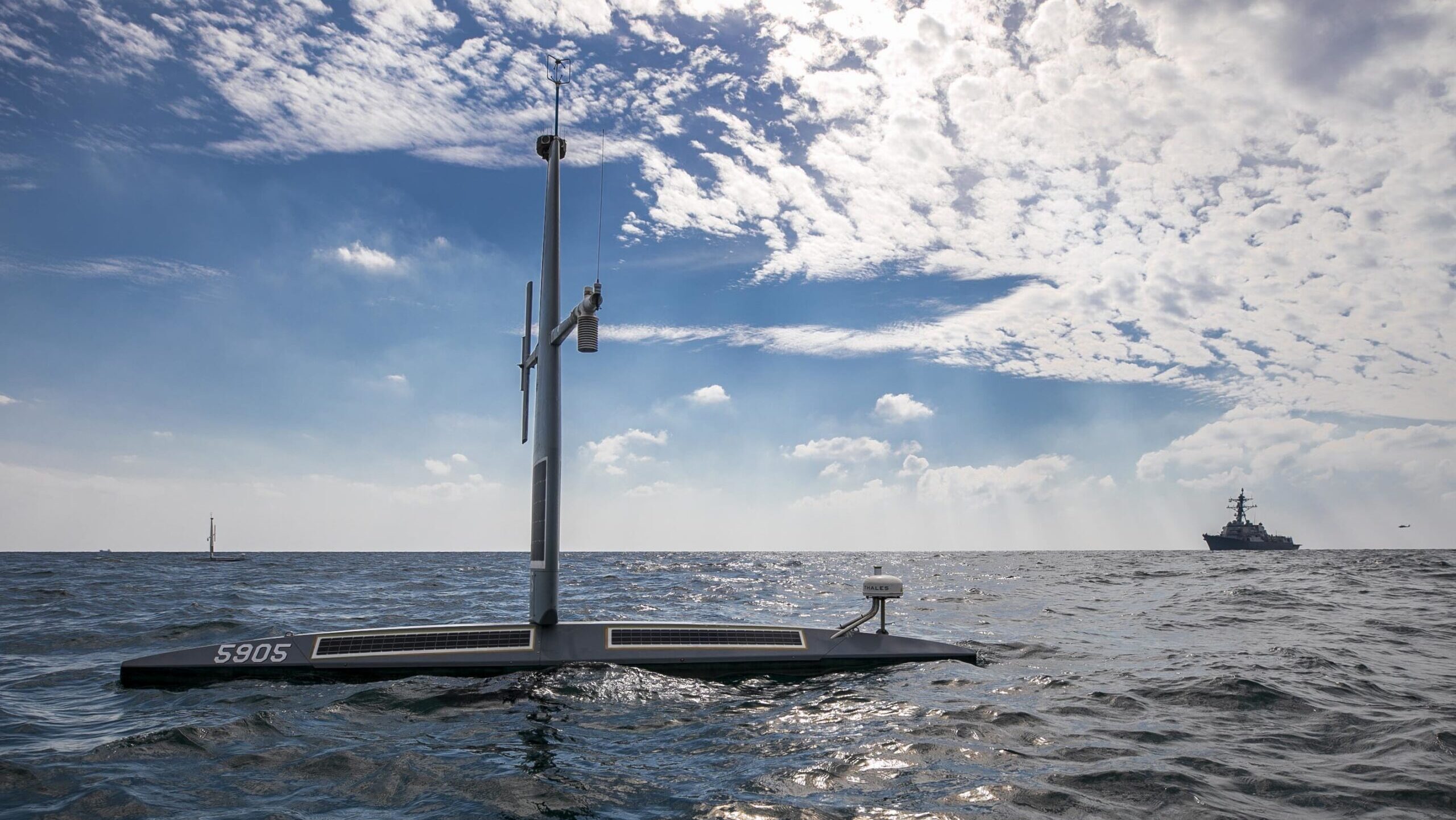
The United States Navy is exploring the establishment of a Robotic Autonomous Systems (RAS) commander to oversee the integration of unmanned capabilities within the fleet. Chief of Naval Operations Adm. Daryl Caudle announced this initiative during the WEST 2026 conference held in San Diego on February 10, 2026. The move is part of a broader strategy to incorporate unmanned vessels into naval operations effectively.
Adm. Caudle revealed plans for a hedge force strategy that aims to leverage unmanned systems, creating a framework that combines various capabilities tailored to specific mission requirements. He emphasized the importance of a dedicated RAS commander who can effectively manage and direct these unmanned systems to fulfill the operational goals set by strike group commanders.
“This RAS commander, if you will, knows how to command and control these packages of unmanned capabilities to achieve the mission outcomes that the strike group commander may want,” Caudle stated. He likened the role to that of a joint task force commander, specifically focusing on unmanned systems.
The exact responsibilities and structure of the proposed RAS commander role are still under development. Caudle noted the current organizational arrangement of RAS capabilities is divided by domain, such as undersea, aviation, and cyber. The new commander could facilitate coordination across these domains, enhancing operational efficiency.
“I can easily see a robotic and autonomous system commander as a first instantiation on the strike group staff,” Caudle explained. He outlined that in addition to the strike commander, there would be integrated roles for air and missile defense, sea combat, information warfare, and, potentially, the RAS commander.
Adm. Caudle’s “Fighting Instructions” also instruct the Navy to determine how fleet and joint force commanders will weave RAS capabilities into strategic decisions regarding deployment and global force management. Currently, while a standard model addresses needs such as anti-submarine warfare, no established framework exists for RAS operations.
“It’s a challenge making an ensemble of these types of capabilities in a meaningful way that combatant commanders and Navy component commanders can ask for,” Caudle remarked. He expressed a desire to ensure that RAS capabilities are not perceived merely as gadgets but as integral components of naval operations.
While the concept of a RAS commander is gaining traction, Adm. Caudle stated that he is not yet ready to publish a comprehensive unmanned strategy. He emphasized the need to fully understand the command structure necessary to implement these forces effectively.
“We’re in this discovery phase of how we actually assemble command and control of these forces through the administrative chain of command,” he explained. This process involves ensuring the Navy can maintain, sustain, and train personnel to utilize these advanced capabilities effectively.
As the Navy embarks on this innovative journey, the establishment of a RAS commander could represent a significant advancement in how unmanned systems are integrated into naval strategy, potentially reshaping future operations.