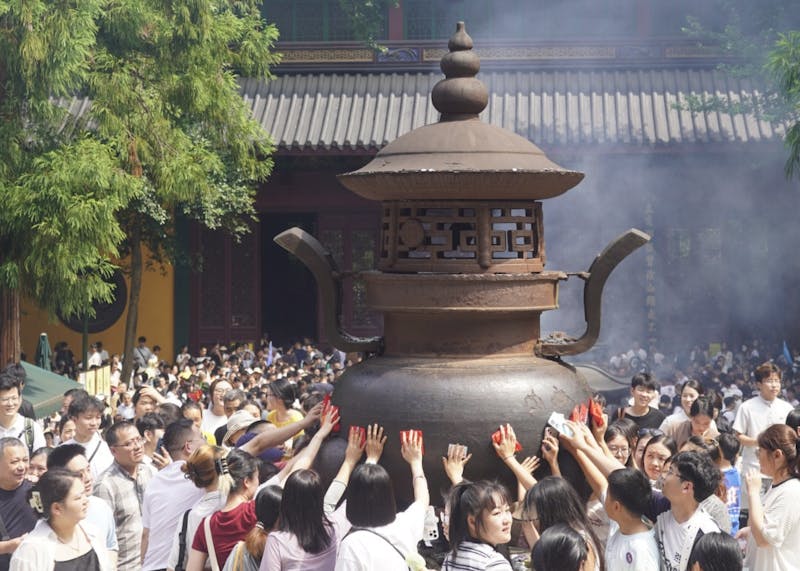
As the Chinese New Year approaches, many individuals are reflecting on their cultural identities and connections to their heritage. For Harmony Liu, a junior from Queens, N.Y., this year’s celebration marks the third consecutive time she will not be home with her family to observe the festivities. The absence of traditional celebrations has prompted her to confront her feelings of cultural disconnection and loss.
Struggles with Cultural Displacement
Liu’s experiences during past holiday seasons have left her feeling a profound sense of longing. In previous years, she spent December 25 in quiet solitude, wishing for a celebration that her family did not partake in. This year, she plans to connect with her roots by cooking dumplings with her roommates, a small nod to her heritage, but it does little to fill the void of family gatherings.
“It scares me to think of the possibility of never properly celebrating the New Year again,” Liu reflects, acknowledging the emotional weight of her experience. With each passing year, she feels increasingly distant from her cultural roots. The challenges of maintaining a connection to her heritage are compounded by language barriers. Liu often relies on translation apps to communicate with her mother, highlighting the daily struggles she faces while navigating her dual identity.
In her fiction class focused on immigrant stories, Liu resonated with the words of author Christopher Castellani, who asserts, “every child of immigrants is born into this sort of loss.” This sentiment encapsulates her daily reality as she grapples with the complexities of her identity. Liu’s connection to her culture feels like a series of elegies for the aspects of her heritage that seem to slip further away.
The Impact of Social Media on Identity
Liu finds herself increasingly aware of a trend on social media platforms, where individuals, often not of Chinese descent, are adopting aspects of Chinese culture. Initially, she appreciated the efforts of Chinese-American creators seeking to deepen their connections with their heritage. However, the shift towards non-Chinese individuals co-opting cultural practices has left her feeling uneasy.
“It’s disturbing how easily they call themselves Chinese,” Liu notes, expressing her discomfort with the casual appropriation of traditions she holds dear.
For Liu, this phenomenon highlights her own struggles with impostor syndrome. Despite her upbringing, she feels a hesitation when asserting her identity as Chinese. The fear of being challenged on her cultural knowledge looms large, complicating her sense of belonging.
This Chinese New Year, Liu plans to call her mother during the festivities, a cherished tradition despite the distance. She anticipates seeing the familiar spread of dishes and hearing the laughter of family members gathering in their home. In sharing her own small celebration, she aims to maintain a connection to her roots, even if it feels lackluster compared to what she once experienced.
“Maybe it’s a little lackluster and sad, but I am Chinese. I can’t bring myself not to try,” Liu concludes, capturing the enduring spirit of cultural perseverance.
Her reflections not only illuminate her personal struggles but also resonate with many who navigate the complexities of cultural identity in a rapidly changing world. As the Chinese New Year approaches, Liu’s story serves as a poignant reminder of the challenges and triumphs of maintaining one’s heritage in the face of distance and modernity.