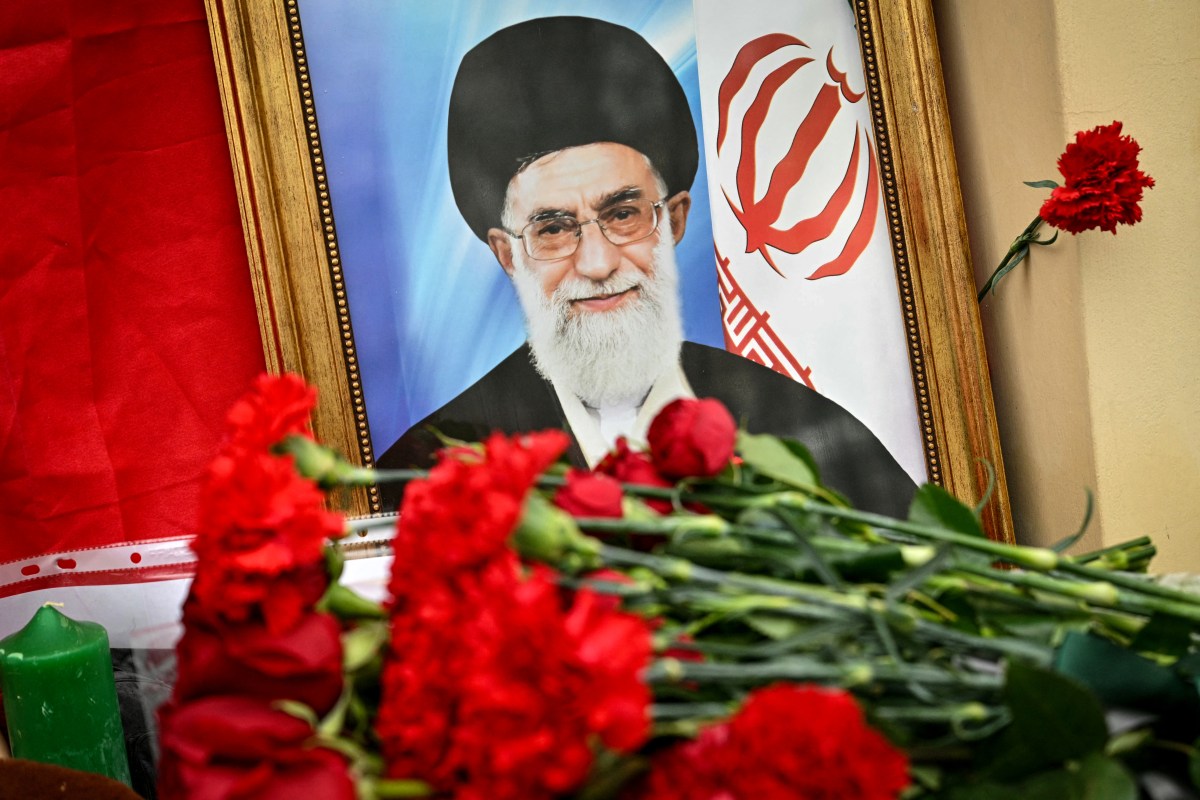
BREAKING: Iran’s regime has swiftly mobilized its military and launched retaliatory strikes following the death of Ayatollah Ali Khamenei in an Israeli airstrike on July 15, 2023. This aggressive response signifies a dramatic escalation in regional tensions, putting U.S. and allied forces on high alert.
The video of a young boy asking Khamenei to pray for his martyrdom has gone viral, highlighting the Supreme Leader’s enduring legacy. Despite his death, speculation arises that Khamenei anticipated a martyr’s fate, as he chose to remain in Tehran amid threats. His decision reflects a leadership philosophy deeply rooted in resilience against external pressures.
Ali Larijani, Iran’s national security chief, confirmed on social media that Iran is prepared for a “long war,” a stark warning to President Donald Trump, who has pushed for regime change. The immediate military actions following Khamenei’s death reveal the meticulous planning that has gone into Iran’s survival strategy.
In a significant shift, Iran launched pre-planned retaliatory strikes against Israel shortly after U.S.-Israeli attacks targeted key sites within Iran. The strikes, executed on Saturday morning, were not reactive but part of a carefully orchestrated response that Tehran had prepared for months, even while nuclear negotiations were underway.
Oil prices have surged in the wake of these developments, climbing between $78 and $80 per barrel. The conflict’s potential to disrupt shipments through the Strait of Hormuz, which carries roughly 20% of the world’s oil, has raised alarms in global markets. Insurers have increased war-risk premiums, and some companies have paused shipments, adding to the economic pressure.
Iran’s retaliation has expanded beyond Israel, signaling a broader regional conflict. Attacks have targeted Gulf states, including Dubai, leading several countries to close their airspace and activate air defense systems. Iranian-backed militias in Lebanon, Iraq, and Yemen are preparing for coordinated strikes, heightening fears of a multifront war that complicates the situation for Gulf allies.
Iranian Foreign Minister Abbas Araghchi revealed that some military units are now operating independently under pre-issued directives, ensuring continuity and rapid response despite potential disruptions in central leadership. This decentralized command structure indicates Iran’s readiness for sustained conflict.
As the threat of U.S. airstrikes looms, Khamenei had previously tasked Larijani and a select group of aides with safeguarding regime continuity. Iran’s entrenched political and military systems are designed to withstand shocks, with multiple layers of succession prepared for key positions. This strategic foresight demonstrates that even with Khamenei gone, the regime is structured to endure.
Officials have indicated that the process to appoint the next Supreme Leader will proceed quickly to avoid a power vacuum during this critical time. An interim leadership council has been established, signaling that the regime aims to project stability and prevent internal strife.
As the situation develops, the global community watches closely, knowing that Iran’s response to Khamenei’s death could redefine the geopolitical landscape of the Middle East. The potential for prolonged conflict raises concerns for international stability and economic pressures, making this a moment of critical importance.
Stay tuned for updates as this story unfolds. The ramifications of Iran’s actions will be felt worldwide, and the urgency of the situation cannot be overstated.