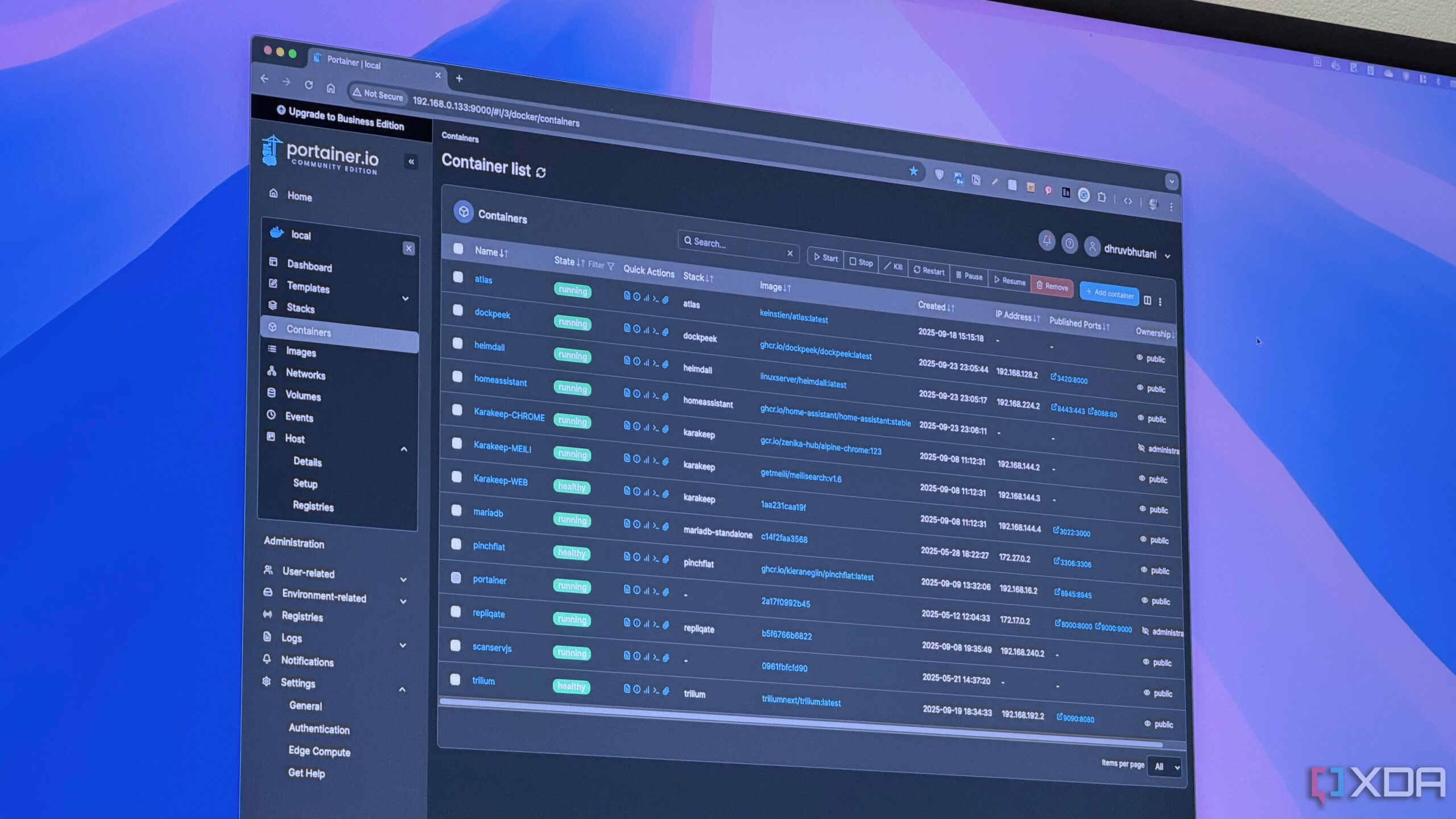
URGENT UPDATE: Home server enthusiasts are rapidly transitioning to Docker, a containerization platform, to simplify management and enhance reliability. This shift, driven by the need for stability amid complex service integrations, is transforming the way users maintain their home servers.
As of October 2023, many users report dramatic improvements in their home server environments. The adoption of Docker allows them to run applications like Home Assistant and media services within isolated containers, drastically reducing downtime and maintenance headaches.
The most significant advantage? Users can now manage upgrades without the fear of breaking their systems. “Each update felt like a gamble,” one user reported, highlighting the previously common fear of disrupted services. With Docker, restoring previous versions or testing new updates takes mere minutes, making the process seamless and stress-free.
Specific applications have emerged as front-runners in this Docker migration. Media servers, commonly the starting point for many home server setups, have seen substantial benefits. Containers like Plex and Jellyfin now operate smoothly, with configurations neatly contained and easily manageable. Users can upgrade these media applications by simply pulling a new image and restarting the container, ensuring that their media libraries remain intact.
Moreover, tools essential for home automation, such as Vaultwarden, Uptime Kuma, and Paperless-NGX, have also been successfully transitioned to Docker. Each service operates within its own dedicated environment, allowing for better organization of configuration files and logs. Users emphasize that if a feature breaks, a quick rollback restores functionality without extensive downtime.
Network monitoring tools like Pi-Hole and AdGuard Home are also popular choices for containerization. These services are now easier to upgrade and maintain, providing enhanced security and efficiency. Users can limit access to only necessary resources on their host systems, reducing potential risks.
For those considering making the switch, experts recommend starting with one container at a time, particularly focusing on media stacks. With Docker, users can create a stable and reproducible server environment, saving significant time and effort in the long run.
As the trend continues to grow, it’s clear that moving to Docker is not just a passing fad but a revolutionary step in home server management. Users are reporting higher satisfaction levels and less time spent troubleshooting their setups. If you’ve been struggling with a chaotic home server, now is the time to consider Docker—your future self will thank you.
Stay tuned for more updates as this movement evolves, reshaping the landscape of home server management for enthusiasts worldwide.