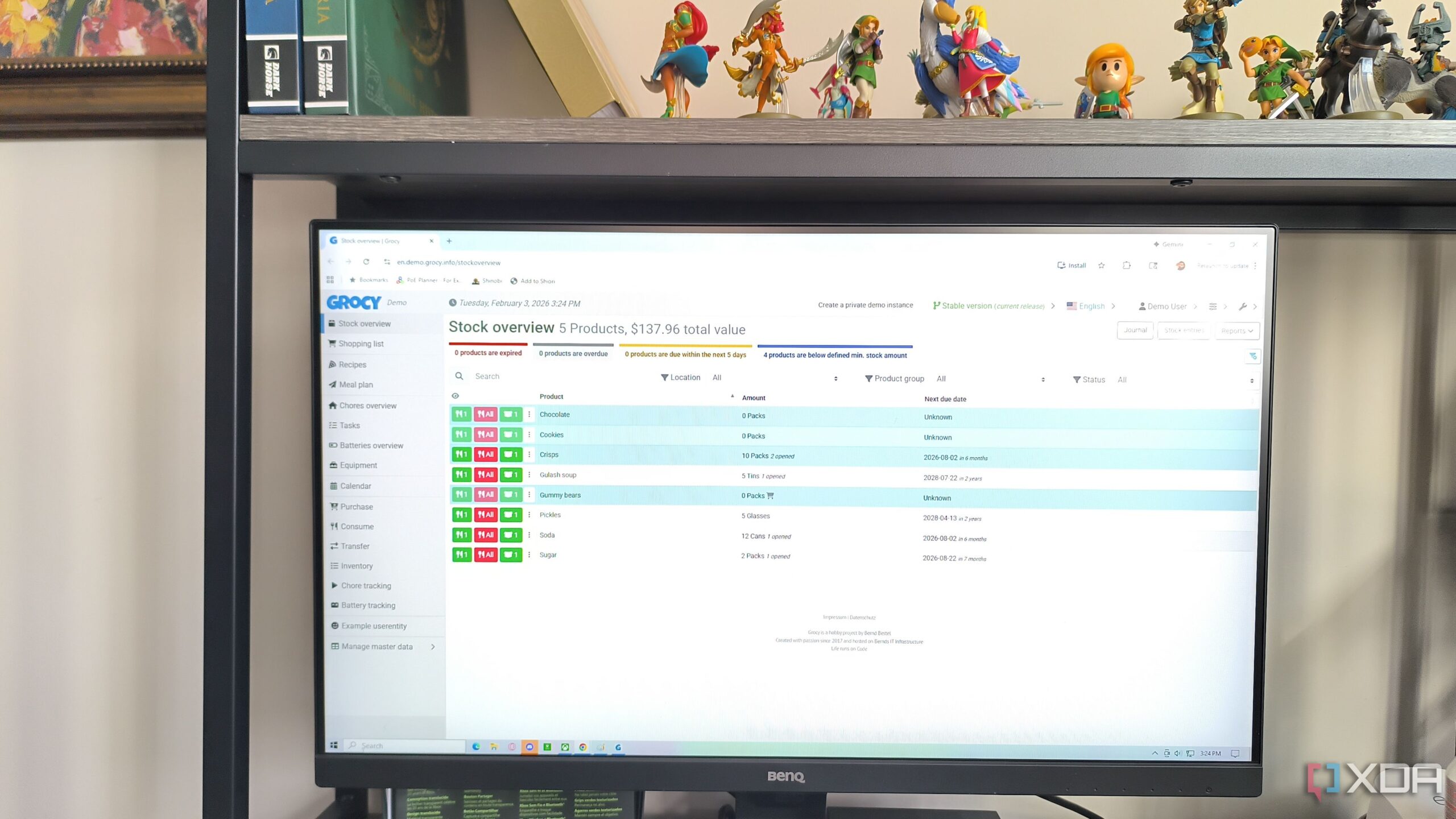
UPDATE: Users are reporting significant challenges with the grocery tracking app Grocy after just one week of use. Many find that the initial setup is promising, but daily operations quickly become cumbersome and frustrating.
The urgency surrounding Grocy stems from its potential to revolutionize grocery inventory management. However, after extensive testing, it appears that the app struggles to meet user expectations, especially for those seeking a streamlined experience.
Initial excitement began when users discovered Grocy as a self-hosted solution for tracking pantry staples and shopping lists. Designed to facilitate household inventory management, Grocy promises to eliminate the age-old question of, “Do I have this?” while grocery shopping.
Setup is straightforward for tech-savvy users, particularly those familiar with Docker. However, the app’s accessibility remains a significant hurdle. Without configuring a reverse proxy for HTTPS access, mobile users cannot utilize Grocy’s standout feature: the barcode scanner. Many users express frustration at having to resort to using a webcam for barcode scanning on their PCs, which complicates the user experience.
Inventory tracking is another area where Grocy falters. While the app allows users to input detailed information about each product, including name, price, and expiration date, the sheer volume of fields can be overwhelming. Users report that onboarding family members to use the app is a daunting task due to its complicated interface. The process of adding new locations to the inventory is not intuitive, requiring multiple steps that detract from user engagement.
Additionally, Grocy assumes a level of discipline that many users find unrealistic. The app relies on users to update inventory records every time an item is consumed or added, which becomes impractical during busy periods. Users note that a single rushed meal can throw the entire inventory tracking system out of balance.
Despite its shortcomings, Grocy does offer useful features beyond inventory management. Users can assign household chores, track battery life, and utilize meal planning tools, all of which function effectively. However, these features do not compensate for the app’s complex inventory system.
As a result, many users are already searching for alternatives that better fit their grocery tracking needs. The clunky nature of Grocy’s inventory management undermines the app’s overall utility, leading to disappointment among those who hoped it would simplify their lives.
This developing story highlights the challenges faced by users of Grocy and raises questions about the future of grocery tracking apps. With a growing demand for efficient household management tools, will Grocy adapt and improve, or will users continue to seek out better options?
For those considering Grocy, the consensus is clear: while it has potential, the execution leaves much to be desired. Stay tuned for updates on user experiences and potential improvements that could make Grocy a viable solution in the future.