








































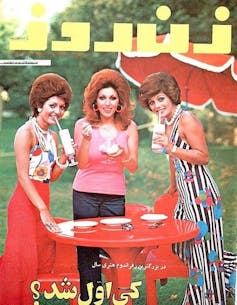
Googoosh, the famed Iranian singer often referred to as the “Voice of Iran,” has decided to pause her farewell tour, a move reflecting her solidarity with ongoing protests in Iran. The 75-year-old megastar, who has been an icon of Iranian culture since the 1970s, announced that she would not perform until her homeland is “rescued.” This decision has sparked discussions about the cultural significance of her silence at a time when the nation is facing political upheaval.
Googoosh: A Cultural Icon
Born Faegheh Atashin in 1950, Googoosh rose to prominence in Iran’s vibrant pre-revolutionary cultural scene. Her music and film career flourished during the late Pahlavi era, a period marked by a blend of traditional and modern influences. By the 1970s, she had become the most recognizable figure in Iranian popular culture, her style and artistry inspiring countless fans.
She recorded songs in multiple languages including Persian, English, and Arabic, redefining the image of a female pop star in Iran. According to Iranian studies scholar Abbas Milani, Googoosh encapsulated the spirit of an era characterized by social experimentation and the quest to challenge traditional norms.
However, following the 1979 Islamic Revolution, Googoosh’s career faced a dramatic shift. The new regime viewed her as a symbol of Western influence and moral decay, leading to her imprisonment and a ban on her performances. For over two decades, she remained in silence, with her absence amplifying her mystique among fans.
A Return from Exile
In 2000, Googoosh was finally allowed to leave Iran, marking the beginning of a new chapter in her career. Her first concert in Toronto at the Air Canada Centre drew a sold-out crowd, reigniting her popularity and leading to the release of nine albums since then. Yet, many of her fans express a preference for her earlier work, often chanting “Ghadimi! Ghadimi!” (“Old! Old!”) during her performances, demonstrating their longing for the past.
Googoosh’s memoir, “Googoosh: A Sinful Voice,” published in December 2025, sheds light on her tumultuous experiences during the revolution and her decision to return to Iran despite the risks involved. She articulates the struggle of reconciling her personal faith with the harsh realities imposed by the Islamic Republic, which viewed music as a moral transgression.
The revolution not only led to her exile but also instigated a mass departure of Iranians seeking refuge from the oppressive regime. Many artists, including Googoosh’s contemporaries, relocated to California, where they rebuilt their careers within the burgeoning Iranian entertainment industry. This new cultural landscape, often referred to as “Tehrangeles,” became a hub for Persian-language music and entertainment, preserving a vital connection to Iranian culture.
As protests continue to challenge the authority of Iran’s clerical regime, Googoosh’s decision to refrain from singing serves as a powerful political statement. Her silence resonates deeply, reflecting the collective memory of a generation yearning for change. By withholding her voice, she emphasizes that nostalgia alone cannot substitute for the urgent need for political action and reform.
In a time when the struggle for freedom and expression remains a poignant theme in Iran, Googoosh stands as both a symbol of cultural heritage and a reminder of the ongoing fight for justice. Her legacy, intertwined with the memories of a lost era, continues to inspire hope among Iranians, both at home and in the diaspora.
























