China has officially launched a cutting-edge artificial intelligence (AI) system designed to access the country’s national supercomputing infrastructure and conduct autonomous scientific research. This significant development, announced on December 23, 2023, comes shortly after the United States revealed its own ambitious AI initiative, known as the Genesis Mission, aimed at enhancing scientific capabilities.
The newly introduced AI platform is set to revolutionize research methodologies, allowing over a thousand institutional users across China to leverage its capabilities. Unlike traditional tools that require constant human oversight, this system can independently plan, execute, and manage complex scientific tasks, prompting discussions about the future of research, security, and international technological rivalry.
Unleashing Autonomous Research Capability
According to China Science Daily, the AI agent can accept natural-language commands to execute entire research workflows with minimal human intervention. Once tasked with a project, it can decompose problems into manageable steps, allocate computing resources, run simulations, analyze extensive datasets, and produce detailed scientific reports. This self-directed approach enables researchers to complete tasks that previously required a full day in approximately one hour. Currently, the platform supports nearly 100 workflows across various disciplines, including materials science, biotechnology, and industrial AI.
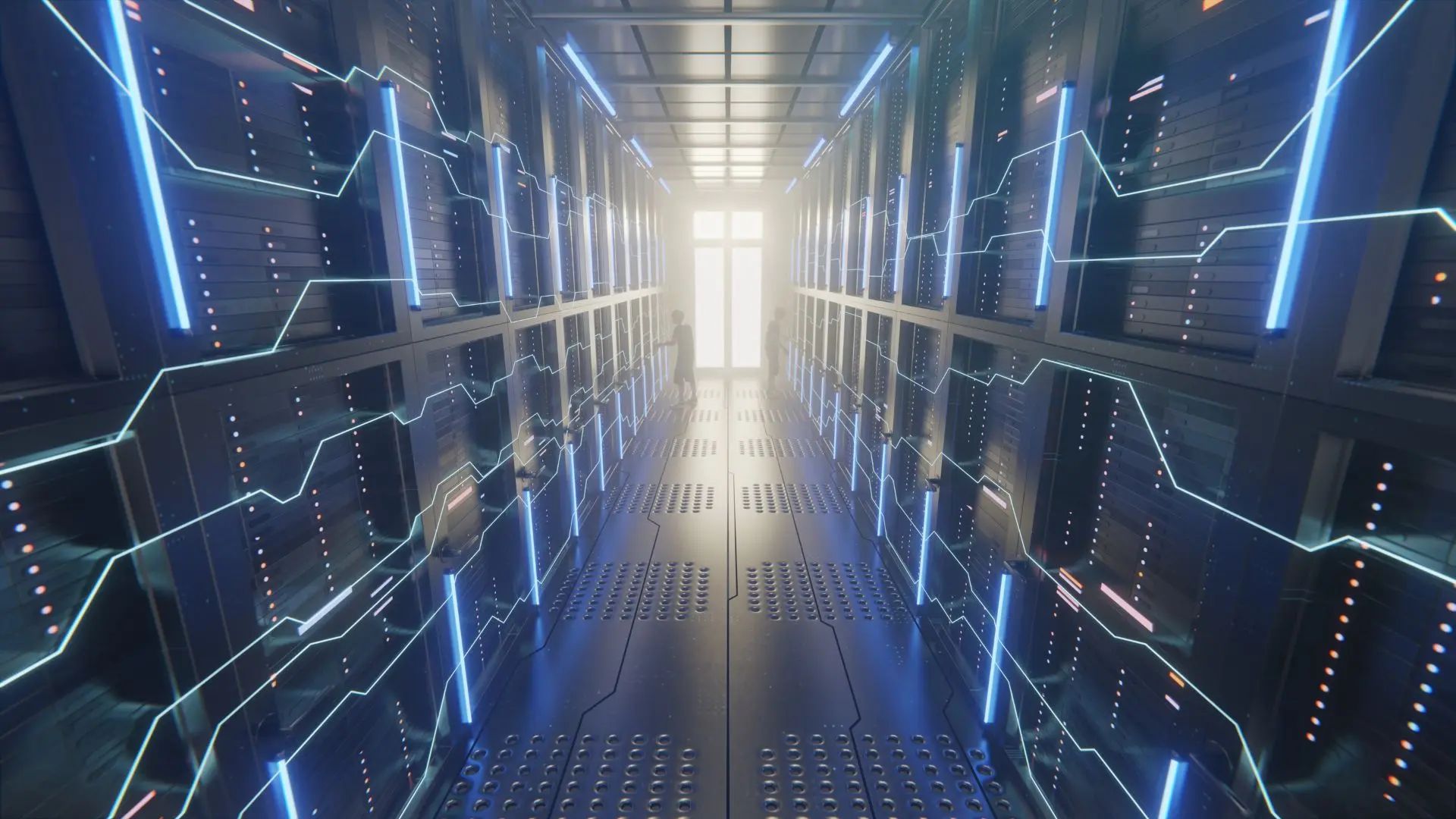
At the heart of this initiative is the National Supercomputing Network, or SCNet, which interconnects more than 30 supercomputing centers nationwide. Launched in 2023, SCNet’s high-speed digital framework is designed to pool computational resources, allowing dynamic allocation based on demand. The official unveiling took place in the Binhai Hi-Tech Zone in Tianjin in April 2024, representing a shift towards large-scale deployment of AI systems in scientific research.
Transforming Scientific Practices
Chinese scientists involved in the project assert that this platform marks a profound transformation in how scientific research is organized. Qian Depei, a member of the Chinese Academy of Sciences and head of an SCNet expert panel, emphasized the shift from traditional number-crunching to AI-driven discovery. “Such new AI agents will connect the tools, data, and computing power scattered across different systems, giving scientists better tools to innovate faster,” he stated at the launch press conference.
Moreover, Cao Zhennan, deputy director of the High Performance Computer Research Centre, noted that the changes encompass both organizational and technical transformations. This initiative aligns with China’s national “AI+” strategy introduced in August 2023, which aims to harness AI for accelerated scientific discovery and industrial innovation.
The timing of China’s launch is particularly noteworthy, as it coincides with increasing competition with the United States in the fields of AI and advanced computing. Both nations have historically invested heavily in supercomputing capabilities, particularly for sensitive applications such as weapons simulations and drug discovery. In November 2023, President Donald Trump unveiled the Genesis Mission, an initiative led by the Department of Energy to train powerful AI systems using federal supercomputers and extensive government research datasets. Trump described the mission as a means to bolster “America’s technological dominance and global strategic leadership.”
China’s rapid deployment of its AI science network raises significant concerns regarding cybersecurity and data protection. Granting AI systems direct access to national supercomputing resources could potentially expose sensitive information and increase the risk of cyber intrusions. As this new era in AI research unfolds, the implications for global competition and security are profound.