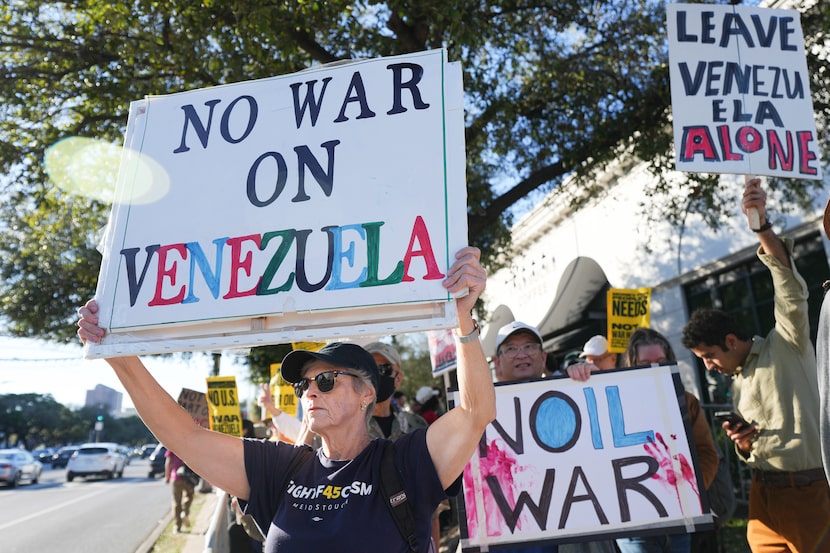
Public discourse surrounding the U.S. government’s recent actions toward Venezuela has sparked a wave of criticism from various commentators. Many are calling for the removal of President Donald Trump and his cabinet members for allegedly orchestrating the kidnapping of Venezuelan President Nicolás Maduro and his wife, alongside accusations of violence against the Venezuelan people. Critics assert that these actions represent serious violations of the War Powers Act, undermining the checks and balances essential to American democracy.
Several letters to the editor have emerged, expressing outrage over the perceived unilateral approach taken by Trump and his administration. One correspondent, Finnegan Motz from Dallas, articulated that allowing the president to conduct acts of war without congressional approval leads to unnecessary loss of life. He pointed to historical events, such as the Bay of Pigs invasion, to underscore the dangers of unchecked presidential power.
In another letter, Barton Clemmer from North Grand Prairie raised questions about the apparent hypocrisy within U.S. foreign policy. He noted that while Trump pardoned former Honduran President Juan Orlando Hernández, who was convicted of drug smuggling, he now seeks to intervene in Venezuela due to allegations against Maduro. Clemmer’s remarks highlight a growing frustration regarding the inconsistency in America’s stance on international drug trafficking and governance.
The outrage is compounded by the political context surrounding the Biden administration’s actions. Just before leaving office in January 2025, the Biden administration offered a bounty of $25 million for information leading to Maduro’s arrest. This move, according to critics like Dennis Roberson from Fort Worth, reflects a double standard, as the current administration expresses outrage over Maduro’s capture.
The U.S. government’s intervention in Venezuela has raised significant ethical questions. Kenneth K. Ebmeier from Round Rock noted that Maduro’s regime is unrecognized by the U.S. and over 50 other nations. He argued that Trump’s claim to govern Venezuela until a democratically elected leader assumes power is misleading. Critics contend that this approach undermines the self-determination of the Venezuelan people, who are now facing a new form of foreign dominance.
As the anniversary of the January 6, 2021, Capitol riot approaches, some letters reflect on its significance. Richard Street from Carrollton expressed sorrow over the day’s events, urging Americans to remember the lessons learned. His sentiments resonate in a climate where national unity and respect for democratic processes are increasingly challenged.
In a more personal reflection, Rudy Maranca from Rowlett shared his immigration story from the Philippines, emphasizing the opportunities America provides. His narrative serves as a reminder of the diverse experiences that shape opinions on U.S. foreign policy and domestic issues.
Another reader, Glenda Solomon from Carrollton, responded positively to an article about morning routines, highlighting the joy found in daily habits during retirement. Her note serves as a gentle reminder of the simple pleasures that can be overshadowed by the weight of political discourse.
The ongoing discussion surrounding U.S. intervention in Venezuela and the implications of domestic political actions reflect broader themes of justice, accountability, and the preservation of democratic norms. As these conversations unfold, they continue to shape public perceptions and policies that affect lives both in the United States and abroad.