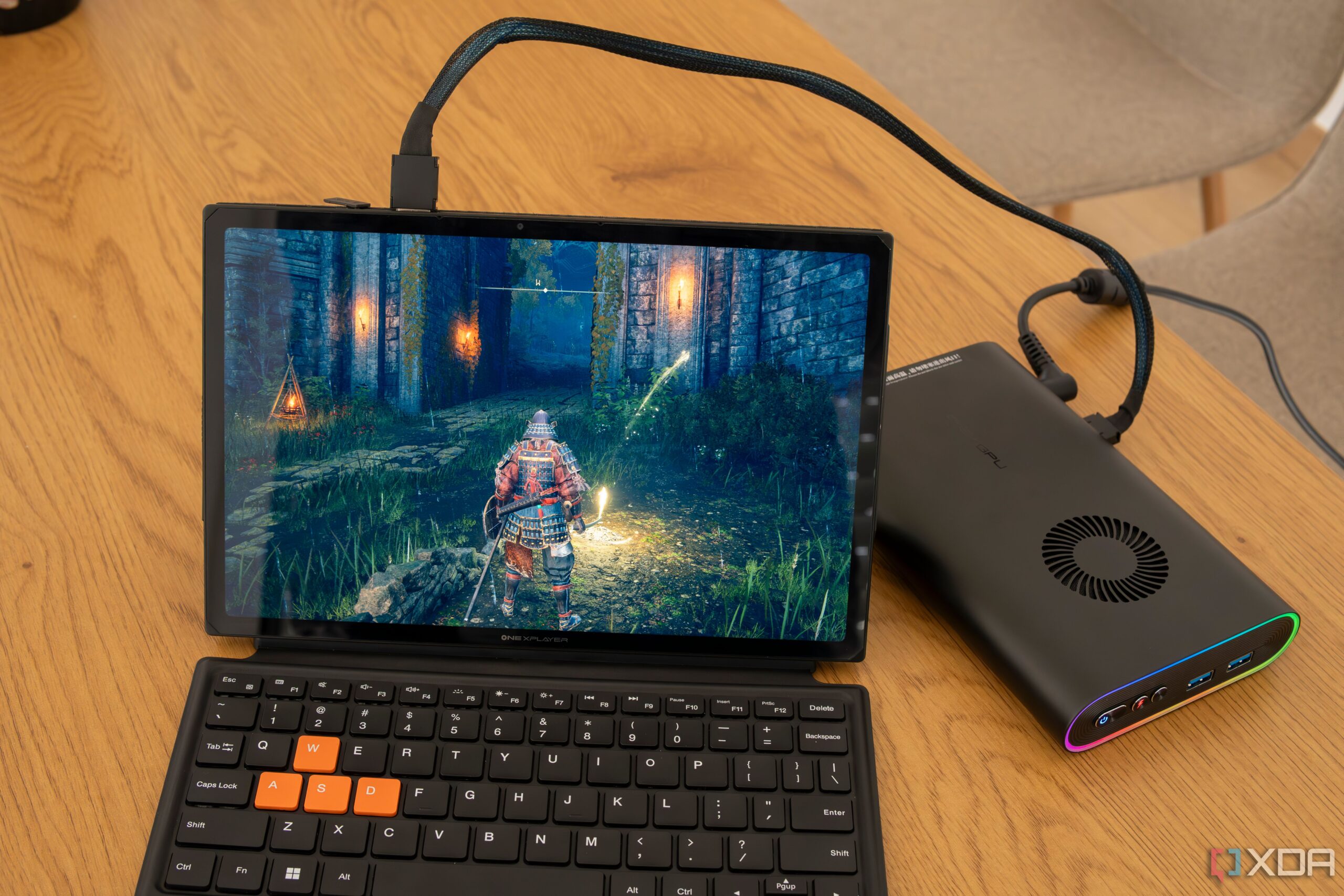
Recent advancements in external graphics technology have put a spotlight on the capabilities of OCuLink, a connection designed specifically for graphics processing units (GPUs). While Thunderbolt has long been the go-to choice for high-bandwidth connections in personal computers, OCuLink’s specialized approach is reshaping the conversation around external GPU performance.
Thunderbolt has established itself as a versatile connector, providing up to 40Gbps of bandwidth with Thunderbolt 4, and even 80Gbps with the upcoming Thunderbolt 5. This technology allows for multiple types of connections, including USB data transfer and video output. However, the bandwidth is shared among these connections, which can limit performance when using external GPUs. In contrast, OCuLink, which stands for “Optical-Copper Link,” focuses solely on PCIe signaling, potentially offering superior performance for GPU users.
Comparing Bandwidth and Latency
One of the key limitations of Thunderbolt is its shared bandwidth, particularly when used with external GPUs. Thunderbolt 4 can allocate up to 32Gbps for PCIe tunneling, equivalent to a PCIe 3.0 x4 connection. Thunderbolt 5 improves this to a PCIe 4.0 x4 connection, providing up to 64Gbps. Despite these advancements, the technology is not universally available, especially in AMD-powered PCs, where Thunderbolt support is rare.
OCuLink, on the other hand, is dedicated to maximizing GPU performance. It supports PCIe 4.0 x4 connections, effectively doubling the bandwidth available through Thunderbolt 4. While OCuLink can technically support up to eight lanes of PCIe communication, implementations in eGPU docks are still limited. The reduced complexity of focusing exclusively on GPU connectivity can also minimize latency, a factor critical for high-performance gaming and graphic-intensive applications.
Real-World Performance Insights
Testing OCuLink against Thunderbolt 4 reveals substantial performance differences. In a benchmark with a Minisforum mini PC, the same GPU registered a bandwidth increase from 2.42GB/s via Thunderbolt 4 to 6.70GB/s using OCuLink. This enhancement translates to improved in-game performance, with notable gains in frame rates across various titles. For instance, games such as Forza Horizon 5 displayed nearly double the frame rates, while other titles showed smoother overall performance with fewer spikes in frame delivery.
Despite its advantages, OCuLink faces challenges in gaining widespread adoption. Thunderbolt’s backing by Intel ensures strong relationships with PC manufacturers, facilitating its inclusion in a broader range of devices. Additionally, the smaller USB-C connector used by Thunderbolt is more suited for modern laptop designs, which increasingly favor compact and versatile ports.
While OCuLink is gaining traction among niche manufacturers, including Asus and Lenovo, it remains less common in mainstream products. The technology has found its place in certain gaming handhelds and compact PCs, but it may not appeal to the broader market due to its larger proprietary port and limited versatility compared to Thunderbolt.
In conclusion, OCuLink presents a compelling alternative for users focused on optimizing external GPU performance. As the demand for high-bandwidth connections continues to grow, the coexistence of these technologies suggests that both OCuLink and Thunderbolt can serve distinct market segments effectively. With ongoing advancements in PCIe standards, OCuLink’s potential for future growth remains promising, even as it carves out its niche in the competitive landscape of external graphics solutions.