Enlisted veterans and service members are finding new pathways to academic success through the Massachusetts Institute of Technology’s (MIT) Warrior-Scholar Project (WSP). The program offers an immersive boot camp designed to help participants transition from military service to higher education, focusing on science, technology, engineering, and mathematics (STEM).
Justin Cole, an Air Force veteran and current sophomore at MIT, exemplifies this transformation. After serving for nine years, Cole’s view on education shifted dramatically due to his experiences during natural disasters, including the devastating 2013 Black Forest fire and two Category 5 typhoons in 2018. He realized that understanding climate issues was paramount to national security, prompting him to pursue further education. In 2023, he attended a weeklong STEM boot camp at MIT, which solidified his determination to apply to the institution.
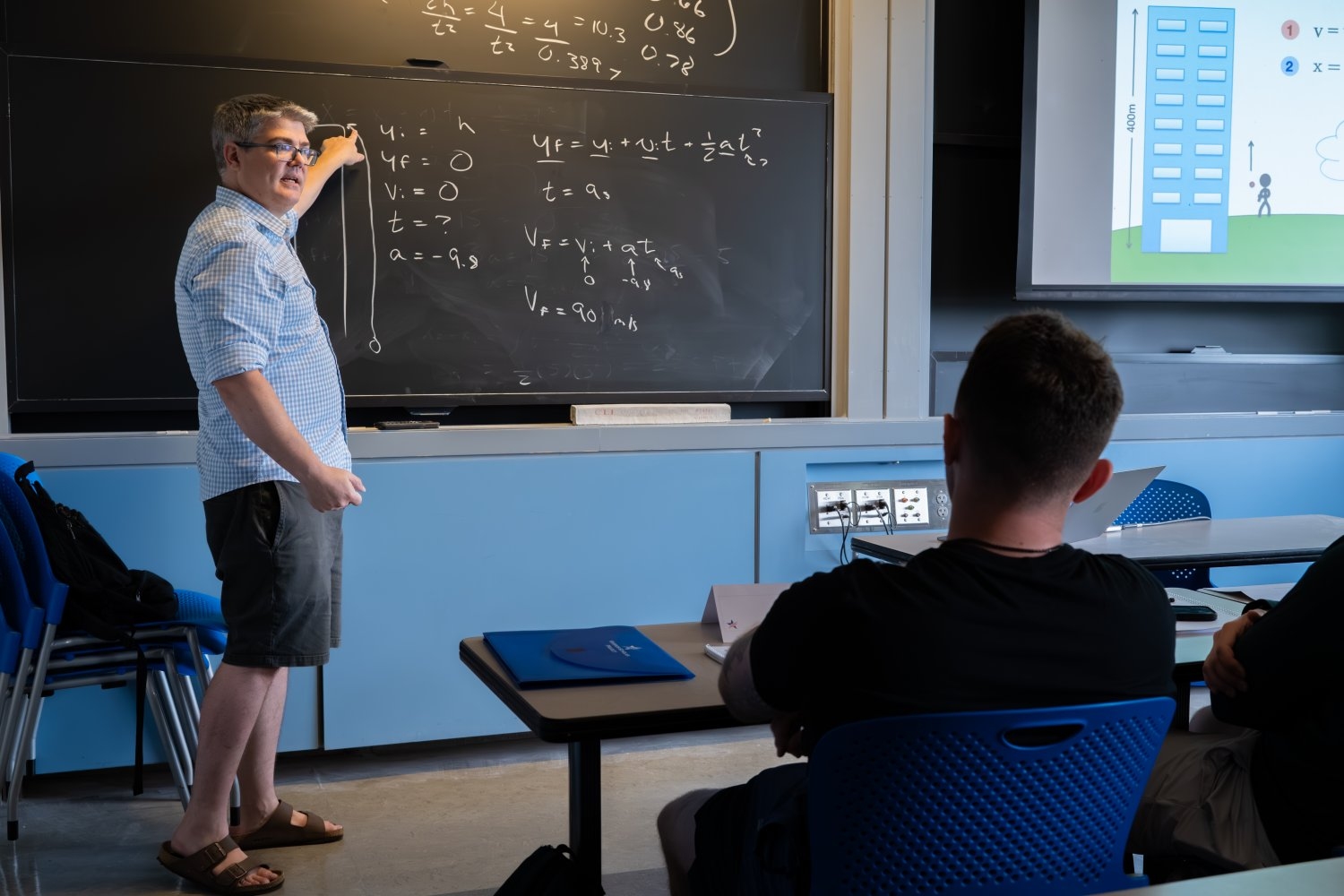
MIT has been a part of the Warrior-Scholar Project since 2017, becoming one of the first universities to host the STEM boot camp. The program, which simulates a week of undergraduate life, is now offered at 19 universities across the United States. Participants engage in rigorous academic challenges, including problem sets, faculty lectures, and college success workshops covering essential skills like time management and note-taking.
Transforming Military Experience into Academic Success
The program is led by Michael McDonald, an associate professor of physics, and Nelson Olivier, a Navy veteran and MIT Sloan School of Management graduate. They have witnessed firsthand the unique advantages that enlisted veterans bring to the classroom. McDonald describes the enthusiasm and curiosity of the participants, noting the stark contrast between their engagement and that of traditional students.
“By Tuesday, they are miserable, they’re pretty beaten down,” McDonald explains, reflecting on the intensity of the program. “But by the end of the week, they’re like, ‘I could do another week.’” This change highlights the growing confidence of participants as they realize their military experience equips them with valuable skills applicable in engineering and beyond.
Olivier emphasizes that veterans often possess practical knowledge that can easily translate into academic understanding. For instance, a veteran who has repaired helicopters is already applying principles of physics, even if they don’t initially perceive it as such. “It’s a thing of beauty when you see that,” he says.
Building a Community of Support
One of the unique aspects of the WSP is its incorporation of alumni, known as fellows, who help facilitate workshops and support participants. These fellows share their experiences and successes, providing tangible proof that transitioning to higher education is achievable. Cole recalls how seeing fellow veterans who successfully navigated academia motivated him to continue his own journey.
Former Marine Corps communications operator Aaron Kahler, who participated in MIT-WSP in 2024, found inspiration in meeting a veteran PhD student during a tour of the neuroscience facility. “There were a lot more [successful veterans] than we thought,” he says, highlighting the importance of mentorship and community.
The involvement of veterans in the program extends beyond workshops. Andrea Henshall, a retired Air Force major and current PhD student at MIT, has also become an active participant, mentoring scholars and providing insights from her own academic journey. Henshall believes that seeing examples of veterans at MIT encourages participants to envision themselves in such roles.
At the conclusion of the boot camp, scholars receive a challenge coin, symbolizing their accomplishments and the ethos of their unit. The coin features Newton’s laws of motion on one side and MIT’s motto, “mens et manus,” which translates to “mind and hand,” on the other. This tangible reminder serves as both motivation and a call to action for participants to strive for significant contributions to society.
Kahler, now a first-year student at MIT, keeps his challenge coin displayed prominently on his desk. “I don’t think I would be here if it weren’t for the Warrior-Scholar Project,” he reflects, underscoring the program’s profound impact on his educational journey.
As MIT celebrates a decade of the Warrior-Scholar Project, the initiative continues to empower veterans and service members, fostering a vibrant community committed to academic success and professional achievement. The program’s success is evident, with over 120 scholars having participated, 93 percent of whom have pursued further education at prestigious institutions including Stanford University, Harvard University, and the University of California at Berkeley. The lasting influence of this program reflects not only in the academics of its participants but also in their contributions to society as informed and engaged citizens.