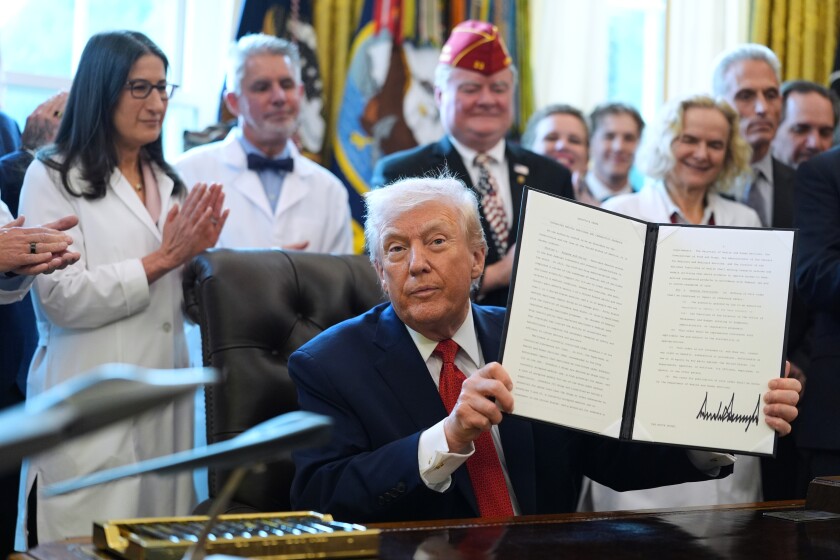
President Donald Trump has directed a significant reclassification of marijuana, moving it from Schedule I to Schedule III under the Controlled Substances Act. This change acknowledges the medical potential of marijuana, which has been classified among the most dangerous drugs since 1970, alongside substances like heroin and LSD. The reclassification is seen as a long-awaited validation of arguments made by advocates for cannabis reform, particularly in its medicinal applications.
The reclassification process began with a recommendation from the U.S. Department of Health and Human Services (HHS), following a comprehensive review ordered by former President Joe Biden. The HHS concluded there was “credible scientific support” for marijuana’s efficacy in treating conditions such as pain, nausea from chemotherapy, and specific appetite issues. This finding counters decades of federal claims regarding marijuana’s dangers and lack of medical usefulness.
Historical Context and Recent Developments
Nearly four decades ago, Francis Young, then chief administrative law judge at the DEA, argued that marijuana did not belong in Schedule I due to its therapeutic benefits. Although his findings were initially dismissed by DEA Administrator John Lawn, Young’s position has gained traction in recent years. His assertion that marijuana is “one of the safest therapeutically active substances known to man” is now echoed in contemporary discussions about its medical use.
The shift to Schedule III allows for increased research opportunities, as it removes the stringent regulatory requirements tied to Schedule I substances. However, it is important to note that this change does not equate to full legalization. Medical use of cannabis products will still require approval from the Food and Drug Administration (FDA). Furthermore, state-licensed marijuana businesses remain illegal under federal law, although they may now benefit from tax deductions that were previously unavailable.
Attorney General Merrick Garland endorsed the HHS recommendation in May 2024, paving the way for the current executive order. Trump described the reclassification as a necessary step to assist “American patients suffering from extreme pain, incurable diseases, aggressive cancers, seizure disorders, neurological problems and more.” This acknowledgment of marijuana’s medicinal properties reflects a growing consensus that federal policy has lagged behind public opinion and state-level reforms.
Implications for Cannabis Industry and Public Perception
The reclassification could have profound implications for the cannabis industry, especially for businesses operating legally in states that have enacted medical marijuana laws. Currently, 40 states permit the medical use of cannabis, with 24 states also allowing recreational use. This creates a notable conflict between federal prohibition and state legislation, an issue that a majority of Americans now oppose.
As the marijuana landscape evolves, Trump’s order emphasizes that it does not legalize marijuana outright. While this statement holds true, many advocates argue that it highlights the ongoing disconnect between federal law and the realities faced by patients and businesses in states where cannabis is legal.
The reclassification can be seen as both a step forward in acknowledging marijuana’s potential benefits and a reminder of the long journey ahead toward comprehensive reform. As discussions continue, the focus will likely shift to how these changes will impact research, medical applications, and the broader cannabis industry in the United States.