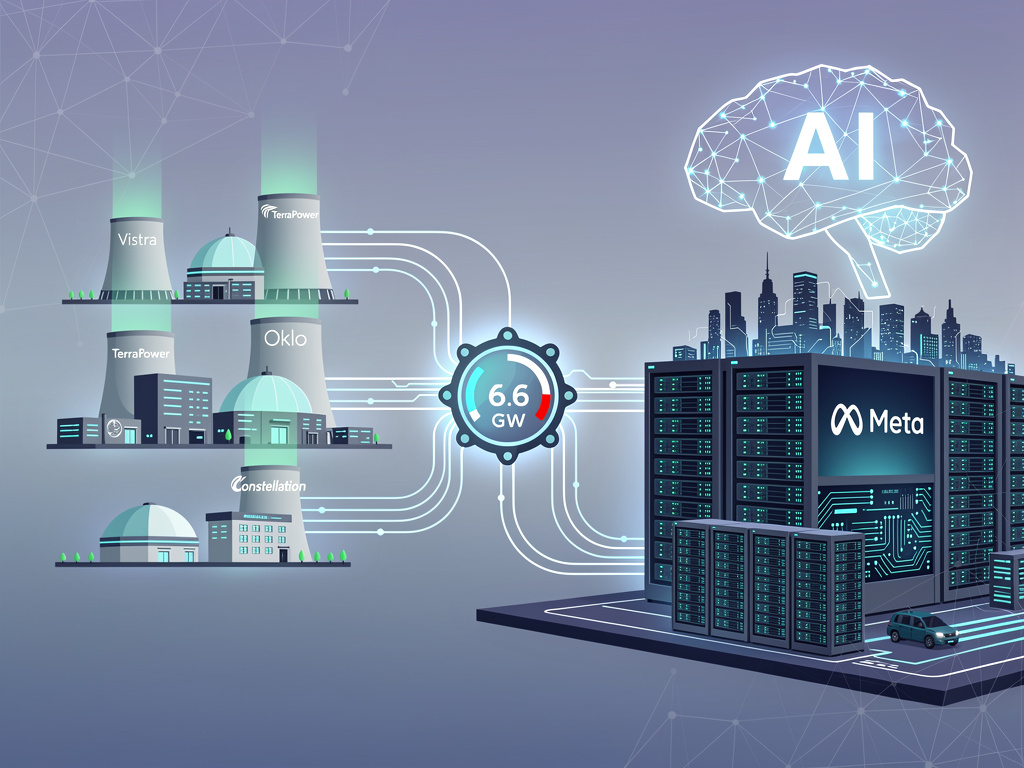
Meta Platforms Inc. has embarked on a groundbreaking energy procurement initiative, securing agreements that could provide up to 6.6 gigawatts of nuclear power to bolster its artificial intelligence infrastructure. Announced on January 9, 2026, the partnerships with Vistra Corp., TerraPower LLC, Oklo Inc., and Constellation Energy Corp. position Meta as a significant contributor to the revival of nuclear energy capacity in the United States, addressing the growing electricity demands driven by AI technologies.
The agreements include long-term power purchase contracts from three existing Vistra nuclear plants located in the U.S. heartland, alongside commitments for the development of advanced small modular reactors from TerraPower and Oklo. Meta’s official blog describes these deals as “landmark agreements” that will not only enhance nuclear plant operations but also promote technological advancements and job creation in local communities across America.
As AI technologies evolve, the demand for electricity to support their operations has surged. Industry analysts estimate that U.S. data centers could account for as much as 8% of national electricity consumption by 2030. Meta’s new Prometheus AI supercluster, designed to significantly enhance model scale, requires a stable and carbon-free power supply that intermittent renewable sources cannot fully deliver.
Strategic Agreements and Their Implications
Meta’s agreements with Vistra entail 20-year power purchase agreements for output from plants in Illinois, Pennsylvania, and Texas, extending the operational lifespan of these facilities. Constellation, recognized as the largest nuclear operator in the U.S., will also contribute to capacity expansions, as highlighted by Meta executive Joel Kaplan. He noted that these ventures solidify Meta’s position as “one of the most significant corporate purchasers of nuclear energy in American history.”
Both TerraPower, backed by Bill Gates, and Oklo, supported by Sam Altman, are investing in next-generation reactor technology. Their small modular reactors promise quicker deployment and reduced costs, which Meta’s involvement could help facilitate by addressing regulatory and financial challenges.
The announcement has already shown positive market reactions, with Vistra’s stock surging by as much as 16% following the news. The potential to power a city of five million homes underscores the significance of these agreements.
Economic and Environmental Impact
Joel Kaplan further emphasized on social media that these partnerships align with national energy priorities under the current administration, contributing to America’s energy infrastructure and promoting clean energy goals. The shift away from a reliance on natural gas towards more stable nuclear power represents a strategic pivot that could stabilize energy output, particularly given the variable nature of renewable sources.
The financial implications of this move are substantial. According to Bloomberg, Vistra’s market capitalization increased by $10 billion in a single day, reflecting heightened investor confidence in nuclear energy’s future. Meta’s financial capability, with $50 billion allocated for capital expenditure in 2025, places the company in a strong position to navigate the complexities of nuclear energy projects, including addressing regulatory hurdles and waste management issues.
The development of modular reactors, such as TerraPower’s Natrium and Oklo’s Aurora microreactors, is expected to enhance safety and efficiency while providing a reliable energy source for Meta’s operations. As uranium supply chains tighten, driven by increased demand, Meta’s scale could help stabilize pricing and encourage the reopening of mining operations in states like Wyoming and Utah.
As U.S. nuclear energy grows from 19% to potentially higher shares of clean power, Meta’s strategic blueprint may redefine corporate energy strategies globally. The anticipated carbon offset of 20 million tons annually by 2035 further illustrates the environmental benefits of this initiative.
With the promise of thousands of high-wage jobs in construction and operations, the projects are expected to stimulate local economies. Meta has emphasized job growth within American communities, addressing concerns that have historically surrounded nuclear energy.
As the technology sector evolves, the partnerships established by Meta could set a precedent for others in the industry, with companies like Microsoft and Google exploring similar nuclear initiatives. The integration of these projects with Meta’s commitment to 100% renewable energy sources will help maintain its sustainability credentials while navigating the future of energy in the digital age.