A group of students from the University of Maryland (UMD) is leveraging drone technology to improve wildfire detection and suppression efforts. In a recent demonstration held at a fire and rescue training center in La Plata, Maryland, the team showcased their innovative approach amidst the challenges of autonomous firefighting. This event is part of the ongoing XPrize competition, which aims to advance solutions for wildfire management.
The team, called Crossfire, is competing against twelve other groups in the semifinals of the autonomous wildfire-suppression track. Their mission involves using drones to detect fires and extinguish them quickly. Each team must locate a fire within 1,000 square kilometers of difficult terrain and extinguish it within ten minutes to qualify for the final round, scheduled for June 2026. The winning team will receive a prize of $3.5 million.
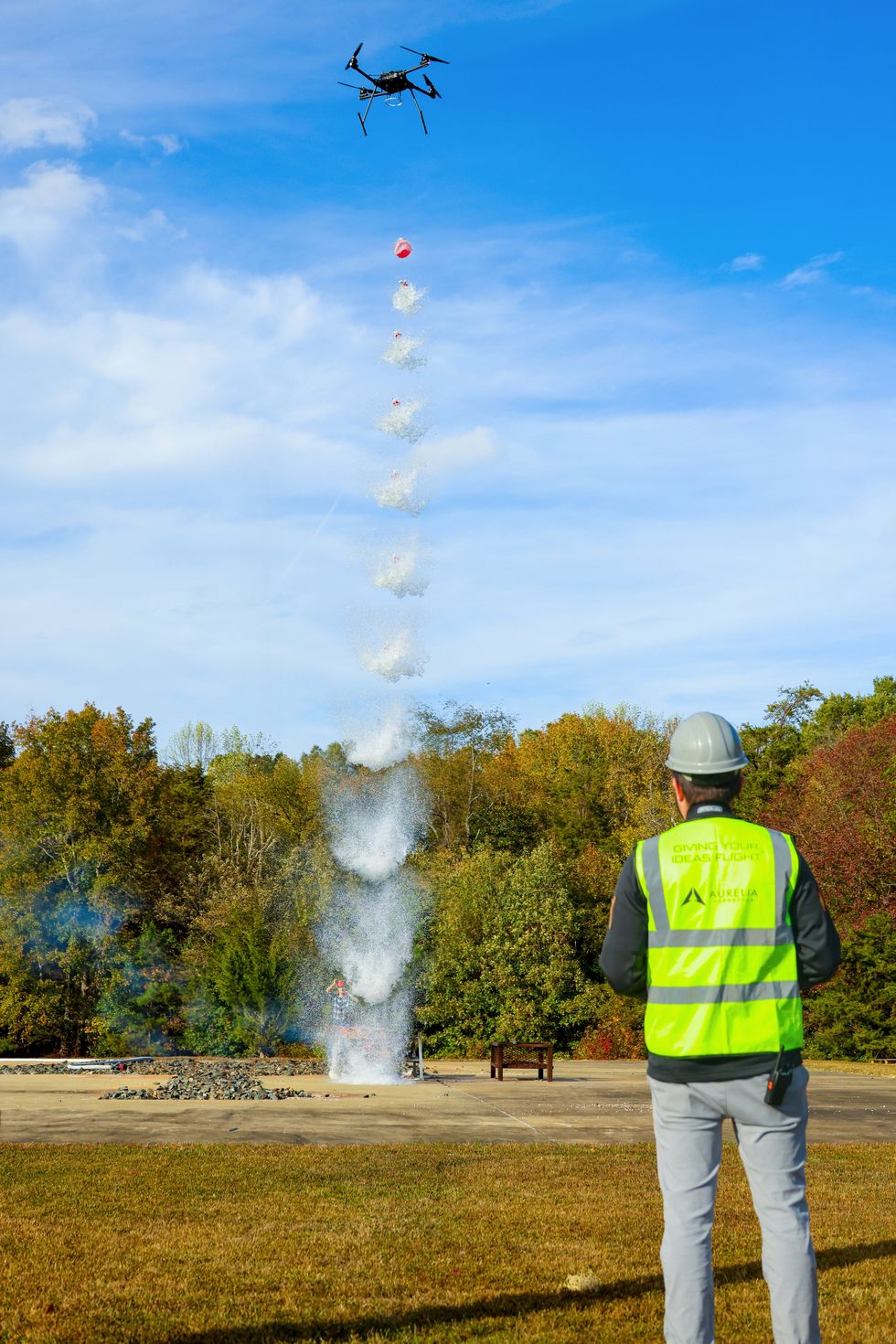
Demonstrations included the use of the Alta X drone, which was equipped with a water-filled balloon intended for targeted fire suppression. The drone was flown approximately 25 meters to a burning stack of pallets, where the balloon was released to extinguish the flames. The process, however, required precision; the balloon needed to detonate at a specific altitude to maximize water dispersal.
Andrés Felipe Rivas Bolivar, a doctoral student in aerospace engineering, piloted the drone while a second drone equipped with a thermal camera monitored the situation from above. Despite initial attempts, the first drops did not successfully extinguish the fire, underscoring the complexities involved in drone-based firefighting.
Wildfires have become a growing concern globally, with incidents like the devastating November 2018 Camp Fire in California highlighting the urgency for effective detection and suppression methods. According to Andrea Santy, program director for the wildfire competition at XPrize, the organization was motivated to create this contest after witnessing the catastrophic impact of wildfires in California.
The competition aims to drastically reduce the response time from detection to extinguishment, which can currently take up to an hour. XPrize has allocated an additional $1 million for teams demonstrating rapid and accurate fire detection. Bob Roper, a senior wildfire advisor for the Western Fire Chiefs Association, emphasized the need for innovative technologies, suggesting that the competition could lead to significant advancements in wildfire response capabilities.
Crossfire’s strategy involves using a combination of ground sensors and drones to detect fires early. The technology they developed includes an off-the-shelf scouting drone that utilizes infrared and color imaging to identify fires and differentiate between dangerous blazes and benign campfires. This distinction is crucial, as the competition rules stipulate that systems must accurately identify threats.
In preparation for the competition, UMD students trained their detection algorithms using a dataset of 40,000 images of fires, ensuring that their system could accurately recognize various fire types. The integration of artificial intelligence allows for real-time analysis and identification of potential threats, which is a key component of their approach.
Despite facing challenges with payload delivery, Crossfire’s team remains optimistic. The third attempt to drop the water balloon successfully extinguished the flames, demonstrating the potential effectiveness of their methods. The team is not only focused on the competition but is also exploring commercial viability for their technology.
Professor Derek Paley has been in discussions with potential customers, mainly fire departments and government agencies, to gauge interest in adopting their innovative firefighting solutions. The path to commercialization may be challenging, particularly due to the existing political landscape surrounding traditional firefighting resources.
Transitioning to drone technology for wildfire suppression may require regulatory changes and the development of new operational frameworks. Roper noted that while some fire departments may be hesitant, the unique capabilities of drones could provide valuable support, especially in situations where traditional crewed aircraft cannot operate effectively.
As the competition unfolds, the Crossfire team is determined to contribute to the evolution of wildfire management strategies. Their work reflects a broader movement towards integrating advanced technology in emergency response, offering hope for more effective solutions to combat the increasing threat of wildfires.