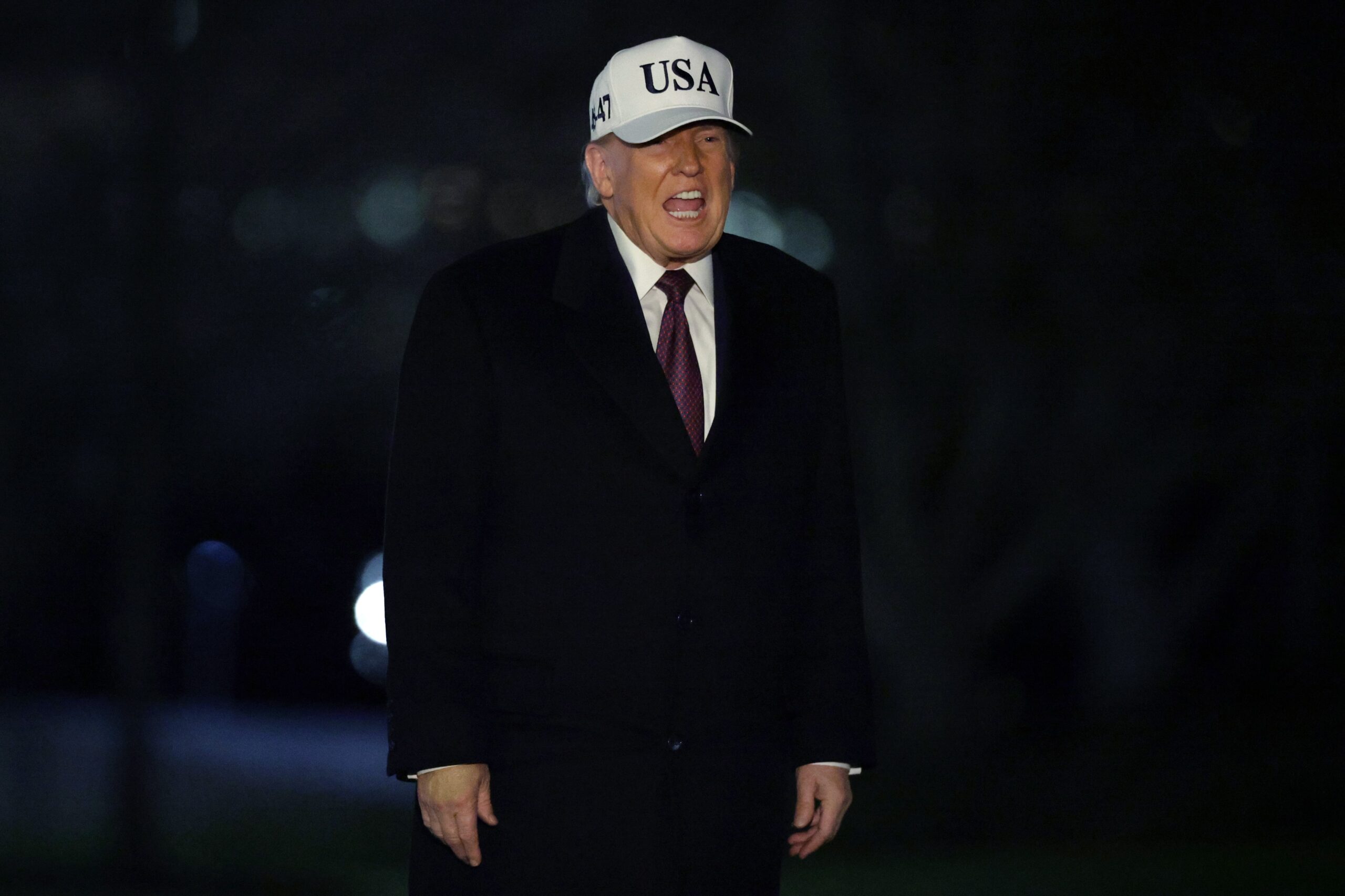
Donald Trump has intensified his rhetoric regarding a potential U.S. takeover of Greenland, a semiautonomous territory of Denmark, in a recent post on his social media platform, Truth Social. The former president, now 79 years old, has argued that the U.S. must secure Greenland for national security reasons, citing concerns about Russian and Chinese interests in the region. This position has been met with significant resistance from NATO and European leaders.
In his late-night message on October 15, 2023, Trump claimed that NATO has pressured Denmark for two decades to address the perceived Russian threat to Greenland. He stated, “Unfortunately, Denmark has been unable to do anything about it. Now it is time, and it will be done!!!” His comments come after a more extensive statement on October 14, where he threatened to impose a 10 percent import tax on eight European nations as a punitive measure for opposing his plans regarding the territory. This tariff would take effect on February 1, 2024, with a proposed increase to 25 percent starting on June 1, 2024.
Trump’s targeted nations include Denmark, Norway, Sweden, France, Germany, the United Kingdom, the Netherlands, and Finland. He described the current situation as “very dangerous for the Safety, Security, and Survival of our Planet,” asserting that these countries are engaging in a “very dangerous game” that poses a risk to global peace.
In response, NATO released a statement affirming their support for Denmark and the people of Greenland. The alliance warned of the “dangerous downward spiral” that Trump’s rhetoric could instigate. The statement emphasized their commitment to sovereignty and territorial integrity, noting that “Tariff threats undermine transatlantic relations and risk a dangerous downward spiral. We will continue to stand united and coordinated in our response.”
Danish Prime Minister Mette Frederiksen addressed Trump’s threats directly, stating, “We want to cooperate and we are not the ones seeking conflict. And I am happy for the consistent messages from the rest of the continent: Europe will not be blackmailed.” She underscored the importance of standing firm on the fundamental values that underpin the European community.
British Prime Minister Sir Keir Starmer engaged with NATO allies before discussing the matter with Trump. His office confirmed that he reiterated the priority of Greenland’s security, arguing that applying tariffs against allies for pursuing collective security is inappropriate.
On October 15, U.S. Treasury Secretary Scott Bessent did not rule out military action concerning Greenland. In an interview with NBC’s Meet the Press, he stated, “Greenland can only be defended if it is part of the U.S., and it will not need to be defended if it is part of the U.S.” He expressed confidence that European leaders would recognize this approach as beneficial for Greenland, Europe, and the United States.
The recent developments highlight ongoing tensions between the U.S. and its NATO allies, as well as the complexities of international relations surrounding Greenland, a territory rich in resources and strategic significance.