








































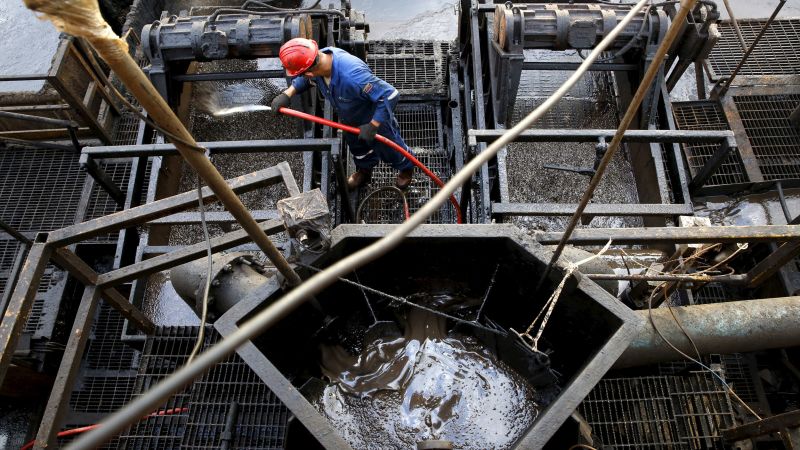
The Trump administration has laid out specific demands for Venezuela to meet in order to resume its oil production. According to two senior White House officials, these conditions were communicated during discussions led by US Secretary of State Marco Rubio with Venezuela’s interim president, Delcy Rodriguez. The administration has insisted that Venezuela sever ties with nations like China, Iran, Russia, and Cuba, while agreeing to partner exclusively with the United States on oil production.
Rodriguez must also commit to favoring the Trump administration and US oil companies in future oil sales. These demands followed the recent ousting of President Nicolás Maduro and come at a time when US officials believe Venezuela may only have a few weeks of economic viability without its oil revenues.
In addition to the oil-related demands, the White House is insisting that Venezuela conduct free and fair elections, release political prisoners, and dismantle drug gangs. Rubio indicated that the administration’s most immediate focus is on pushing Caracas to expel foreign adversaries and enhance cooperation on oil sales and counter-narcotics efforts.
While the administration has not disclosed whether Rodriguez has agreed to these demands, officials are confident that the significant military presence off the Venezuelan coast will compel her government to comply. If Rodriguez shows willingness to cooperate, a senior official mentioned that there is potential for the administration to reassess its sanctions policy against Caracas.
Trump has expressed to allies that his primary goal is to remove Iran, Russia, and China from the Western Hemisphere, viewing the pressure on Venezuela to cease business with these nations as a critical first step. The administration is also in the process of developing plans to facilitate substantial oil exports from Venezuela to the US, as well as strategies for rebuilding the country’s energy infrastructure.
Another key aspect of the administration’s strategy involves preventing Venezuela from selling oil to foreign adversaries. On a related note, Trump is expected to meet with oil executives, including representatives from Chevron, the only US oil company currently operating in Venezuela, and Exxon Mobil and ConocoPhillips, on Friday.
This meeting follows Trump’s announcement on social media that Venezuela’s interim government would be transferring between 30 and 50 million barrels of oil to the United States, which he stated will be sold at market price and under his control as President.
The unfolding situation remains fluid, as the Trump administration continues to navigate the complexities of Venezuelan politics and its implications for US foreign policy and energy needs.
























