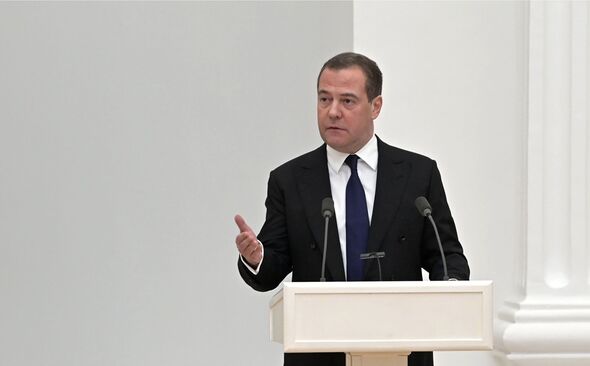
Vladimir Putin was reportedly nearing a decision to authorize the use of nuclear weapons following an alleged Ukrainian drone attack on his presidential residence in late December, according to Dmitry Medvedev, a prominent ally of the Russian leader. This assertion comes despite findings from Western intelligence agencies indicating that no such attack occurred, prompting accusations that the claim serves as a part of a broader Russian disinformation campaign.
Medvedev, who previously held the presidency from 2008 to 2012, articulated his concerns in an interview published by Kommersant, suggesting that the West is pushing Russia toward extreme military responses. He implied that such provocations could justify a retaliatory strike involving special weapons, including nuclear options. “These provocations continue. Remember what happened at the end of the year, when there was an attack on the Russian presidential residence using a massive number of unmanned aerial vehicles,” he stated.
Ukrainian officials swiftly rejected Medvedev’s claims, labeling the reports regarding a strike on the Kremlin leader’s residence on December 28–29 as “lies.” President Volodymyr Zelenskyy dismissed the narrative as a fabricated excuse for Russia’s ongoing military actions in Ukraine. He stated, “The Russians have come up with an obviously fake story about an alleged attack on the residence of the Russian dictator, so that they would have an excuse to continue their attacks on Ukraine, in particular on Kyiv.”
Ukrainian forces confirmed conducting drone strikes against legitimate military targets in the Novgorod region, which is located several dozen miles from Putin’s estate. This discrepancy highlights the tensions surrounding the narrative of aggression between the two nations.
Medvedev’s comments also included criticism of the Trump administration, accusing it of neglecting Russian proposals to renew the New START treaty governing nuclear arms control. This treaty is set to expire on February 5, 2024, marking a significant moment as it will be the first time since the early 1970s that the United States and Russia operate without binding limits on their strategic nuclear arsenals.
He argued that the collapse of arms control agreements is attributable to American bad faith rather than inherent failures of the treaties themselves. “The world is sliding toward an expanded nuclear arms race,” he warned. Medvedev emphasized that Russia would remain vigilant and prepared to counter any new threats to its security, stating, “New threats to our security will be promptly and firmly countered.”
He highlighted advancements in Russian military technology, mentioning systems such as the Burevestnik, Oreshnik, and Poseidon, underscoring a commitment to maintaining and enhancing Russia’s strategic capabilities.
The exchange of accusations and threats reflects the escalating tensions in the region, with both sides poised to continue their military strategies as they navigate a complex geopolitical landscape. The situation remains fluid, and the international community watches closely as developments unfold.