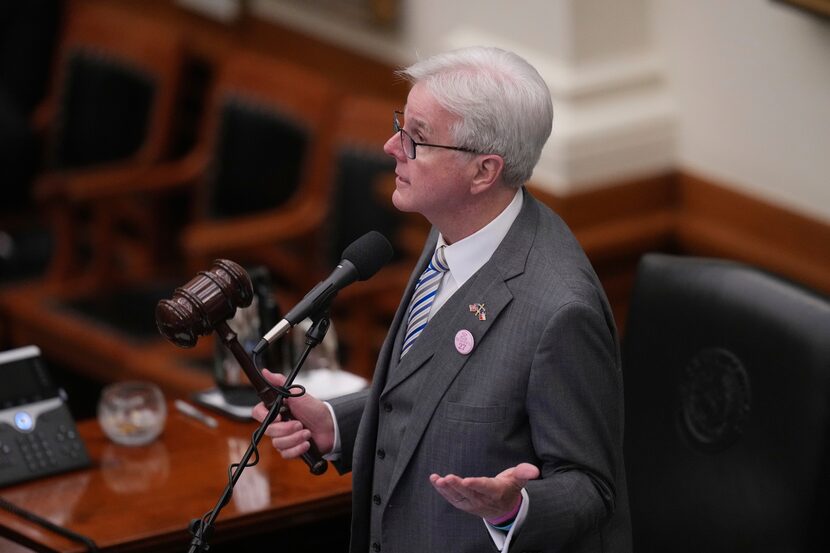
Controversy surrounds Dan Patrick‘s property tax plan as residents voice their opinions in letters to the editor. The plan, which proposes to lower the age for senior property tax exemptions to 55, has sparked a heated debate about its fairness and implications for different age groups. Critics argue that it disproportionately benefits older homeowners at the expense of younger families, a sentiment echoed by several Dallas residents.
In a letter to the editor, Will McCutcheon from Richland Hills expressed concern over the idea that Patrick’s plan would favor “the wrong end of the age spectrum.” He highlighted the challenges faced by Generation X, which includes balancing responsibilities for children, grandchildren, and aging parents. McCutcheon pointed out that waiting for tax relief until the age of 60 is oppressive, especially considering the longer life expectancies of today’s population. He argued that individuals who have lived responsibly should not be penalized with extended property tax burdens.
Another resident, Ken Duble, raised questions about the inequity in Patrick’s proposal. He noted that approximately 3.3 million of Texas’ 6.1 million homeowners would qualify for the reduced exemption, leaving 2.8 million younger homeowners to shoulder the financial burden. Duble emphasized that many homeowners aged 55 to 65 are often in their peak earning years and may not require as much financial relief as struggling young families.
As the debate on property taxes continues, discussions about the future of Dallas City Hall have also emerged. Former mayors Tom Leppert and Ron Kirk recently suggested that redeveloping the City Hall site could save downtown Dallas. Their opinion piece sparked disappointment among community members, who believe the focus should not solely be on City Hall as a solution to revitalizing the area.
In response, R. Lawrence Good argued that the City Hall site comprises only about 10 acres, while there are nearly 55 acres of land available for development nearby. He urged the City Council to decouple the decision regarding City Hall from the need for a new arena and to take the time to evaluate the city’s space needs more carefully.
The suggestions from Leppert and Kirk have drawn criticism, with some residents like Michael Amonett expressing skepticism about the effectiveness of a new arena in saving downtown. Amonett referred to previous developments, such as the American Airlines Center, questioning whether another big-ticket project would truly address the underlying issues facing the area.
The discussion surrounding the future of Dallas City Hall and the implications of Dan Patrick’s tax plan reflects a broader conversation about fairness and the needs of different age groups within the community. As residents navigate these complex issues, the outcomes may significantly impact the city’s economic landscape and the lives of its citizens.