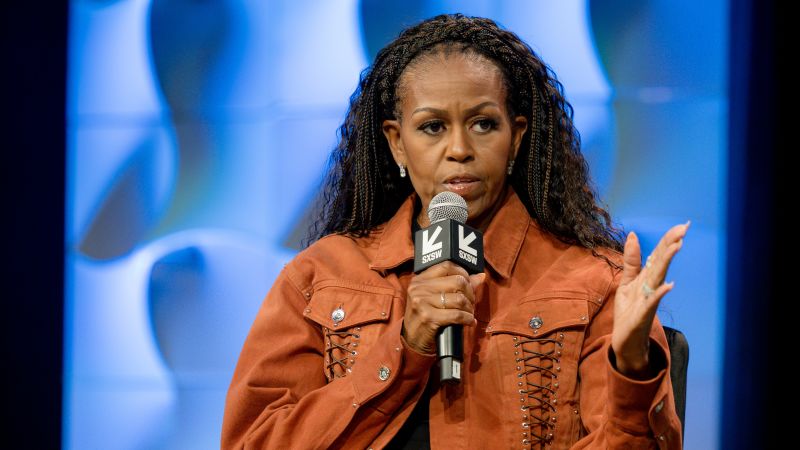
Former First Lady Michelle Obama clarified her earlier comments regarding the United States’ readiness for a female president during an interview on the popular podcast, Call Her Daddy, released on March 13, 2024. In the conversation, she expressed optimism about the country moving towards electing a woman to the highest office, despite her previous remarks suggesting that the nation may not yet be prepared for such a milestone.
Obama noted, “It takes time, right, so, but we’re moving. We are moving in that direction.” Her comments reflect a growing conversation around gender and leadership in American politics. Last year, while promoting her book, The Look, Obama had stated, “That’s why I’m like, don’t even look at me about running ‘cause you all are lying. You’re not ready for a woman.”
In her recent interview, she expanded on what it means for the nation to be ready for a female leader. When asked by host Alex Cooper about the steps necessary for acceptance of a woman in the presidency, Obama emphasized the importance of discussing societal attitudes towards women in leadership roles. She highlighted that there are still men who would not vote for a female candidate.
“There are men out there that were not gonna vote for a woman. You know, that … people have had those conversations, right. Let’s just be real about it and let’s put that on the table and talk about what’s that about,” she said. Obama encouraged a candid discussion about the barriers women face in politics, stating, “Let’s not be mad because I made the statement. Let’s look at the fact that we’ve had two really qualified female candidates.”
Obama referred to former Secretary of State Hillary Clinton, who ran for president and lost in both 2008 and 2016, and current Vice President Kamala Harris, who faced President Donald Trump in the 2024 election. She pointed out that the electorate’s preference for a newcomer over a well-established female figure was evident in the 2008 Democratic primary, where her husband, Barack Obama, defeated Clinton.
“My husband beat her. People were more comfortable with him as a newcomer, right,” she remarked. This observation sheds light on the complex dynamics of political candidacy and public perception.
Obama’s comments reflect a broader conversation about gender equality in politics, emphasizing the need to confront uncomfortable truths about societal biases. “We’ve had qualified women … There’s a falling shortness that is happening that I, you know, I’d say ‘Look, well why can’t we talk about that. Why are we pretending that that didn’t just happen?’”
As discussions about the future of female leadership in the United States continue, Obama’s insights may play a significant role in shaping public opinion and fostering a more inclusive political landscape. Her remarks serve as a reminder that while progress is being made, the journey toward gender parity in politics remains ongoing.