








































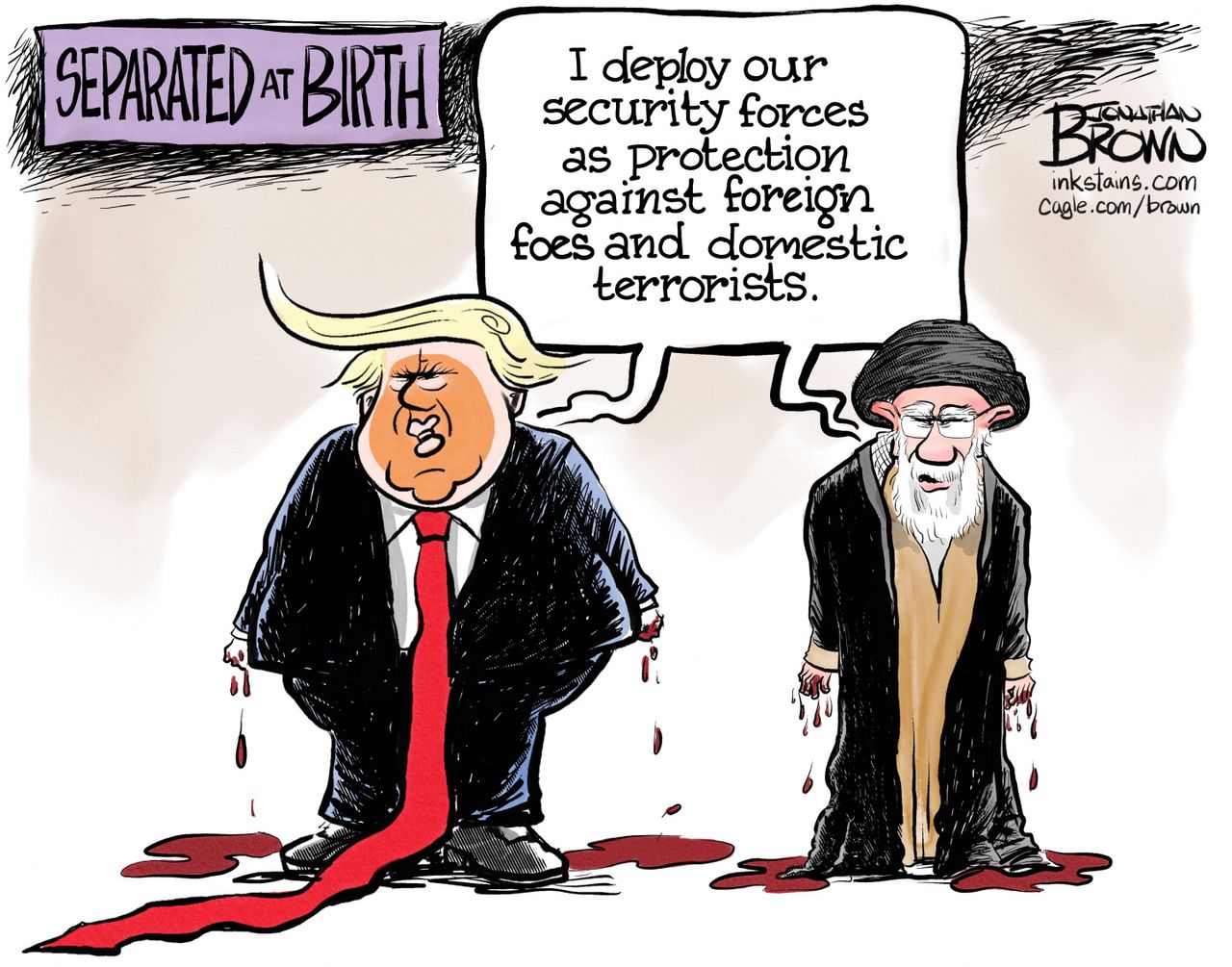
As protests continue across Iran, a series of powerful political cartoons have emerged, critically addressing the government’s violent crackdown on dissent. Artists like Jonathan Brown and Gary Varvel have used their platforms to depict the struggle for freedom, providing a visual commentary on the ongoing crisis that has captivated international attention.
The protests, which began in response to rising political and economic tensions, have become a rallying point for citizens seeking change. The Iranian government’s response has been marked by severe measures, leading to a significant loss of life and widespread injuries among demonstrators. In light of these events, political cartoons have served as both a form of resistance and a means of raising awareness globally.
Powerful Imagery Reflects Harsh Reality
Cartoonists like Graeme MacKay and Clay Jones have crafted works that encapsulate the despair and determination of the Iranian populace. Their illustrations often highlight the stark contrast between the government’s oppressive tactics and the people’s unwavering quest for justice.
For instance, one notable cartoon by Nick Anderson depicts a lone figure standing in defiance against a backdrop of chaos, symbolizing the courage of those who continue to protest despite the dangers. These images resonate deeply, capturing the emotional weight of the protests and the resilience of the Iranian people.
Furthermore, the cartoons have sparked discussions on social media, reaching a broad audience and prompting conversations about human rights issues in Iran. The international community has been urged to pay attention to the situation, and these visual narratives play a critical role in keeping the dialogue alive.
Art as a Form of Protest
Political cartoons have long been a staple of social commentary, but in times of crisis, they become even more significant. The work of these artists not only entertains but also informs and inspires action. As the situation in Iran evolves, their illustrations continue to serve as a powerful reminder of the human cost of oppression.
The influence of these cartoons extends beyond borders, as they symbolize solidarity with Iranian protesters. They encourage viewers worldwide to reflect on their own freedoms and the importance of standing against tyranny. In a digital age where art can transcend geographical boundaries, these cartoons become vital tools for advocacy and awareness.
Through the lens of humor and satire, the artists convey serious messages that resonate with audiences, challenging them to consider the implications of the Iranian government’s actions. As protests persist, the role of political cartoons remains essential in shaping public perception and fostering empathy for those affected by the crackdown.
In conclusion, the ongoing protests in Iran and the accompanying artistic responses underscore the power of visual storytelling in times of crisis. As the world watches, artists continue to document the struggles and hopes of a nation yearning for change, reminding us all of the enduring power of art as a form of protest.
























