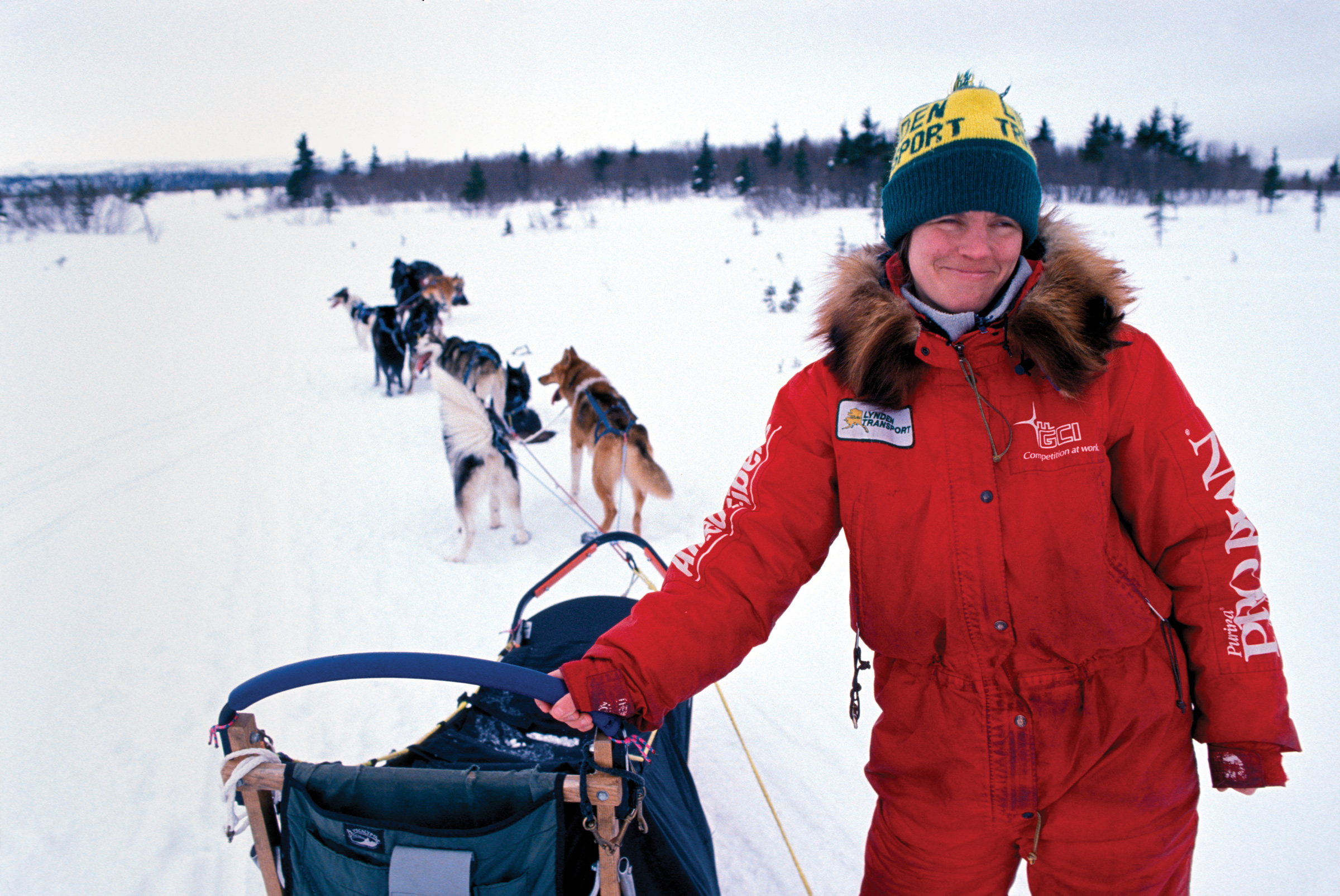
Susan Butcher, a trailblazer in the world of sled dog racing, showcased that compassion and mutual trust are fundamental to success in the Iditarod. This message resonates deeply within the sport, where the relationship between musher and dog has evolved over the years.
Butcher, who won the Iditarod four times, first captured national attention in the late 1980s. During a stop at the Brown’s Lodge in Unalakleet, Alaska, she was surrounded by admirers, including a young girl named Laureli Ivanoff, who was captivated by Butcher’s presence. At just ten years old, Laureli struggled with shyness as she watched the celebrated musher interact with fans, illustrating the powerful influence Butcher had on those around her.
In March 1986, Butcher made headlines when she became the first person to win three consecutive Iditarod races, ultimately securing four championships in her career. She was a figure who challenged the norms of a male-dominated sport, proving that determination and care could forge a winning path. Her approach contrasted sharply with the perceptions of some traditionalists who criticized her for being too nurturing towards her dogs.
Despite the backlash, Butcher’s legacy endures. She demonstrated that success in the Iditarod is not solely dependent on physical strength or aggressive tactics, but rather on building a bond of trust with the dogs. Her understanding of their needs—both physical and emotional—became a hallmark of her racing philosophy.
In the years following her victories, the culture surrounding mushing began to shift. The treatment of sled dogs is now regarded with greater respect and care, transforming how teams prepare for the grueling 1,000-mile race across Alaska. Butcher’s influence contributed to this evolution, emphasizing that nurturing relationships can lead to extraordinary results.
The Iditarod itself, established in 1973, is a significant event that marks the arrival of spring for many Alaskans. Each year, teams traverse through Unalakleet, which is positioned 775 miles into the race. The first musher to reach this checkpoint is honored with a prize of $3,000 in gold nuggets, awarded in a ceremony that draws community members and media alike.
Butcher’s journey in the sport serves as a reminder of the impact one individual can have. Her legacy continues to inspire new generations of mushers, particularly women, who see in her a model of strength and resilience.
As spring approaches, many recall the moments of excitement that the Iditarod brings. For some, like Laureli Ivanoff, those memories are intertwined with the lessons learned from Butcher’s life. Her ability to redefine expectations and success through care and trust stands as a powerful example for all, particularly in a world often characterized by the need for control and dominance.
Reflecting on Butcher’s approach, it becomes clear that her methods not only led to victories but also transformed the racing community’s perspective on animal treatment. As the Iditarod progresses each year, her influence remains palpable, reminding all involved that true leadership lies in understanding, empathy, and nurturing relationships.