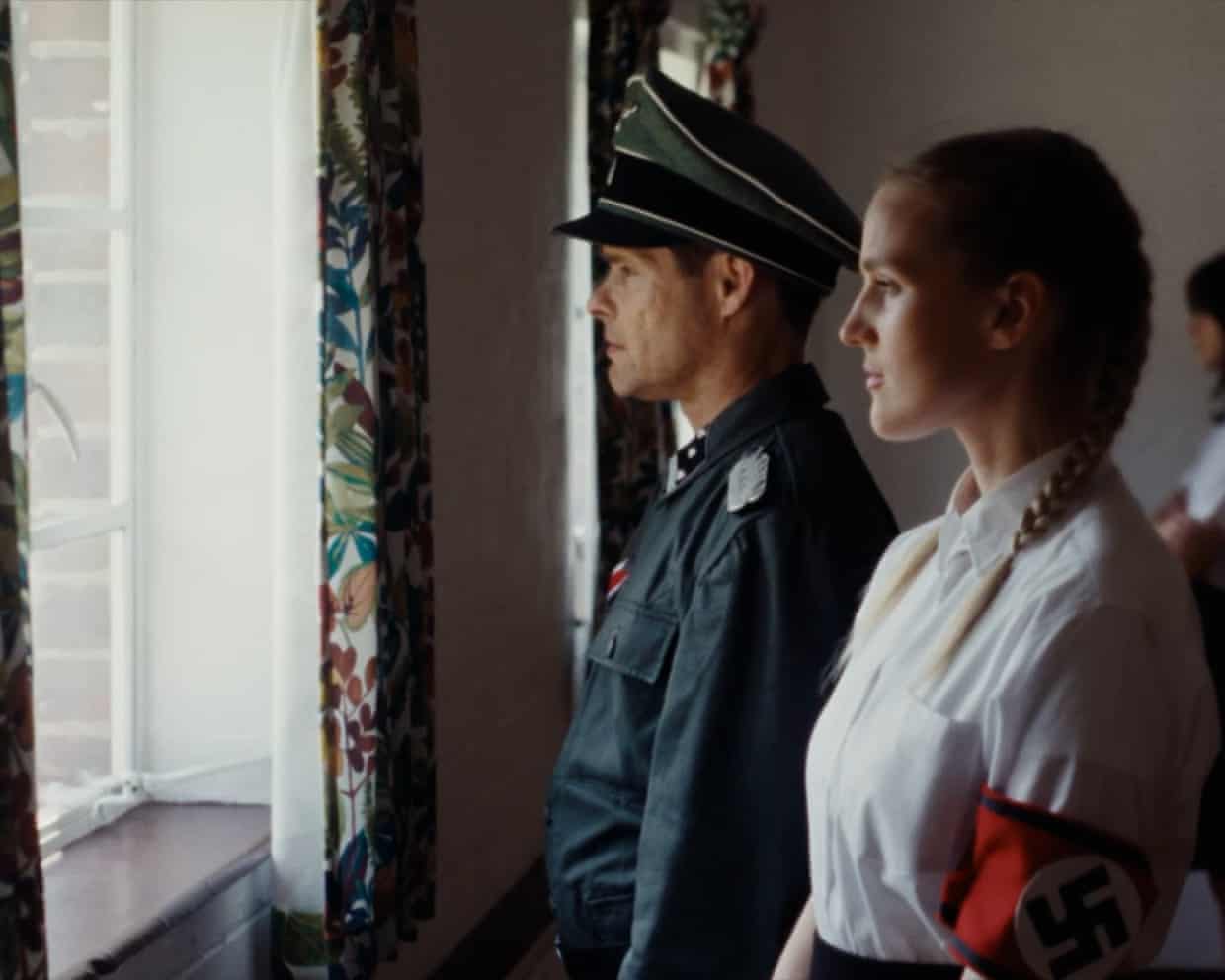
The film Aryan Papers, which delves into the dark realities of the Holocaust, has been criticized for its lack of depth and execution, leaving audiences disappointed. Directed by Danny Patrick, the film is set in 1942 near Stuttgart and centers around the controversial Lebensborn programme aimed at breeding Aryan babies. Despite the serious subject matter, the film’s execution has raised eyebrows, with many deeming it a significant misstep.
The film’s title echoes an unrealized project initially envisioned by filmmaker Stanley Kubrick, which he abandoned due to concerns about its commercial viability after the release of Schindler’s List. In contrast, Patrick’s adaptation has been met with harsh critiques for its lack of coherence and production quality. Observers note that the film suffers from a disjointed narrative structure and poorly executed production values, rendering it difficult for viewers to follow the storyline.
Set against the backdrop of Nazi Germany, the film follows characters involved in the Lebensborn initiative, which aimed to pair vetted young women with Nazi officers. One of these women, Gisella (portrayed by Celia Learmonth), embarks on a dangerous mission to smuggle two Jewish teenagers, Benjamin (played by Jacob Ogle) and Judith (played by Niamh Ogle), to safety. The film’s antagonist, Helga, portrayed by Leona Clarke and Cara Chase, adds tension but is criticized for a lack of believable motivation.
Critics have pointed out several glaring issues, including an incoherent timeline exacerbated by Patrick‘s fractured editing style. The film’s set design and props, which include anachronistic elements like a modern plastic bin, detract from its authenticity. Performance quality has also been described as lacking, with many actors delivering lines in a manner that feels unpolished and rehearsed.
Despite the film’s earnest intentions, it has been labeled as a failure on multiple levels. Reviewers have expressed that the production does not do justice to the gravity of its subject matter. Some view it as an insult to Holocaust victims, arguing that it trivializes their experiences through inadequate storytelling and execution.
Scheduled for release on digital platforms starting January 26, 2024, Aryan Papers may find it challenging to garner interest given the overwhelmingly negative feedback it has received thus far. As audiences reflect on this film, the hope remains that future projects will better honor the historical narratives they seek to portray.