








































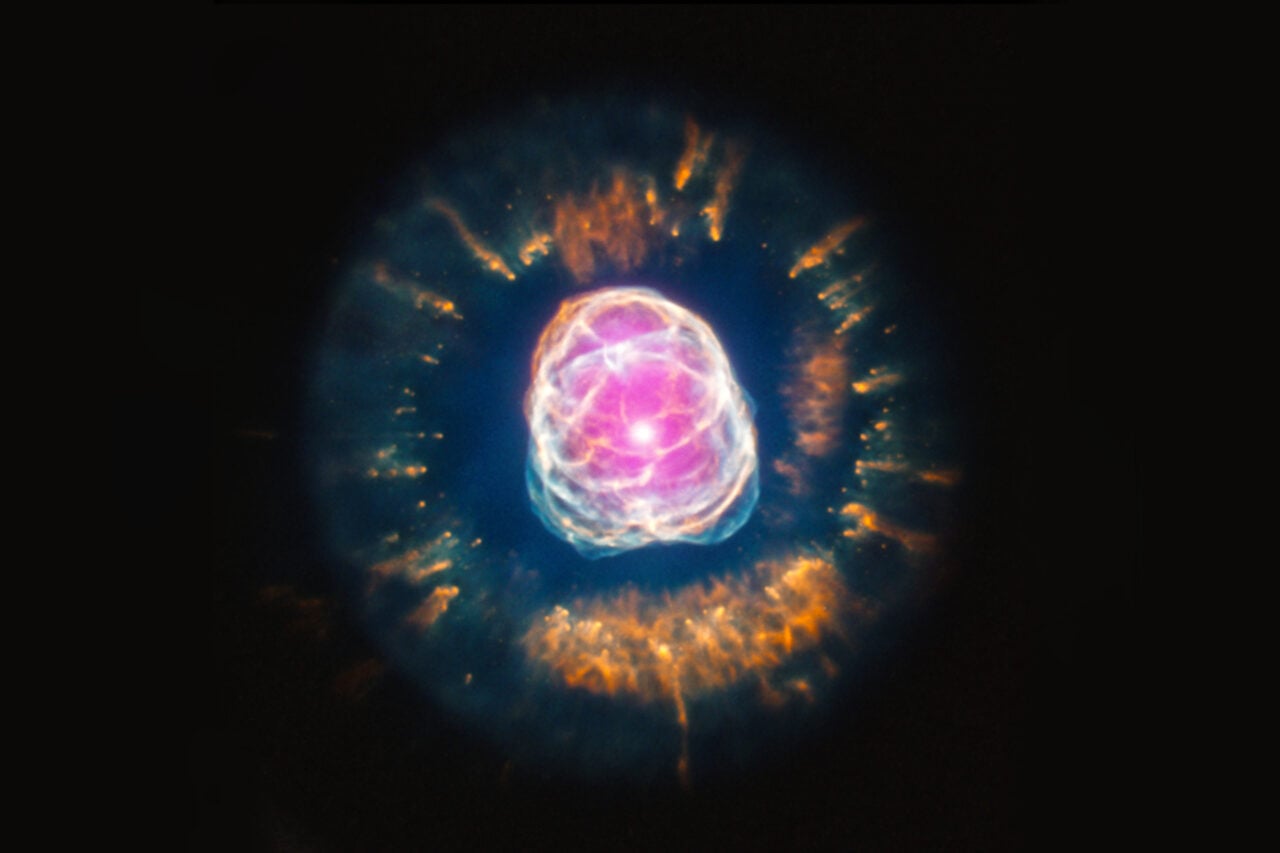
Astrophysicists at the University of British Columbia have proposed a new perspective on the search for dark matter by examining white dwarfs, a type of stellar remnant commonly referred to as ‘zombie stars.’ Their analysis, detailed in a recent preprint on arXiv, investigates the potential connection between these dead stars and axions, a theoretical particle considered a prime candidate for dark matter. While the study does not provide evidence for axions, it opens important avenues for future research.
The concept of axions dates back to 1977, initially proposed to address a persistent imbalance between matter and antimatter in the quantum realm. Despite numerous attempts, scientists have struggled to detect these elusive particles, which are theorized to have a low mass and weak interactions with other matter. Some estimates suggest that approximately 85% of the universe is composed of dark matter, which remains largely invisible and undetectable, further complicating efforts to confirm the existence of axions.
White dwarfs are the dense remnants left after stars exhaust their nuclear fuel. These stellar cores typically resist collapse due to a phenomenon known as electron degeneracy pressure, which arises because electrons cannot occupy the same energy state. As the electrons within a white dwarf move, they generate enough pressure to counteract gravitational collapse, maintaining the star’s structural integrity.
Potential Axion Formation in White Dwarfs
The research team suggests that the fast-moving electrons within white dwarfs could potentially facilitate the formation of axions. They noted that some observations indicate certain white dwarfs cool more rapidly than expected. If these stars were actively producing axions, it could explain the unexpected energy loss, as axions escaping the star would drain residual energy.
To investigate this hypothesis, the researchers utilized archival data from the Hubble Space Telescope and conducted simulations to determine how axions might affect the thermal dynamics of white dwarfs. They developed predictions regarding the temperature and age of these stars with and without the influence of axions. After running their experiments, the team compared their theoretical calculations against actual data from 47 Tucanae, a globular cluster known for its population of white dwarfs.
The findings, however, did not yield the anticipated evidence of axion-induced cooling. Despite this setback, the researchers established a new limit on the likelihood of electrons producing axions, estimating the interaction to occur roughly once in every trillion chances.
Implications for Future Research
While the results may not confirm the existence of axions, they contribute to the broader understanding of dark matter and its potential constituents. As noted by Paul Sutter, an astrophysicist at Johns Hopkins University who was not involved in the study, “This result doesn’t rule out axions entirely, but it does say it’s unlikely that electrons and axions directly interact with each other.” He emphasized that the search for axions will require more innovative approaches moving forward.
The exploration of white dwarfs in relation to dark matter continues to be a vital area of research. As scientists refine their methods and deepen their understanding of these cosmic phenomena, the quest to unveil the mysteries of dark matter remains one of the most compelling challenges in modern astrophysics.
























