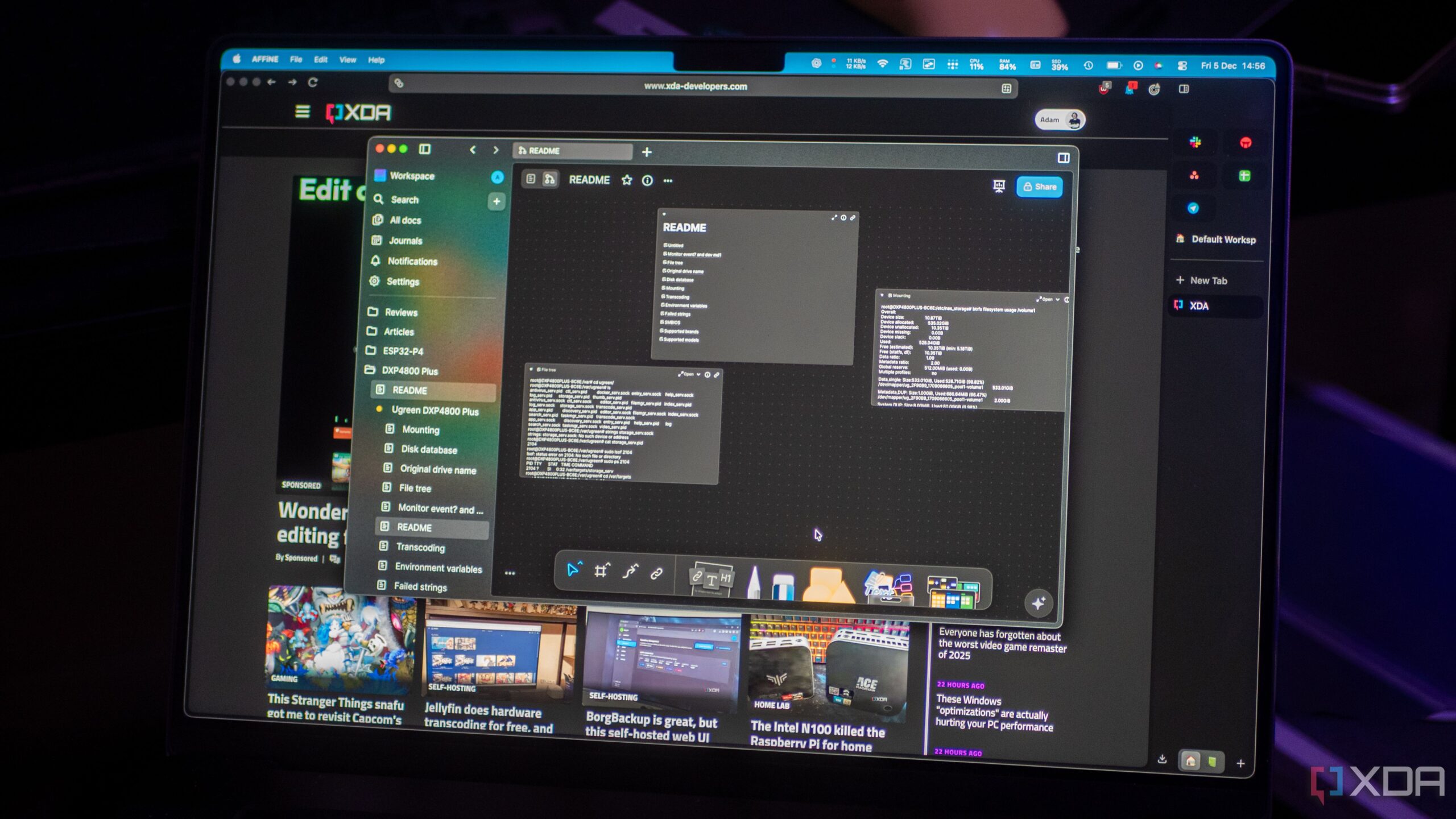
URGENT UPDATE: A tech enthusiast has made headlines by switching from Obsidian to Affine, reporting significant improvements in their note-taking experience. This transition, initiated after a conversation at Maker Faire Shenzhen, highlights the growing interest in Affine as a viable alternative to Obsidian.
The user, who has a long history with Obsidian, was initially skeptical about Affine. However, after fully migrating their notes, they discovered that Affine offers a fresh approach to note management, combining features of traditional Markdown note-takers with the flexibility of modern tools.
The key difference lies in Affine’s design philosophy. While Obsidian is known for its minimalist interface and extensive plugin ecosystem, Affine emphasizes a more integrated workspace. This allows users to blend documents, whiteboards, and databases seamlessly. As the user pointed out, “Affine doesn’t try to imitate Obsidian at all; the differences are immediately obvious.”
One standout feature is Affine’s “whiteboard” mode, which enables users to incorporate sketches and diagrams directly into their notes. This is a significant upgrade for those who require dynamic note-taking capabilities. The user highlighted a specific instance where Affine’s synchronization process outperformed their previous CouchDB setup with Obsidian. “I added to a note from my phone while offline, and when I reconnected, it merged perfectly with my laptop version,” they noted.
The user self-hosted Affine using Docker and has combined it with Tailscale for secure remote access. They noted the installation process was surprisingly smooth, contrary to expectations for smaller open-source projects. “Caddy manages SSL, and Unbound handles local DNS, making everything hassle-free,” they explained.
Despite acknowledging Obsidian’s strengths, especially for text-driven workflows, the user emphasized that Affine fits their needs better. “I spend less time managing configurations and more time actually writing and organizing my ideas,” they stated. This shift in focus has led to increased productivity and satisfaction with their note-taking process.
While the user is not criticizing Obsidian’s plugin ecosystem, they found it to be a source of distraction. “I can just write with Affine,” they said, underscoring the tool’s ability to streamline their workflow.
For those contemplating a switch, the user advises that Affine may be particularly beneficial for individuals who experience frustration with syncing issues or plugin dependencies. “If you find yourself managing your note-taking system more than using it, Affine might be worth exploring,” they urged.
As the tech community continues to evolve, this switch from Obsidian to Affine represents a broader trend of users seeking tools that align with their workflows rather than simply opting for the most feature-rich options. With the self-hosted setup being straightforward and a strong focus on local data control, Affine is positioning itself as a strong contender in the note-taking landscape.
This development is not just a personal preference; it reflects a significant shift in how users engage with technology to meet their needs. As more individuals explore Affine, the ongoing discourse around the best note-taking solutions will likely intensify.
Stay tuned for more updates as this story develops, and consider testing Affine for yourself—you might find it surprisingly effective.