








































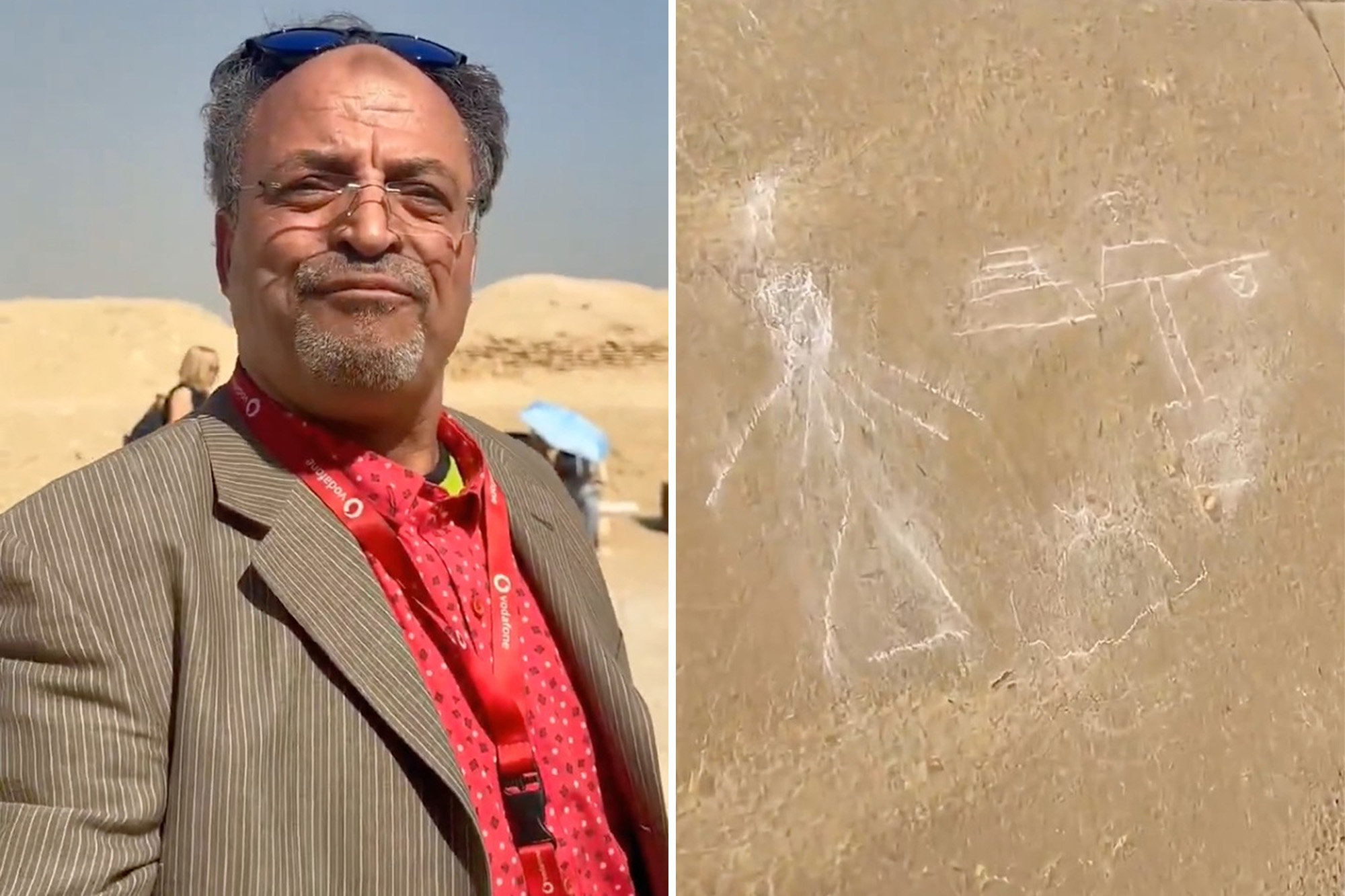
A tour guide in Egypt was arrested after he drew a stick figure on the side of the ancient Pyramid of Unas, which dates back approximately 4,000 years. The incident occurred while he was leading a group of tourists through the site, as he passionately discussed the history of the pyramid. A video shared by the Egyptian Ministry of Interior captured the moment when the male guide made the drawing on the pyramid’s outer casing, located on its lowest side.
Following the act, the guide attempted to erase the sketch but was unsuccessful, as shown in the footage. Authorities were alerted to the situation when a report indicated that an antiquity had been damaged. In response, police apprehended the suspect for violating Egyptian law. The ministry stated that he “confessed to committing the incident as described,” and the sketch was subsequently removed by “the competent authorities.”
Legal Consequences for Defacing Antiquities
Legal measures have been initiated against the tour guide, although the ministry did not disclose further details regarding the proceedings. Under Egypt’s 1983 Antiquities Law, individuals who deface an antiquity can face imprisonment for a minimum of one year and a fine of up to 500,000 Egyptian pounds, equivalent to around $10,400.
The Pyramid of Unas is located about 32 kilometers from the Pyramids of Giza and holds significant historical value. It is renowned for containing some of the earliest-known examples of Pyramid Texts. These inscriptions, numbering over 200, were carved to ensure the protection and resurrection of the Egyptian pharaoh Unas, the ninth and final king of the Fifth Dynasty.
Constructed in the 24th century BC, the pyramid was built in anticipation of Unas’ death. This period marked a cultural shift in ancient Egypt, emphasizing the worship of the sun god, Re, and leading to the creation of numerous sun temples.
The incident involving the tour guide highlights the ongoing challenges of preserving Egypt’s invaluable archaeological heritage. As tourism continues to play a crucial role in the Egyptian economy, authorities remain vigilant in enforcing laws designed to protect the nation’s antiquities.
























