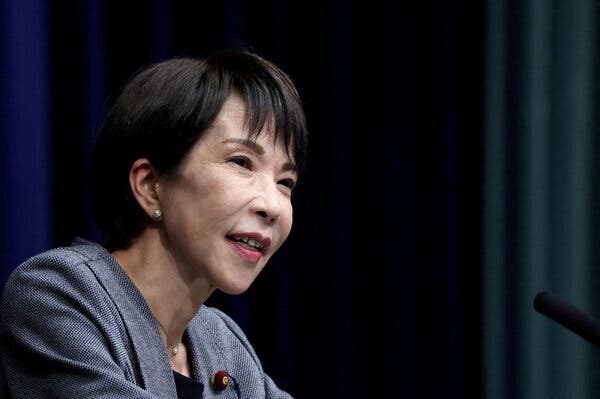
On Monday, Sanae Takaichi, Japan’s Prime Minister, announced her decision to dissolve Parliament and call for a snap election. This move aims to bolster her authority and rejuvenate the prospects of her party, the Liberal Democratic Party (L.D.P.). The election is scheduled for February 8, 2024, following the House of Representatives’ regular session on Friday.
In her statement during a news conference in Tokyo, Takaichi expressed, “I believe that the only option is for the people, as sovereign citizens, to decide whether or not Sanae Takaichi should be prime minister.” This marks a significant gamble early in her tenure, as she seeks to strengthen her political position and address the challenges facing her administration.
Political Risk and Potential Gains
The decision to call for an early election is one of the most consequential moves of Takaichi’s leadership. While she aims to secure additional parliamentary seats to facilitate her economic and security agenda, the risk of losing critical seats looms large. Analysts warn that a significant defeat could undermine her authority and hinder her ability to implement key policies.
Despite these risks, some observers believe Takaichi’s bold approach could reinvigorate the L.D.P. and help her gain the legislative support needed to advance her plans. Mireya Solís, director of the Center for Asia Policy Studies at the Brookings Institution, noted, “She wants to seize the momentum and strengthen her hand at home and on foreign policy.”
As Japan’s first female prime minister, Takaichi’s leadership is under close scrutiny. If the L.D.P. were to suffer a major setback, her position as prime minister could be jeopardized. Nevertheless, political analysts suggest that while the stakes are high, a scenario of significant defeat remains unlikely.
Takaichi’s conservative policies have already drawn both support and criticism within the political landscape. Her approach indicates a desire to consolidate power and ensure that her vision for Japan is realized. The coming weeks will be critical as she navigates the complexities of a snap election, with potential implications for Japan’s domestic and foreign policies.