








































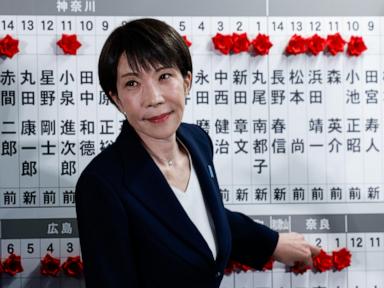
Japanese Prime Minister Sanae Takaichi has launched a significant shift in policy direction following a decisive election victory that granted her party a two-thirds supermajority in the lower house of parliament. On Monday, Takaichi began implementing her agenda aimed at transforming Japan’s security, immigration, economic, and social policies. This comes after the Liberal Democratic Party (LDP) secured a record 316 seats in the 465-member lower house, surpassing the absolute majority of 261 seats necessary for control.
In the recent elections held on February 4, 2024, Takaichi’s LDP, along with its new ally the Japan Innovation Party (JIP), formed a coalition that achieved a total of 352 seats. Takaichi celebrated the success at LDP headquarters, noting this outcome as a significant endorsement of her leadership. Her immediate focus includes reappointing her Cabinet, advancing a delayed budget, and preparing for the votes next week that will secure her position as prime minister.
Takaichi, who became Japan’s first female leader in October 2023, expressed her commitment to making Japan stronger and more prosperous. In an interview with NHK, she emphasized her intention to work collaboratively with opposition parties while pursuing her policy goals. “I will be flexible,” she stated, highlighting her approach to governance.
The LDP’s recent electoral success is particularly notable given its history of scandals in recent years, including funding and religious controversies. Takaichi’s strategy involved calling for early elections just three months into her tenure, capitalizing on her popularity to shift the political landscape in favor of conservative policies.
Despite lacking a majority in the upper house, Takaichi’s commanding lead in the lower house positions her to advance her policy objectives, especially as tensions with China escalate and relations with the United States remain critical. She aims to revise Japan’s security and defense policies by December 2024, which includes lifting a ban on weapons exports and enhancing military capabilities.
Takaichi is also advocating for stricter immigration policies and enhanced measures to address economic security, in response to rising costs and stagnant wages. Her proposals have garnered mixed reactions; while some citizens welcome a shift towards conservatism, others express concern over potential civil rights implications stemming from her policies.
The opposition, comprising the LDP’s former coalition partner, the Buddhist-affiliated Komeito, and the liberal-leaning Constitutional Democratic Party of Japan, is projected to see a significant decrease in their combined seat count. This fragmentation has hindered their ability to challenge Takaichi’s government effectively.
In a show of international support, former U.S. President Donald Trump congratulated Takaichi on her electoral success via a post on his Truth Social platform, describing her as a “highly respected and very popular leader.” This endorsement underscores the global implications of Takaichi’s policies, particularly in relation to regional security dynamics.
As Takaichi prepares to reconvene the lower house in mid-February, her administration faces the pressing task of addressing economic measures and potential budgetary constraints. Political analysts have noted that while her rightward shift may resonate with certain voter bases, it could also complicate diplomatic relations, particularly with South Korea, due to historical tensions stemming from Japan’s wartime past.
In her campaign speeches, Takaichi emphasized the need for government spending to bolster “crisis management investment and growth.” She seeks to implement tougher measures on immigration, including stricter requirements for foreign property ownership and a cap on foreign residents.
Critics warn that Japan’s political landscape may prioritize electoral survival over substantive policy outcomes, raising concerns about the government’s ability to enact necessary reforms. As Takaichi embarks on this ambitious agenda, the coming months will be crucial in determining the trajectory of Japan’s domestic and foreign policies.
























