








































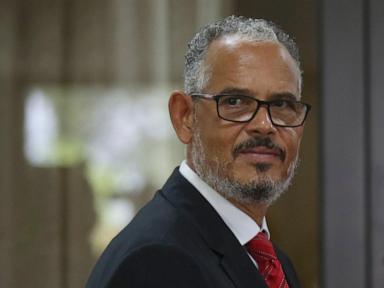
Haiti’s presidential council officially dissolved on February 3, 2024, after a tumultuous nearly two-year tenure alongside Prime Minister Alix Didier Fils-Aimé, who is expected to remain in power as the nation prepares for its first general elections in a decade. The council’s disbandment follows significant internal strife and external pressures, including a notable U.S. naval presence in the region.
The dissolution occurred just days after the U.S. deployed a warship and two Coast Guard boats near Port-au-Prince, where gangs currently exert control over 90% of the capital. Analyst Diego Da Rin from the International Crisis Group commented, “The naval presence appears to provide the latest proof of Washington’s willingness to use the threat of force to shape politics in the Western Hemisphere.”
In late January, two prominent members of the council announced that a majority had voted to oust Fils-Aimé, defying calls from the U.S. government to maintain political stability. Following this, the U.S. issued visa revocations for four unidentified council members and a Cabinet minister. Ultimately, the plan to dismiss Fils-Aimé did not materialize, as the council stepped down during an official ceremony.
Outgoing council president Laurent Saint-Cyr emphasized the need to prioritize security over personal interests, stating, “We need to put our personal interest to the side and continue progress for security.” Fils-Aimé briefly addressed the nation, asserting, “The presidential council has done its work by paving the way for a governance mindful of security and electoral issues.”
Negotiations are ongoing regarding the future governance structure, particularly as a new multinational security mission is set to replace a U.N.-backed mission led by Kenyan police that has faced staffing and funding challenges. Da Rin highlighted the importance of clarity in governance, noting, “Countries contributing to this force will want to know they are working alongside a government whose legitimacy is undisputed.”
February 7 marks a significant date in Haiti’s history, commemorating the onset of democratic rule following nearly 30 years of dictatorship. However, the country failed to hold scheduled general elections on this date, largely due to rampant gang violence affecting much of the capital and surrounding regions. Although tentative dates for elections have been proposed for August and December, skepticism remains about their feasibility.
The council was established in April 2024, nearly three years after the assassination of President Jovenel Moïse, an event that plunged Haiti into chaos. Following Moïse’s death, former Prime Minister Ariel Henry was unable to return to Haiti due to security threats posed by gang coalitions, which had attacked critical state infrastructure, forcing the main international airport to close for almost three months.
Despite pledging to quell gang violence and improve living conditions in Haiti, the council has been criticized for its inability to address the growing power of criminal gangs. Da Rin noted, “The government has been unable to push back criminal gangs that control most of Port-au-Prince and have expanded into other areas.” Additionally, allegations of corruption have tarnished the council’s reputation, with accusations of bribery against three members in late 2024.
As the council stepped down, André Joseph, a 42-year-old street vendor selling candy outside government offices, expressed his relief. Living in a makeshift shelter as one of the 1.4 million people displaced by gang violence, he said, “Their time is up. They were there nearly two years and didn’t do anything for the country. Haiti needs to move on with a better government in charge that could lead the country into a better direction.”
The future of Haiti remains uncertain as the country grapples with escalating violence and a power vacuum following the council’s dissolution. As discussions continue regarding the establishment of a new governance structure and the upcoming elections, the international community watches closely, hoping for a resolution that can restore stability to the troubled nation.
























