








































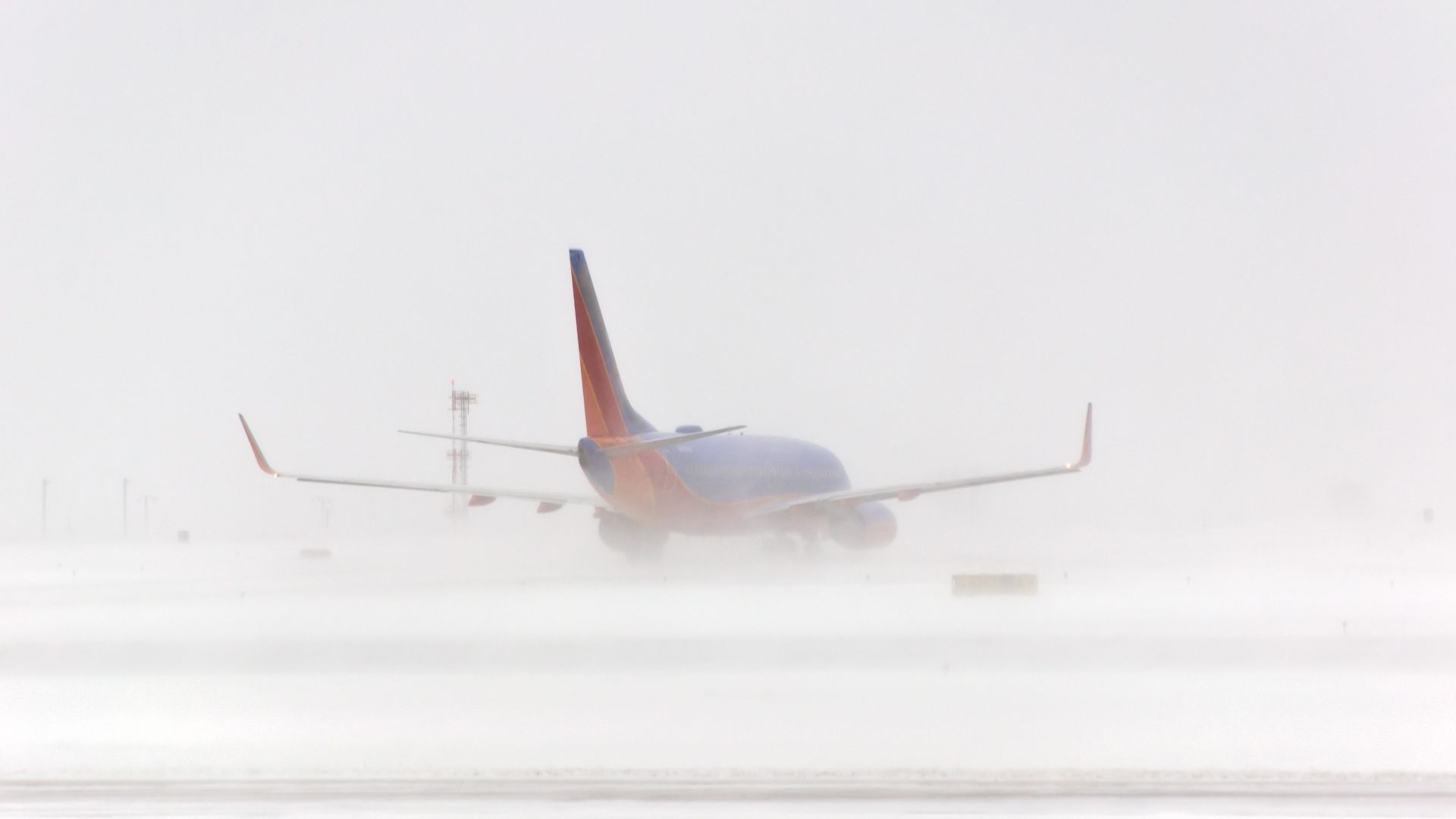
A severe winter storm that impacted much of the United States over the weekend resulted in over one million people losing power and at least 25 fatalities. The storm, named Winter Storm Fern, also caused nearly 20,000 flight cancellations, according to NPR. The Department of Transportation (DOT) anticipates a return to normal flight operations by midweek, following significant disruptions to air travel.
On Sunday alone, more than 5,000 flights faced delays, and the situation worsened on Monday with approximately 4,500 cancellations and nearly 2,500 delays, as reported by WNEP. The storm deposited over 2.5 feet (76 cm) of snow across various states in the Eastern United States, with many regions receiving at least one foot of snow. This event marked the most significant air travel disruption since the onset of the COVID-19 pandemic, where, on March 30, 2020, nearly half of all scheduled departures were cancelled across the country.
Airlines like American Airlines and JetBlue were significantly affected, with the former cancelling about 25% of its scheduled flights while the latter cancelled nearly half of its itineraries on Monday. Despite the extensive cancellations, there were no emergency incidents involving commercial aircraft. However, a private flight operating a Bombardier Challenger 650 tragically crashed at Bangor International Airport (BGR) in Maine on Sunday. The aircraft was carrying between nine and eleven passengers. The Federal Aviation Administration (FAA) will be conducting an investigation alongside the National Transportation Safety Bureau (NTSB). Bangor Airport police Sergeant Jeremy Brock confirmed that all individuals on board are presumed deceased.
The storm’s widespread impact extended beyond aviation, as ice, sleet, and snow affected regions as far west as New Mexico. Affected states included Texas, Louisiana, Mississippi, Tennessee, Kentucky, Virginia, and Georgia, where power outages were prevalent. While some residents have had their power restored, many continue to face challenges in receiving assistance due to the unprecedented nature of the storm. This winter weather is particularly unusual for states that do not typically experience such heavy snowfall, leaving them ill-prepared.
Severe Weather Conditions Disrupt Travel
As snowfall continues in the Northeast, the National Weather Service (NWS) has issued warnings regarding persistent frigid temperatures affecting more than half of the Eastern states throughout the week. Major airports such as Ronald Reagan Washington National Airport (DCA) and LaGuardia Airport (LGA) experienced significant disruptions, with DCA effectively closed despite operational lighting and LGA grounding around 90% of its flights. Baltimore Washington International (BWI) and Raleigh-Durham International (RDU) faced similar cancellation rates.
Challenges in air travel during severe winter conditions are numerous. Ice or frost accumulation on aircraft wings can dramatically disrupt airflow, reducing lift and increasing drag. Even a thin layer of frost can prevent a plane from taking off at normal speeds or lead to a stall shortly after departure. Additionally, heavy snowfall can reduce visibility below 1,000 meters, complicating pilot navigation during critical takeoff and landing phases.
Airlines and airports utilize various strategies to manage winter weather, but storms of this magnitude often overwhelm their resources. Emergency Operations Centers (EOCs) are activated at major hubs to coordinate snow removal and equipment sharing. To alleviate terminal congestion, many airlines waived change and cancellation fees, encouraging passengers to rebook for later travel dates.
Aircraft must be entirely free of snow, ice, or frost prior to takeoff. De-icing teams utilize heated fluids to clear contaminants, a process that is time-sensitive. If an aircraft cannot take off within approximately 15 minutes after de-icing, it must undergo the procedure again. Many airports found their ground crew overwhelmed as the severity of the snowfall and icing exceeded their operational capacity, resulting in further delays and cancellations.
With the DOT’s expectations for a return to normalcy by midweek, the air travel sector hopes to recover from one of the most significant weather-related disruptions in recent history. As the recovery process unfolds, authorities and airlines continue to monitor the situation closely, prioritizing passenger safety and operational efficiency.
























