








































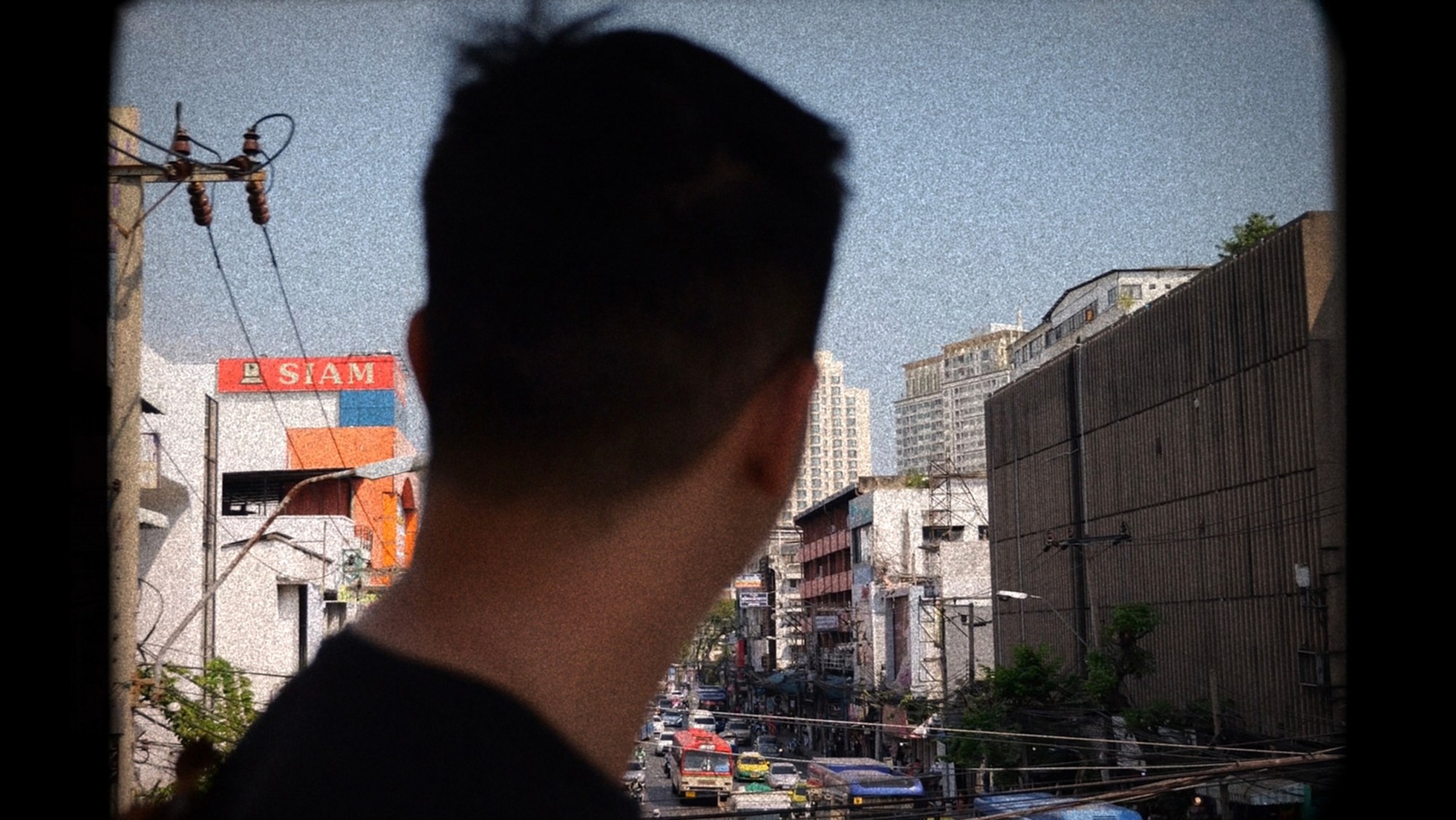
The film *Unerasable!*, directed by the pseudonymous filmmaker Socrates Saint-Wulfstan Drakos, premiered at the International Film Festival Rotterdam (IFFR) on February 4, 2024. The film tells the poignant story of an independent filmmaker, known as CP, who faced violent repression in his Southeast Asian homeland and subsequently lived in exile. Through this work, Drakos highlights the challenges faced by displaced individuals and the struggle to maintain their narratives amidst adversity.
At IFFR, *Unerasable!* was featured in the Tiger Competition, showcasing the film as a heartfelt exploration of exile and memory. The film has been characterized as “an urgent, courageous, and poetic bricolage diary” that captures the harrowing journey of CP, who was tortured for his involvement in pro-democracy activities. After fleeing to Thailand in 2018, he encountered further obstacles in his quest for a dignified life in the West, including bureaucratic hurdles.
In a recent interview, Drakos shared insights into the film’s creation and its deep personal significance. The connection between the filmmaker and CP dates back a decade, when they were both emerging talents in the film industry. Drakos recalled, “Suddenly, in 2018, he disappeared and did not get in touch with anyone among our filmmaking community.” After years of silence, CP reached out in 2022, seeking assistance with a film project in Thailand. Upon reuniting, Drakos was profoundly affected by the stories CP shared, particularly the trauma of his torture.
“I felt my heart was broken,” Drakos reflected. He recognized that CP’s life had been largely erased from the collective memory of their filmmaking community, prompting him to document CP’s experience. “I wanted to create something that would return to him a part of his own memory,” Drakos explained. The film serves as a testament to the importance of preserving individual stories that might otherwise be lost.
Drakos filmed *Unerasable!* in various locations, including Thailand and Sweden, capturing the fragmented essence of CP’s narrative. He describes the film as more of a diary than a traditional documentary, utilizing found footage to evoke themes of memory and censorship. “This film is about us, and also about censorship,” he stated, emphasizing the experimental approach taken to convey the ruptured nature of CP’s experiences.
The collaborative process extended to music as well, with Drakos partnering with the experimental classical group Ear to the Earth. Their compositions were tailored to evoke the emotional landscapes of the film, enhancing its overall impact. Drakos expressed gratitude for their collaboration, stating it created a powerful synergy.
Ultimately, Drakos hopes that *Unerasable!* will provide CP with a sense of closure and the opportunity to move forward. He expressed a desire for the film to travel the festival circuit, allowing a broader audience to engage with CP’s story. “Maybe when the film is out, he will feel better, and he can move on better with his life,” Drakos added.
The emotional weight of *Unerasable!* was evident during its premiere, where CP experienced the film for the first time. He shared that he cried three times while watching, particularly during poignant scenes involving his family and friends. “He felt it was someone telling exactly what he wanted to tell the world,” Drakos noted, highlighting the profound connection that the film fostered between CP and his past.
Regarding his choice of the alias Socrates Saint-Wulfstan Drakos, the filmmaker explained, “I went to a website to look at a list of names that are the very least known.” He chose the unique surname Saint-Wulfstan and combined it with Greek names reflecting his interest in mythology. Drakos admires Socrates for his commitment to truth, a value he aims to embody through his work.
As *Unerasable!* continues to make its way through the film festival circuit, it stands as a powerful reminder of the personal stories behind the headlines of exile and repression. Drakos’s dedication to documenting CP’s journey not only preserves a vital narrative but also sheds light on the broader implications of civil liberties in today’s world.
























