








































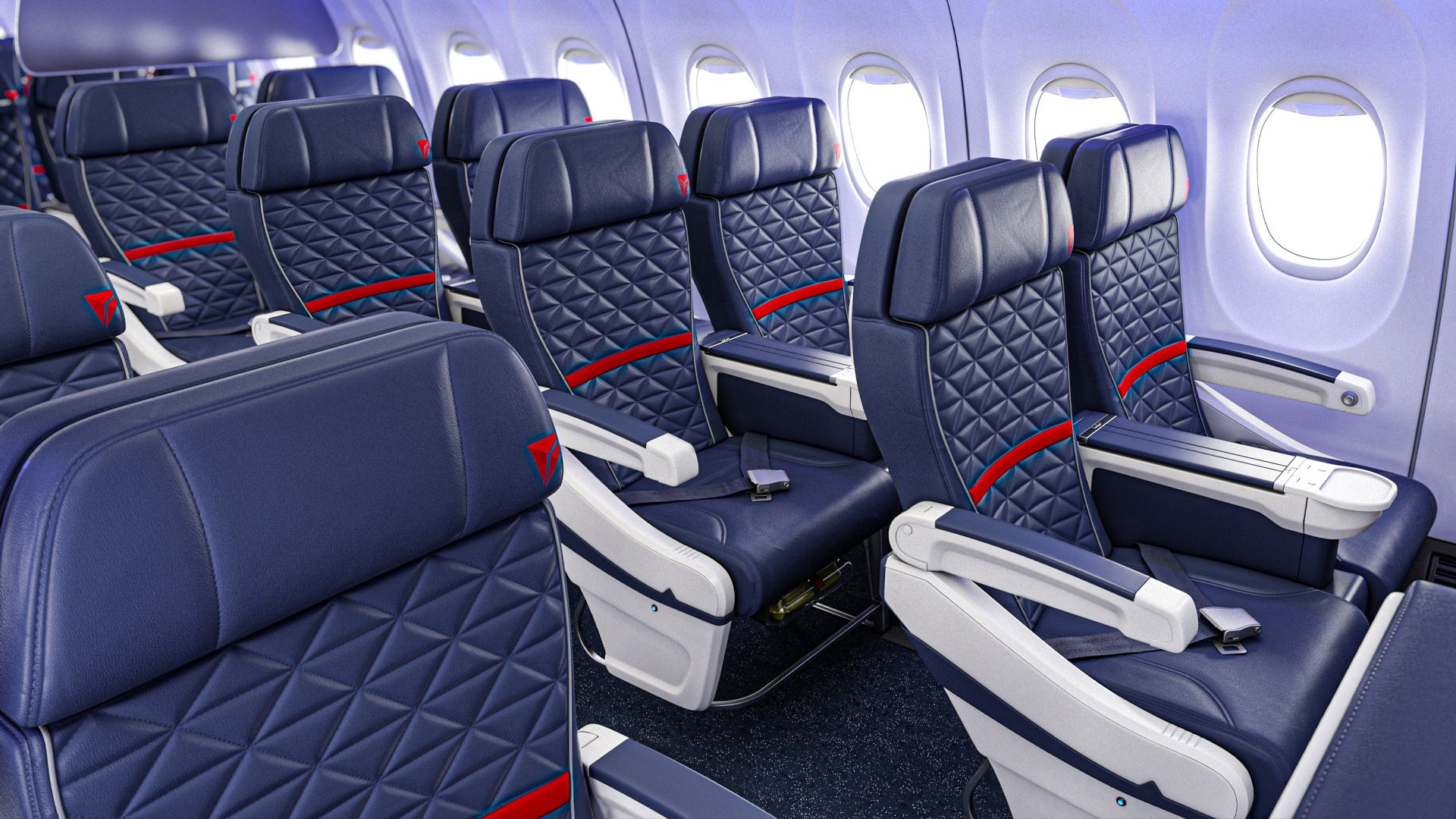
Choosing the right seat on Delta Air Lines’ Boeing 737 fleet in 2026 is crucial for ensuring a comfortable journey. With the 737-800 and 737-900ER aircraft serving as the backbone of Delta’s domestic network, passengers will encounter various configurations that can significantly affect their travel experience. Understanding the best seating options can make a notable difference, whether embarking on a short regional flight or a lengthy transcontinental journey.
Delta Air Lines has gradually transitioned its fleet from older models to focus on the more modern and spacious 737-800 and 737-900ER variants. As of 2026, these aircraft will feature multiple cabin configurations, from the standard 16-seat first class on the 737-800 to the diverse layouts of the 737-900ER, which can include up to 20 first class seats. This article aims to provide a comprehensive guide to the seating arrangements, highlighting optimal rows for legroom and comfort, as well as identifying specific seats to avoid due to design flaws or functional limitations.
Identifying the Best Seats
For an exceptional experience on a Delta Boeing 737, passengers should aim for bulkhead seats in first class or the exit rows in the main cabin. Row one in first class is particularly advantageous, as it ensures no reclining passengers infringe upon personal space during the flight. In the main cabin, the over-wing exit rows, specifically rows 20 and 21 on the 737-900ER, offer significant legroom that rivals premium options.
Understanding the specific layout of the aircraft is essential. Delta Comfort+ provides up to 34 inches of pitch, an improvement over the standard 30 to 31 inches found in the main cabin. However, the first row of Comfort+ often features a bulkhead wall, which means carry-on items must be stored in overhead bins during takeoff and landing.
Delta’s narrowbody aircraft have undergone several interior updates, shifting from more traditional recliner seats to modern slimline designs. While these newer seats maximize cabin density, they can feel firmer on longer flights. Therefore, selecting a seat with ample pitch or a well-placed window is increasingly important for passenger comfort.
Understanding Aircraft Variants
The selection of seats is heavily influenced by the specific aircraft variant and its unique cabin configuration. Delta operates the Boeing 737-800 with a relatively consistent layout, comprising 16 first class seats and 144 main and Comfort+ seats. In contrast, the 737-900ER fleet presents a more fragmented picture. Depending on the route and the specific tail number assigned, passengers may encounter three distinct seating arrangements on the 737-900ER, each differing significantly in premium and standard seating ratios.
For example, the standard configuration includes a spacious 20-seat first class cabin and 21 Comfort+ seats. Yet, some second-hand 737-900ERs integrated into the fleet feature only 12 first class seats and as few as six Comfort+ seats. The variance in layouts means that the ideal seat on one 737-900ER could be drastically different or entirely absent on another.
Aircraft / Layout | First Class | Comfort+ | Main Cabin | Total Seats
— | — | — | — | —
737-800 | 16 | 36 | 108 | 160
737-900ER (Standard) | 20 | 21 | 139 | 180
737-900ER (Ex-Lion Air Variant 1) | 12 | 6 | 162 | 180
737-900ER (Ex-Lion Air Variant 2) | 12 | 24 | 137 | 173
For those traveling on high-density layouts with minimal Comfort+ seats, obtaining an extra-legroom spot becomes highly competitive. Conversely, the standard layout offers greater flexibility for Medallion members seeking complimentary upgrades into premium sections. Verifying the exact seat map in the Delta app before choosing a seat is the most effective way to ensure a comfortable journey.
Frequent Delta passengers often express that while the best seat may be subjective, certain rows statistically provide a superior experience. On the 737-800, experienced travelers often target row one in first class or exit rows 19 and 20 in the main cabin. Conversely, it is advisable to avoid row 15 on many 737-800 and 737-900ER aircraft, as these seats often lack a window due to the positioning of air conditioning risers.
Delta’s upgraded cabins feature 11-inch seatback screens in first class and nine-inch screens in the main cabin, along with power outlets at every seat. Despite these advancements, some passengers find the newer slimline seats rather firm on longer flights, underscoring the importance of selecting a seat with maximum pitch for physical comfort, particularly on transcontinental routes.
Avoiding Common Pitfalls
Given the diversity of Delta’s 737-900ER configurations, it is easy to select a preferred exit row on a standard layout, only to face a potential aircraft swap shortly before departure. To mitigate this risk, passengers should keep their Delta app notifications enabled to receive alerts for any seat changes.
Certain seats within the 737 fleet come with inherent drawbacks. For instance, row 20 on the 737-900ER is often deemed a “danger zone” due to its proximity to an exit path, resulting in limited or no reclining capabilities. Additionally, the area near row 21 can be significantly colder due to the door seal, which may be uncomfortable for passengers on overnight or long transcontinental flights.
Seat / Row | Aircraft | Issue
— | — | —
15A / 15F | 737-800 & -900ER | Misaligned or missing window (air conditioning riser)
Row 20 | 737-900ER | Limited or no recline (in front of exit row)
All Seats | 737-900ER (73R) | High probability of no seatback screen or power outlets
Row 10 (Bulkhead) | All 737 Variants | No under-seat storage; fixed armrests can feel narrow
For the less consistent variants of the 737-900, passengers may be wary of the 73R’s lack of amenities. Arriving at a destination with a dead laptop or phone before a long-haul flight can be a considerable inconvenience. In these cases, the 737-800 emerges as the more reliable option, consistently offering power outlets and entertainment options.
In conclusion, navigating Delta’s Boeing 737 fleet in 2026 resembles a seat lottery that demands attentive planning. The standard 737-800 stands out as the most dependable choice, providing consistent power and entertainment at every seat. In contrast, the 737-900ER fleet presents a fragmented experience, with variations in seating configurations that can affect comfort and convenience. By prioritizing the 737-800 for reliability or seeking out the 73J variant for maximum legroom, passengers can enhance their travel experience. As Delta continues to upgrade its fleet with new technologies and amenities, staying informed through a quick check of the Delta app will be key to ensuring a pleasant journey.
























