








































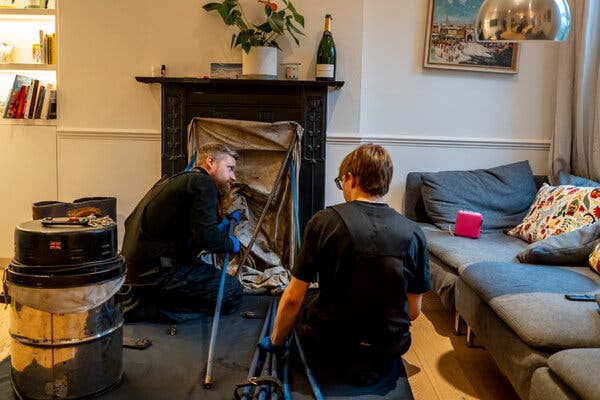
Chimney sweeps are witnessing a surprising revival in the United Kingdom, driven by rising energy costs and renewed interest in traditional heating methods. Professionals like Josh Firkins, a chimney sweep in London, are bringing modern technology to a historic trade, blending traditional practices with contemporary tools.
On a recent day against the backdrop of a gray London skyline, Firkins began his work with a spiky round brush protruding from a chimney of a large family home. He noted that this brush would have been familiar to his great-great-great-grandfather, Charles Firkins, who started his career as a chimney sweep in the mid-19th century. While the brush remains a staple, many other aspects of the job would likely astonish his ancestor.
Modern chimney sweeps utilize tools such as digital cameras, which allow for an internal view of chimneys, and industrial vacuum cleaners that efficiently remove soot and debris. In a notable twist, drones are now employed to inspect rooftops before the work begins.
Chimney sweeps once played an essential role in British households, particularly when coal and wood-burning fires were the primary sources of heat. Their presence has been romanticized in popular culture, notably through Dick Van Dyke’s portrayal of Bert in the classic film “Mary Poppins.” Yet, the history of chimney sweeping is not without its darker moments, including the exploitation of children in the 18th and 19th centuries who faced dangerous working conditions.
The mid-20th century marked a significant decline for the chimney sweep industry as central heating became prevalent. The introduction of clean air regulations further diminished the use of open fires, leading to a sharp decrease in the number of active sweeps. Despite this decline, some firms managed to survive, and now they are reporting a resurgence.
As energy costs continue to climb, many homeowners are reconsidering their heating options. The return to traditional fireplaces and wood-burning stoves has prompted a renewed demand for chimney sweeps, with some businesses, including the Firkins family operation, experiencing increased bookings.
The adaptation of chimney sweeps to modern technology has helped them remain relevant in today’s market. The combination of traditional techniques with new tools is not only preserving a historic craft but also addressing contemporary needs. The revival of this trade highlights a growing trend towards sustainable and alternative heating methods as energy prices rise.
As the industry adapts and evolves, chimney sweeps like Josh Firkins are excited about the future. They are not just maintaining the chimneys of the past; they are also paving the way for a new generation of homeowners who value both tradition and innovation. This resurgence offers a glimpse into how old trades can adapt to modern challenges, ensuring their survival in an ever-changing economic landscape.
























