








































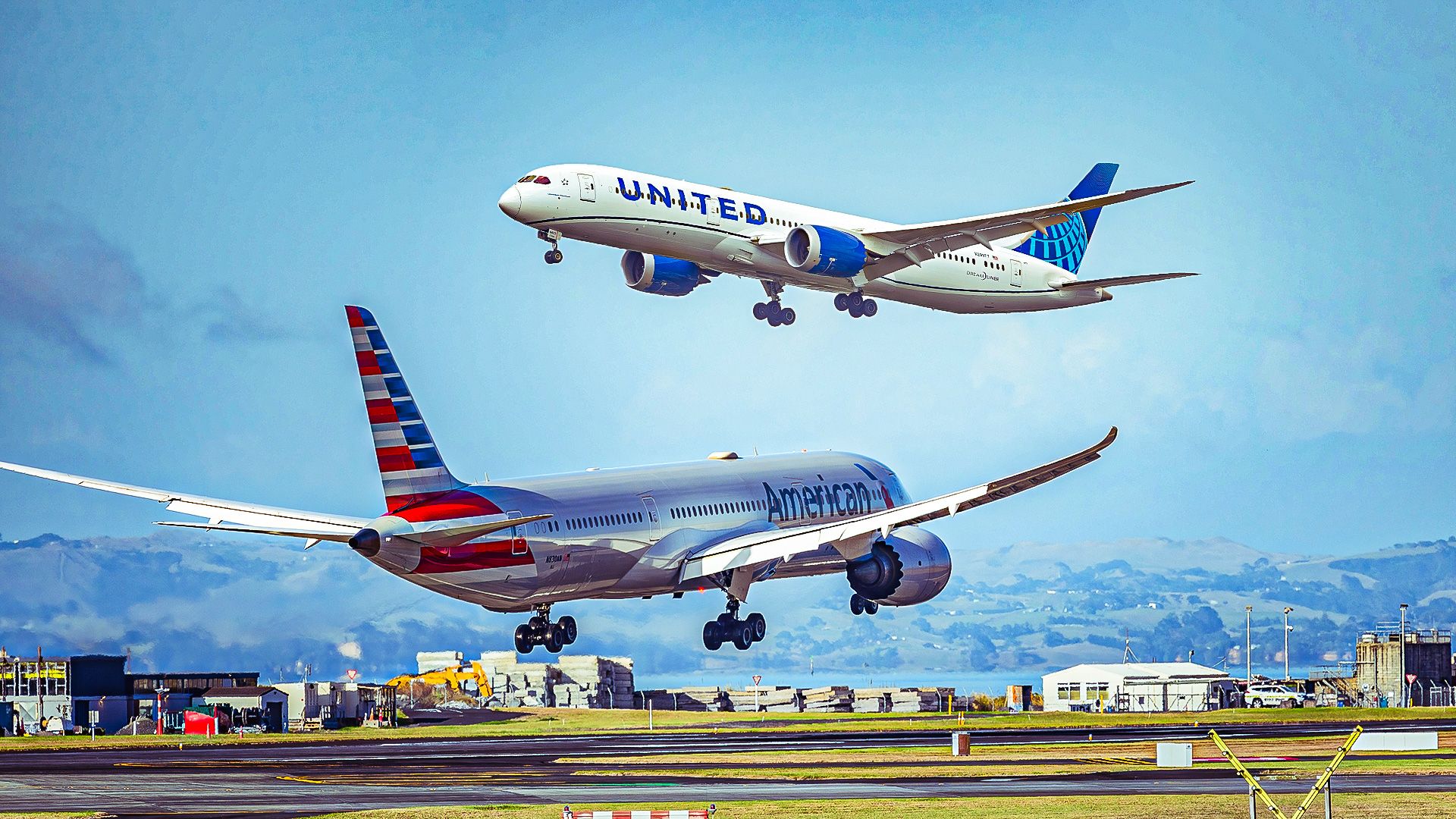
American Airlines and United Airlines are set to enhance their premium offerings with the introduction of new Boeing 787-9 aircraft, configured to provide an upgraded onboard experience. American Airlines began operating its newly configured 787-9s in spring 2025, while United Airlines plans to roll out its revamped models in early 2026, with the first delivery expected by the end of this year. Both airlines are adopting layouts that prioritize premium seating, aiming to attract business travelers and enhance profitability.
Overview of the New Aircraft Configurations
American Airlines currently operates 33 Boeing 787-9s, 22 of which feature a standard layout. Of these, 11 belong to the “78P” subfleet, designed with a premium-heavy configuration that includes 51 Flagship Suites. This fleet is complemented by an additional 20 787-9s on order, with new fleet numbers starting at 8MA. In contrast, United Airlines has received 48 787-9s, all configured in the standard layout, and is preparing to welcome its first new “78L” subfleet. This subfleet will include 64 Polaris Suites, the largest business class cabin among 787 operators globally, with the first aircraft designated N61101.
Both airlines have opted for similar seating arrangements, utilizing the Elevate Ascent for business class and the Collins Aspire for economy class. However, United Airlines is differentiating its offering with the Collins MiQ for Premium Plus, while American Airlines will use the Safran Z535i for its premium economy section. Both carriers are also increasing screen sizes and adding features such as headrest wings in the premium economy cabin.
Comparing Premium Layouts
When assessing which airline offers a more premium Boeing 787-9 experience, United Airlines emerges as the clear leader. The new United 787-9 will accommodate just 222 seats, consisting of 64 Polaris Suites (including eight Polaris Studios), 35 Premium Plus seats, 39 Economy Plus seats, and 84 economy seats. This configuration allows for a substantial portion of premium seating—99 out of 222 seats—rising to 138 when including Economy Plus.
In contrast, American Airlines’ latest 787-9s will feature 51 Flagship Suites and 32 premium economy seats, alongside 18 Main Cabin Extra seats and 143 economy seats, totaling 244 seats with 83 premium options. Including the Main Cabin Extra seats, this figure reaches 101, which is significantly lower than United’s offering. Interestingly, American’s newest 787-9s resemble United’s older, denser layout rather than a fully optimized premium configuration.
American Airlines has historically maintained a conservative approach to the size of its premium cabins. While United’s current 787-9s feature 48 Polaris seats, American’s older models come with just 30 Flagship Business seats. This pattern continues across various aircraft types, with American generally offering fewer premium seats compared to United.
The operational strategies of both airlines reflect their hub locations and market demands. United Airlines dominates in key business markets such as San Francisco and New York, while American’s main hub is Dallas/Fort Worth, which, although significant, has less international business travel compared to United’s core markets.
American Airlines has deployed its 78P subfleet on transatlantic routes to London from Chicago and New York, while expanding to other international destinations like Paris, Buenos Aires, Auckland, and Brisbane. Conversely, United’s 78L models will initially connect San Francisco with London and Singapore, enhancing its premium offering on long-haul flights.
Interior Features and Onboard Experience
Both airlines are introducing new seat designs and cabin aesthetics with their respective 787-9 configurations. American Airlines is implementing the Elevate Ascent, characterized by suite doors and a customizable reverse herringbone layout. United’s version offers a mix of reverse herringbone and herringbone configurations, with options for couples to book adjacent “honeymoon suites.”
While both carriers utilize similar business and economy class seats, United Airlines stands out by offering larger screens and more extra-legroom seating options. In addition, United’s design includes a smaller counter area in the Polaris Suites to accommodate an ottoman for face-to-face dining, a feature absent on American Airlines.
In premium economy, American is deploying the Safran Z535i, while United will install an updated version of the Collins MiQ. Both seat styles will boast modern designs, privacy wings, Bluetooth connectivity, and multiple charging options, but United will also provide additional amenities such as reading lights and dedicated storage.
The competition between American and United reflects broader trends in the airline industry, where premium configurations are increasingly prioritized to meet the evolving demands of travelers. As both airlines continue to innovate with their 787-9 fleets, the focus remains on creating enhanced travel experiences that appeal to premium customers.
With the introduction of these new aircraft, American and United Airlines are positioning themselves to capture a larger share of the lucrative premium travel market. This strategic move not only enhances their service offerings but also reflects the ongoing evolution in airline travel, where comfort and convenience remain paramount.
























