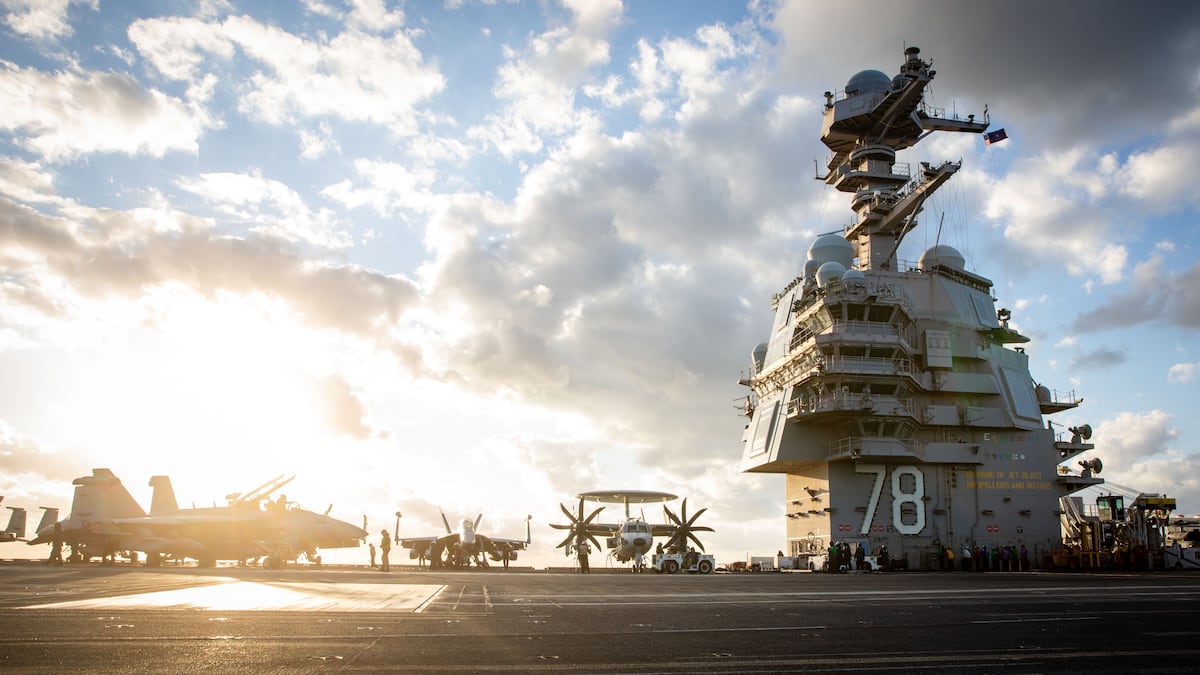
The USS Gerald R. Ford, the largest aircraft carrier in the world, is grappling with ongoing plumbing issues that impact an essential aspect of life at sea: the bathrooms. This challenges the vessel, which has an estimated construction cost of approximately $13 billion, as it continues its operations following recent military actions involving the capture of Venezuelan President Nicolás Maduro.
The plumbing complications primarily revolve around the ship’s vacuum collection, holding, and transfer system, known as VCHT. This system is critical for transporting and disposing of wastewater by utilizing pressure to suck waste through pipes. Despite these persistent issues, according to Lt. Cmdr. David Carter, spokesperson for U.S. Fleet Forces Command, there has been no adverse effect on the carrier’s operational readiness or mission execution.
Details on Plumbing Problems and Maintenance
Carter emphasized that the plumbing issues have been mostly isolated incidents, which do not significantly disrupt the overall sewage system. “A repair takes, on average, between 30 minutes and two hours,” he stated. “During this time, the rest of the system continues to operate independently.”
While the Navy has not released specific service call logs, reports from NPR indicated that the USS Gerald R. Ford has sought external assistance for its plumbing problems a total of 42 times since 2023, with 32 requests made in 2025 alone. Notably, a dozen of these calls occurred after the ship departed from Naval Station Norfolk on June 24, 2025, and commenced its regularly scheduled deployment.
Further reports from NPR revealed troubling statistics, including emails that documented 205 breakdowns of the toilets over a four-day period. One email suggested that improper use by sailors was contributing to the frequent malfunctions of the sewage system. In response to inquiries, Carter confirmed to Military Times that the carrier averages around one maintenance call per day, often attributed to “improper materials being introduced to the system.”
Historical Context and Future Improvements
The issues faced by the USS Gerald R. Ford are not unprecedented. A 2020 Government Accountability Office report highlighted that the sewage pipes installed throughout the ship were too narrow to adequately accommodate the flushes of its crew, which exceeds 4,000 personnel. To address the persistent clogs, the Navy has expended approximately $400,000 per flush on a specialized acidic chemical designed to clear the strained pipes.
As operational demands evolve, Carter noted that the frequency of plumbing maintenance requests has decreased over time. He also mentioned that planned improvements to the plumbing system are anticipated during upcoming maintenance periods. These adjustments aim to enhance the reliability of the sanitary facilities aboard the USS Gerald R. Ford, ensuring that sailors can focus on their critical missions without the distraction of plumbing complications.
In summary, while the USS Gerald R. Ford continues to operate effectively, the ongoing plumbing issues highlight challenges that can arise aboard even the most advanced naval vessels. The Navy remains committed to addressing these concerns as part of its broader maintenance and operational strategies.