








































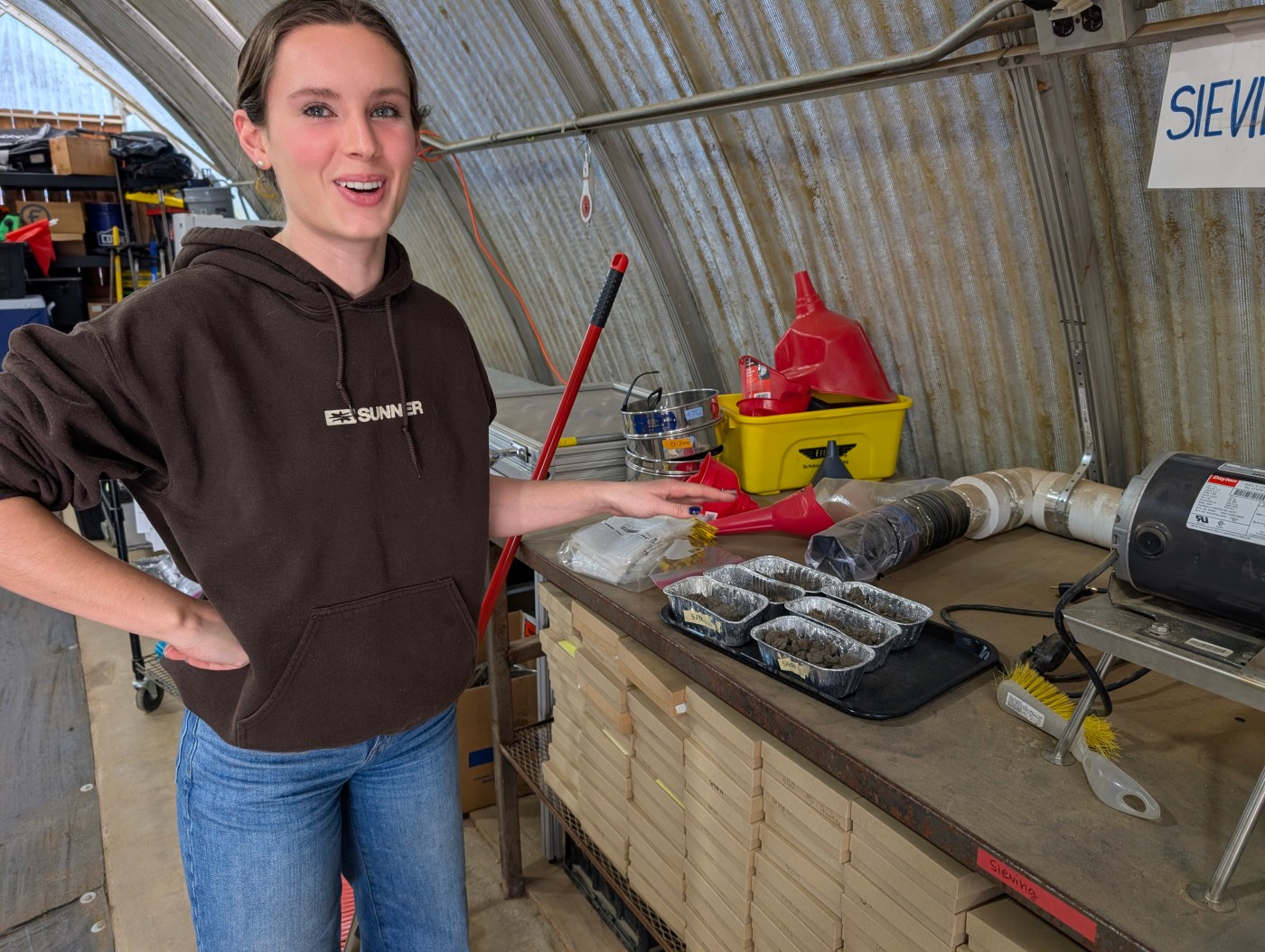
URGENT UPDATE: Students at Chico State University are making headlines today as they engage in groundbreaking soil health initiatives aimed at revolutionizing agricultural practices across California. As of February 4, 2026, students Kaylee Mulhearn and Paige Flaig are conducting vital soil tests at the university’s farm, aiming to enhance natural growth conditions for crops.
Amid the distant crackling of pile burns, Mulhearn and Flaig have taken to the lab to analyze various soil samples for nutrient qualities that could reshape farming in the region. “This is the soil processing area, and it’s under the wing of the Center for Regenerative Agriculture and Resilient Systems,” Flaig stated. Their mission involves partnering with local producers to implement more sustainable and regenerative practices that are crucial for farming’s future.
The urgency of their work cannot be overstated. On this pivotal day, the students are performing side-by-side comparisons of soil samples to evaluate their stability and water retention capabilities. “We’re measuring how well the soil holds together through its biological fungal community,” Flaig explained, emphasizing the importance of soil health in agricultural productivity.
Mulhearn added that the team is also conducting carbon-nitrogen tests and sending samples to a lab in Montana to assess pH levels. “This helps us understand the differences in soil health between regenerative practices and conventional practices,” she said. This analysis is critical for farmers seeking to cut costs and improve efficiency while reducing reliance on synthetic materials.
The long-term goal of this initiative is not just to aid farmers but to work harmoniously with nature. “We aim to help farmers utilize natural processes more efficiently,” Flaig pointed out. “Our approach focuses on reducing synthetic inputs, which ultimately benefits both the earth and agricultural output.”
As weather patterns continue to shift and environmental challenges mount, the work being done at Chico State is more urgent than ever. Farmers across the state are closely watching these developments, which could lead to significant changes in how crops are cultivated sustainably.
This initiative is part of a broader trend toward regenerative agriculture, which seeks to restore soil health and enhance biodiversity. With the timing critical, the results from these tests could influence farming practices far beyond California, positioning Chico State University as a leader in this essential movement.
Stay tuned for more updates as these students continue to explore innovative solutions for improving soil health and supporting the agricultural community. Their findings will not only impact local farmers but also serve as a model for sustainable practices nationwide.
























