








































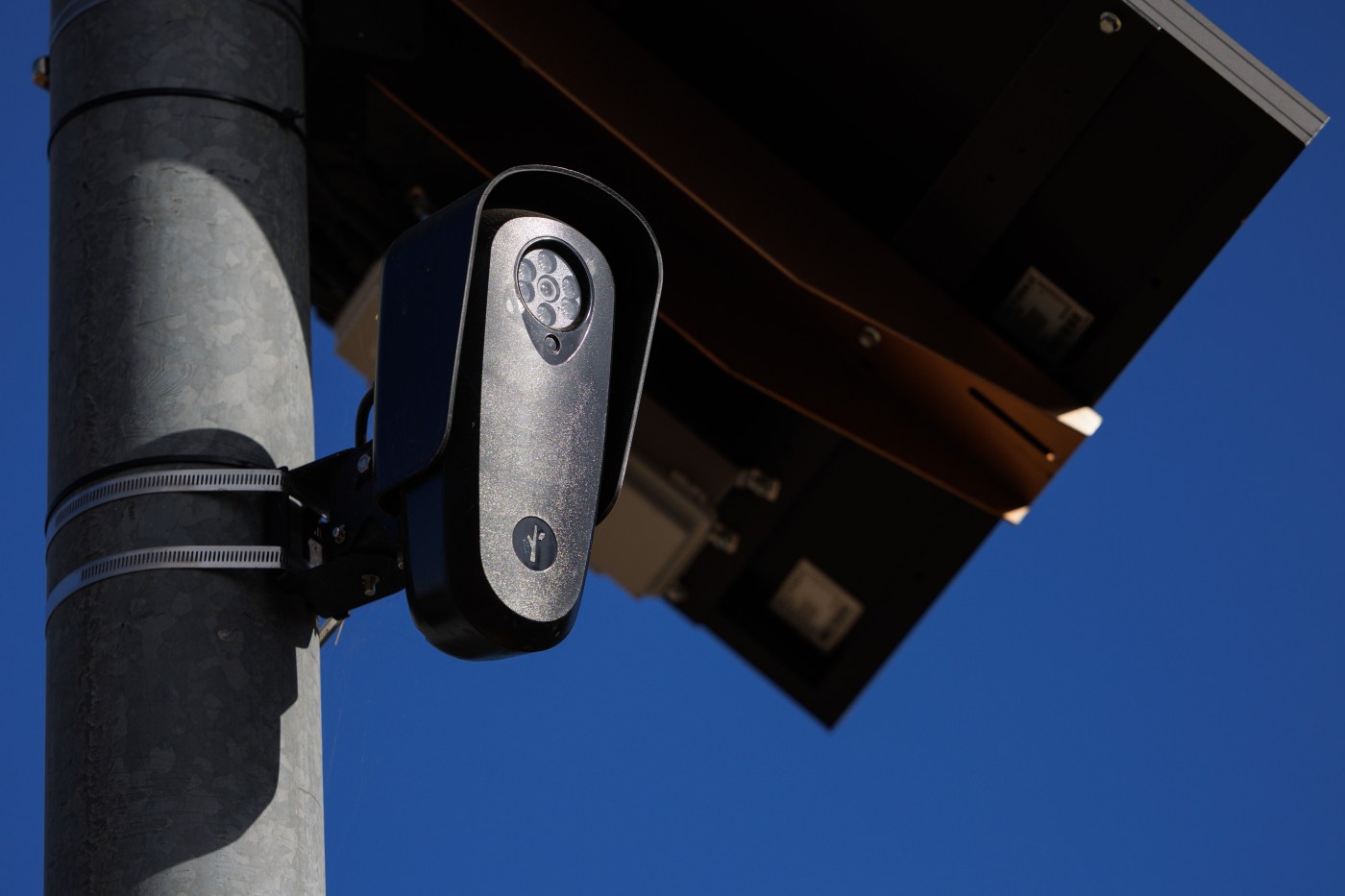
BREAKING: The San Jose Police Department (SJPD) is tightening its policies on automated license-plate readers (ALPRs) in response to intense public scrutiny and privacy concerns. Chief Paul Joseph announced significant changes that aim to restrict data retention and prevent misuse of information by outside agencies just hours ago.
In a policy memo released today, Joseph requested the City Council’s approval to reduce the retention period for license plate data from one year to 30 days. This comes amid growing fears that these surveillance tools may facilitate immigration enforcement. The city currently operates 474 ALPR cameras throughout San Jose, and officials are eager to balance public safety with community privacy rights.
Joseph emphasized that the revisions are essential for maintaining trust with the community while still utilizing technology effectively. “We must have the tools available to law enforcement to be as effective as possible,” he stated. “At the same time, we recognize there are legitimate concerns about privacy and data misuse.”
The proposed changes will be discussed during a City Council meeting scheduled for March 10. Key amendments include enhanced documentation requirements for data requests from outside agencies and a ban on recording vehicles entering and leaving houses of worship and reproductive health clinics. This aims to prevent collaboration with out-of-state agencies that may not abide by California laws restricting local police from participating in immigration-related actions.
In light of increasing public concern, the SJPD has also updated its software portal to remind users that license plate data cannot be shared with federal immigration authorities. Furthermore, the department has disabled a “Federal Sharing” setting, which previously allowed requests from agencies coded as federal entities.
The move comes after legal action from the Electronic Frontier Foundation and the ACLU of Northern California, which filed a lawsuit against the city and its officials, claiming that unwarranted data searches violated the California Constitution. This lawsuit has intensified the debate over surveillance measures in the region.
Just days ago, the Mountain View City Council voted to end its contract with Flock Systems, a major vendor of ALPRs, following an audit that revealed unauthorized access to city camera data by federal agencies. Additionally, Santa Clara County supervisors have prohibited the sheriff’s office from accessing Flock camera data, further raising alarms about privacy and data sharing.
Despite the controversy, Joseph maintains that ALPRs play a crucial role in solving crimes in San Jose. He highlighted recent high-profile arrests that have utilized the cameras, including the arrest of a teen charged with a shooting at Westfield Valley Fair mall on Black Friday. “To lose these cameras would be devastating to our public safety,” Joseph asserted.
The ongoing clash over surveillance technology has seen varying responses across the Bay Area. While some cities, like Santa Cruz, have stopped using the cameras entirely due to privacy concerns, others, such as Oakland, continue to endorse their use for crime-fighting, provided there is sufficient community oversight.
As the debate continues, the SJPD is committed to implementing robust safeguards to ensure data privacy and community trust. The department’s proposed changes are a direct response to public outcry, reflecting a growing demand for transparency in law enforcement practices.
This is a developing story. Stay tuned for further updates as the City Council reviews these critical changes.
























