








































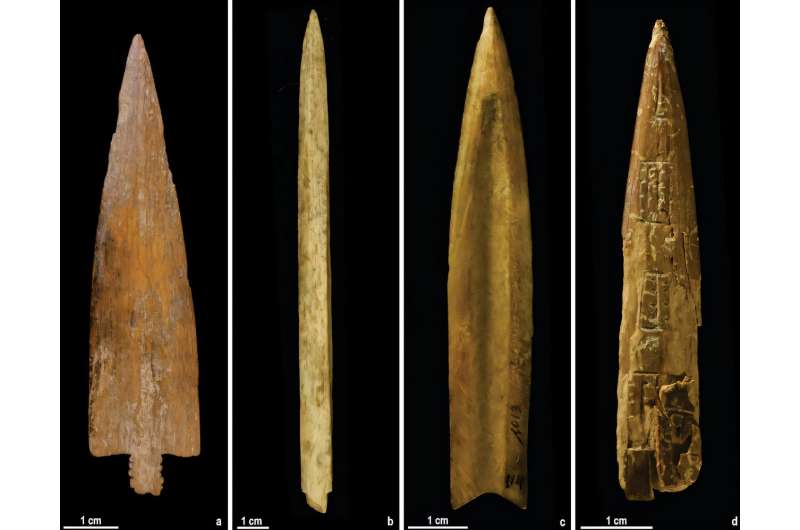
Recent research has revealed significant insights into the organized craft production of ancient communities in the Sierras de Córdoba, Argentina. A study led by Dr. Matías Medina and his team, including Sebastián Pastor and Gisela Sario, analyzed bone arrow points from the Late Prehispanic Period (approximately 1220 to 330 cal BP) and shed light on the manufacturing techniques used by these prehistoric societies. Their findings were published in the International Journal of Osteoarchaeology.
Understanding Ancient Craft Production
For decades, knowledge regarding the diverse bone materials utilized by the Late Prehispanic people was limited. Dr. Medina noted that publications focusing specifically on bone technology were scarce, particularly in South America. Previous archaeological reports often provided general descriptions of worked bone artifacts without delving into the specific manufacturing methods employed.
The study examined 117 bone artifacts collected from the Museo Arqueológico Numba Charava. These artifacts were gathered non-systematically over the past century from various sites in the southern Punilla Valley, leading to some uncertainty regarding their precise origins. The analysis indicated that the primary material used for crafting these arrow points was bone from the guanaco, a species closely related to the llama.
Manufacturing Techniques and Cultural Significance
The researchers found that the arrow points were mainly produced from metapodia, the long bones of the limbs. The bones were split lengthwise to create workable blanks, then ground and shaped into arrowheads. Some points included decorative elements, although these were rare. Dr. Medina stated, “Only three bone arrow points with incised decoration on the blade were reported in the archaeological literature.” This decoration, composed of lines and small triangles, linked these artifacts to wider cultural practices in central Argentina.
According to the team, the primary use of these arrow points was likely for warfare rather than hunting. The stylistic attributes, such as incised decorations and additional barbs, may have served to express the social identity of the maker. Such features could also serve as a reminder of cultural affiliation, particularly in the context of conflict.
The study contributes to a broader understanding of how communities in the Southern Punilla Valley organized their tool-making processes. The findings suggest that arrowheads were produced locally, with each point exhibiting unique characteristics. While the production process was labor-intensive, it was also standardized, likely passed down through generations within nuclear families.
Dr. Medina emphasized the need for comparative studies with neighboring regions, such as the Low Paraná and Uruguay River floodplains, to explore variations in manufacturing techniques influenced by local resources. He noted that these areas developed complex bone technology to adapt to the scarcity of stone materials.
This research not only highlights the importance of bone tools in ancient Argentinian society but also opens pathways for future studies into the technological practices of prehistoric communities. Understanding these ancient crafts enriches our knowledge of their daily lives and social structures.
The findings underscore the significance of family units in the production of tools and food, reinforcing the notion that nuclear families were central to the social fabric of these Late Prehispanic societies. As Dr. Medina pointed out, further investigations into regional variations can provide valuable insights into the diverse strategies employed by ancient peoples to meet their subsistence needs.
This study marks a critical step in the archaeological understanding of craft production in prehistoric Argentina, offering a foundational basis for future research and exploration in the field.
























