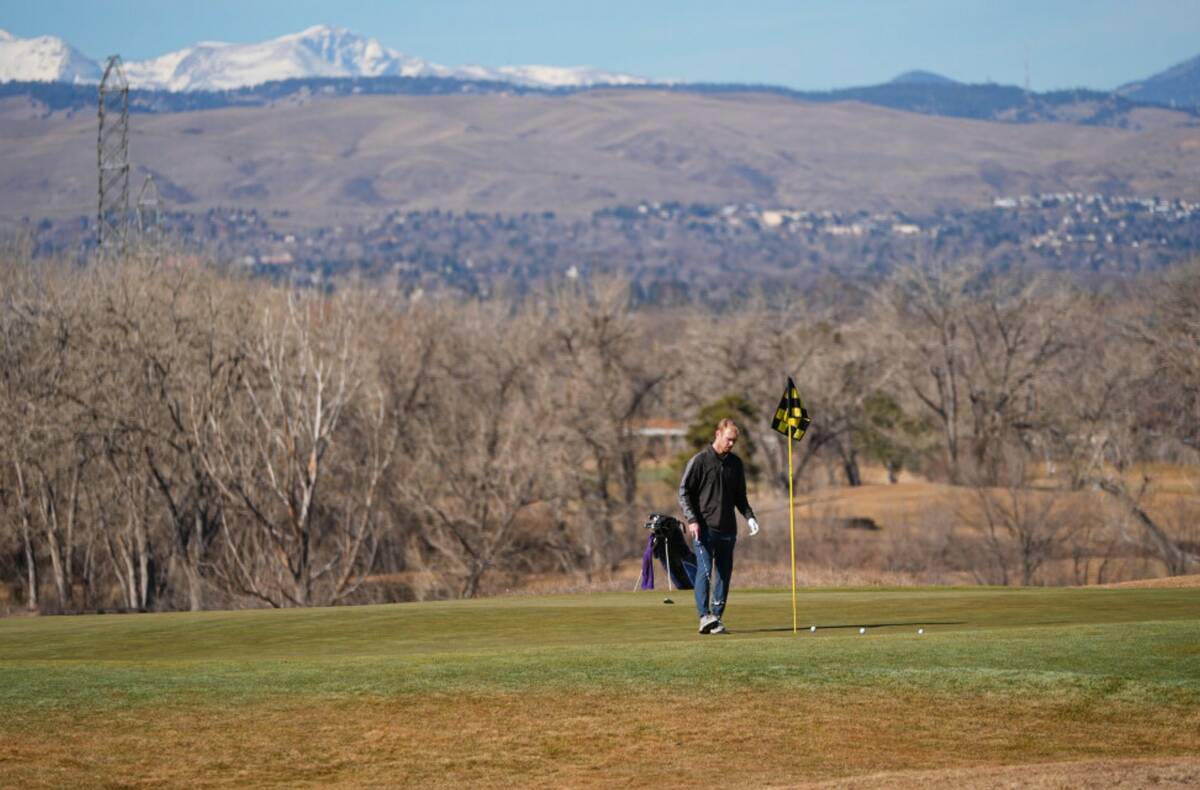
A significant snow drought currently afflicts much of the American West, resulting in record low snow cover and rising temperatures. This phenomenon is raising concerns about future water supplies, increasing wildfire risk, and negatively impacting winter tourism and recreation. According to the National Snow and Ice Data Center, both snow cover and depth are at levels not seen in decades, with at least 67 weather stations reporting their warmest December through early February on record.
Normal snow cover for this period should reach approximately 460,000 square miles, equivalent to the size of California, Utah, Idaho, and Montana combined. However, this year, it measures only about 155,000 square miles, roughly the size of California. Mark Serreze, director of the National Snow and Ice Data Center, has noted, “I have not seen a winter like this before,” reflecting on his nearly 40 years of experience in Colorado. He added that the current weather pattern is unusually persistent.
Impact on Water Supply and Wildfire Risks
The lack of snow has created significant challenges for ski resorts, which are already facing difficulties this season. States such as Oregon, Colorado, and Utah have recorded their lowest statewide snowpack since the early 1980s, the earliest period for which records are available. A dry January has left many states with less than half of their average precipitation, exacerbated by higher-than-average temperatures and abundant sunshine.
As of Monday, it has been 327 days since Salt Lake City International Airport recorded at least 1 inch (2.54 centimeters) of snow, marking the longest stretch without snow since the winter of 1890-91. The lack of snow in Colorado and Utah particularly affects the Upper Colorado River Basin, crucial for water supply. “This is a pretty big problem for the Colorado basin,” stated Daniel Swain of the University of California’s Water Resources Institute. A robust snowpack typically provides a steady flow of water into rivers, essential for agriculture, urban areas, and hydropower systems.
Climate Change and Future Predictions
Experts are also warning that the ongoing snow drought may trigger an early wildfire season. With snow disappearing earlier than usual, the ground remains exposed to warmer spring and summer conditions, which can dry out soils and vegetation more quickly. Daniel McEvoy, a researcher at the Western Regional Climate Center, explained that, “Too warm to snow” has been a prevailing trend. The record-low snowpack is primarily attributed to elevated temperatures linked to climate change, driven by the burning of fossil fuels.
Since December 1, over 8,500 daily high temperature records have been broken or tied in the West, according to data from the National Oceanic and Atmospheric Administration (NOAA). Much of the precipitation that typically falls as snow has instead fallen as rain, which runs off quickly rather than accumulating in the mountains.
Meteorologists predict that wetter and cooler weather may arrive this week, potentially marking the peak of the snow drought. Nevertheless, many regions are expected to remain warmer than usual, and scientists remain skeptical that the anticipated snowfall will be sufficient to alleviate concerns about water supplies and wildfire risks.