








































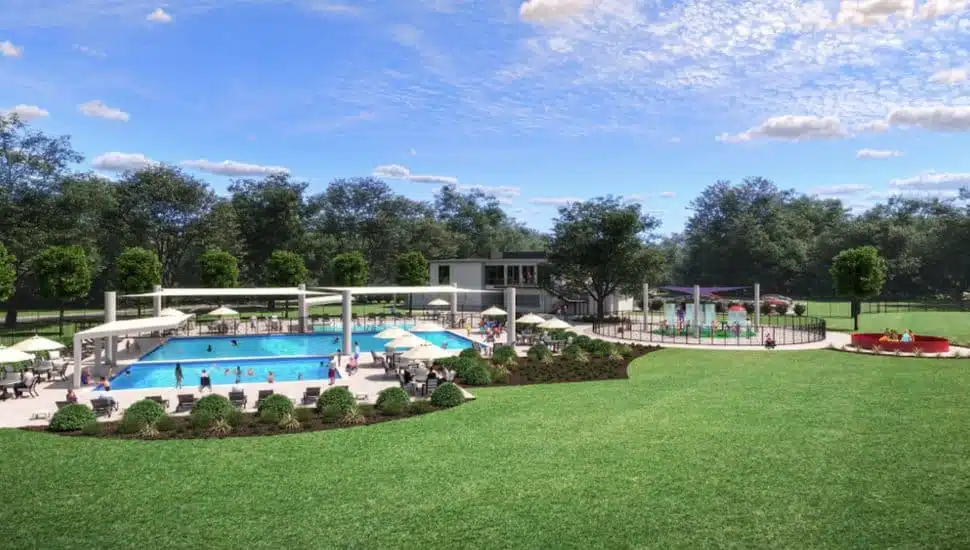
UPDATE: Rabbi Yudy Shemtov has just announced an ambitious project to build a groundbreaking recreational park for kids with special needs in Langhorne, Pennsylvania. Named PlayaRaya, a play on “play your way,” this facility aims to ensure that all children can enjoy inclusive outdoor activities.
The park is being constructed on the long-abandoned site of the former Breezy Point Swim Club, purchased for $729,000 with donor support in 2022. After overcoming a lengthy legal dispute over the property, Rabbi Shemtov has successfully raised over $1 million toward the project, which is set to open its first phase—including a pool, splash pad, and ball pit—by summer 2026.
However, the full vision for the park is much larger. Rabbi Shemtov aims to raise an additional $6 million to develop walking trails, fitness stations, playgrounds, and even pickleball courts. This second phase is still under review by local authorities, as the additional facilities are not currently zoned for the site.
Accessibility is at the heart of this initiative. Rabbi Shemtov emphasizes that the park will not just have ramps alongside steps; every feature will be designed with inclusivity in mind. “Accessibility’s not an afterthought. It’s the core,” he stated, highlighting his commitment to creating an environment where children of all abilities can thrive together.
The vision for PlayaRaya emerged during the COVID-19 pandemic when Rabbi Shemtov noticed a lack of inclusive outdoor spaces for families. “I realized that our camp is only 25 days a year. But what do you do for the other 340 days?” he remarked. This park aims to fill that gap, offering a welcoming space for families with children who have special needs and those without.
Features like the splash pad will be carefully designed to accommodate children on the autism spectrum, ensuring that water temperatures and other elements are suitable for all. Rabbi Shemtov’s goal is to create an environment where families can spend quality time together, enjoying recreational activities without barriers.
Funding for the park is ongoing, with Shemtov actively seeking support from foundations, private donors, and state grants. “I know I need at least another $5-6 million,” he said, expressing confidence that community support will help bring this vision to life.
Organizations such as the Children’s Hospital of Philadelphia are already showing interest in collaborating with the facility to offer therapeutic services, further enhancing its impact on the community. “This will expand the Friendship Circle to a completely different level,” Shemtov stated, indicating a future filled with diverse opportunities for both recreational and therapeutic activities.
Once the park is operational, Rabbi Shemtov plans to share his development plans with other potential builders, hoping to inspire similar inclusive projects across the country. “It now becomes a subtle education to people that we are all alike,” he noted, reinforcing the importance of inclusivity in community spaces.
As the project gains momentum, the community can look forward to a transformative space that prioritizes accessibility and inclusivity, paving the way for a new standard in recreational facilities. Stay tuned for more updates on this developing story.
























