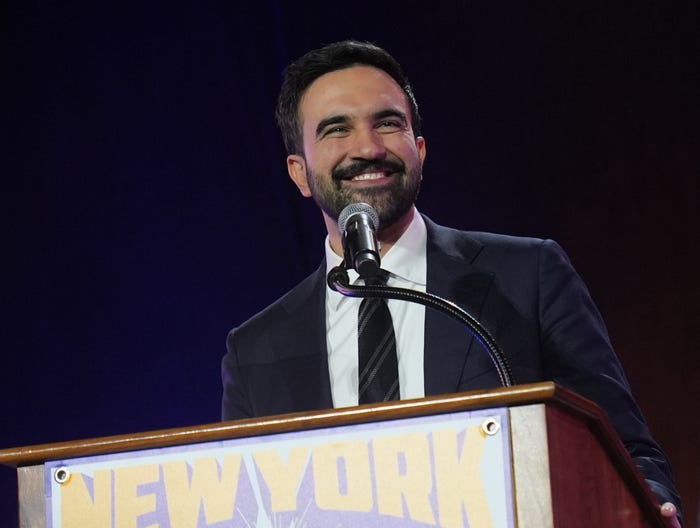
UPDATE: Just hours before being sworn in as New York City’s mayor on January 1, 2026, Zohran Mamdani is facing a mixed response from the city’s powerful business leaders. As concerns swirl over his socialist platform, some executives are finding areas of agreement, particularly regarding childcare.
Yasser Salem, a former McKinsey executive and head of the pro-Mamdani PAC OneNYC, revealed that discussions with over 70 CEOs have shown surprising support for proposals like universal childcare. “Some executives recognize that policies like free childcare can alleviate employee burdens, enhancing productivity,” Salem told Business Insider.
Yet, tensions remain. Many business leaders, including banking titan Jamie Dimon, have expressed concerns about Mamdani’s public safety measures and housing policies. The fear is that his plans could exacerbate existing issues in New York City. Mamdani’s proposal to freeze rents on rent-stabilized apartments has drawn criticism, as experts argue it may worsen the city’s housing crisis, which has already reached a boiling point.
According to a recent analysis, New York families are spending over 25% of their income on childcare. The business community is backing innovative public-private partnerships to tackle this issue, which could ease financial pressures on both parents and employers.
While Mamdani’s agenda raises eyebrows, Salem insists that not all is contentious. He pointed out that both sides agree on the necessity of increasing housing supply to address long-term affordability crises. “The difference lies in their timelines,” he explained. Mamdani’s immediate focus on rent control contrasts with a broader strategy of zoning reform and the construction of 200,000 truly affordable apartments.
Public safety remains a critical point of contention. Business leaders are keenly watching how Mamdani intends to implement his new Department of Community Safety, which aims to deploy civilian responders to aid in emergency situations. “Will a McDonald’s owner dealing with a disturbance call a mental health worker instead of police?” Salem pondered. He assured that these changes would be “additive,” not a replacement for law enforcement.
Interestingly, taxes are not a major concern for many CEOs, who have indicated a willingness to support higher taxes if it leads to a better living environment in New York. Mamdani’s decision to keep Jessica Tisch as NYPD commissioner has also helped to ease fears regarding safety and management experience.
With Mamdani’s inauguration just hours away, the stakes are high. The dynamics between his administration and the business elite will set the tone for the coming years in New York City. Salem urges CEOs to focus on specific policy disagreements rather than labels like socialism, highlighting Mamdani’s intent to enhance the social safety net rather than confiscate wealth.
As Mamdani prepares to take office, the city watches closely. What happens next could redefine New York’s economic landscape and the relationship between government and business in an era of profound change. Share your thoughts on how Mamdani’s policies might impact NYC and its business community as the new mayor takes charge.