








































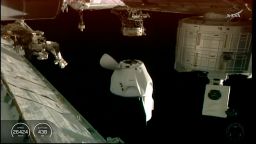
Four astronauts aboard a SpaceX Crew Dragon capsule are set to return to Earth after an unexpected medical issue prompted an early departure from the International Space Station (ISS). The crew, part of the Crew-11 mission, left the ISS at 5:20 p.m. ET on January 8, 2024, and is expected to splash down in the Pacific Ocean around 3:40 a.m. ET on January 9, 2024.
NASA made the decision to bring the crew home after cancelling a planned spacewalk due to the medical concern of an unnamed crew member. Dr. James Polk, chief health and medical officer at NASA, clarified during a press conference that the issue was not an injury resulting from mission activities but related to the unique challenges posed by microgravity. He emphasized the need to utilize more comprehensive diagnostic tools available on Earth, as the ISS lacks the full capabilities of a typical emergency room.
The Crew-11 team includes astronauts Kimiya Yui from the Japan Aerospace Exploration Agency (JAXA) and Oleg Platonov from Roscosmos, along with NASA astronauts Mike Fincke and Zena Cardman. While the specific medical issue remains confidential to protect the crew member’s privacy, NASA has confirmed that the individual is in stable condition and does not require special arrangements for the return journey.
Challenges of Reentry
The return to Earth involves significant physical strain on astronauts. As the Crew Dragon capsule descends, the g-forces can exceed five times that of Earth’s gravity. The final phase of the mission is particularly perilous, with the capsule reentering the atmosphere at speeds exceeding 22 times the speed of sound. This intense process can cause the exterior of the spacecraft to reach temperatures above 3,500 degrees Fahrenheit (1,926 degrees Celsius), resulting in a temporary communication blackout due to a buildup of plasma.
Once the capsule splashes down, recovery ships will be positioned nearby to assist in retrieving it from the ocean. Following their return, crew members will likely exit the capsule on medical stretchers, a standard procedure that does not necessarily indicate a serious condition. Nevertheless, NASA has stated that the affected astronaut will undergo a medical assessment upon landing.
Impact on the International Space Station
Originally scheduled to leave the ISS in mid-February, the Crew-11 astronauts’ early return leaves the space station with a reduced crew. Remaining on the ISS are two Russian cosmonauts, Sergey Kud-Sverchkov and Sergei Mikaev, along with NASA astronaut Chris Williams. Williams arrived at the ISS as part of a rideshare agreement with Russia.
As the situation unfolds, NASA continues to prioritize the health and safety of its astronauts, ensuring that all necessary measures are taken to support those affected by medical issues in space. The agency’s response highlights the complexities of human spaceflight and the importance of a robust medical framework for addressing health concerns in microgravity environments.
























