








































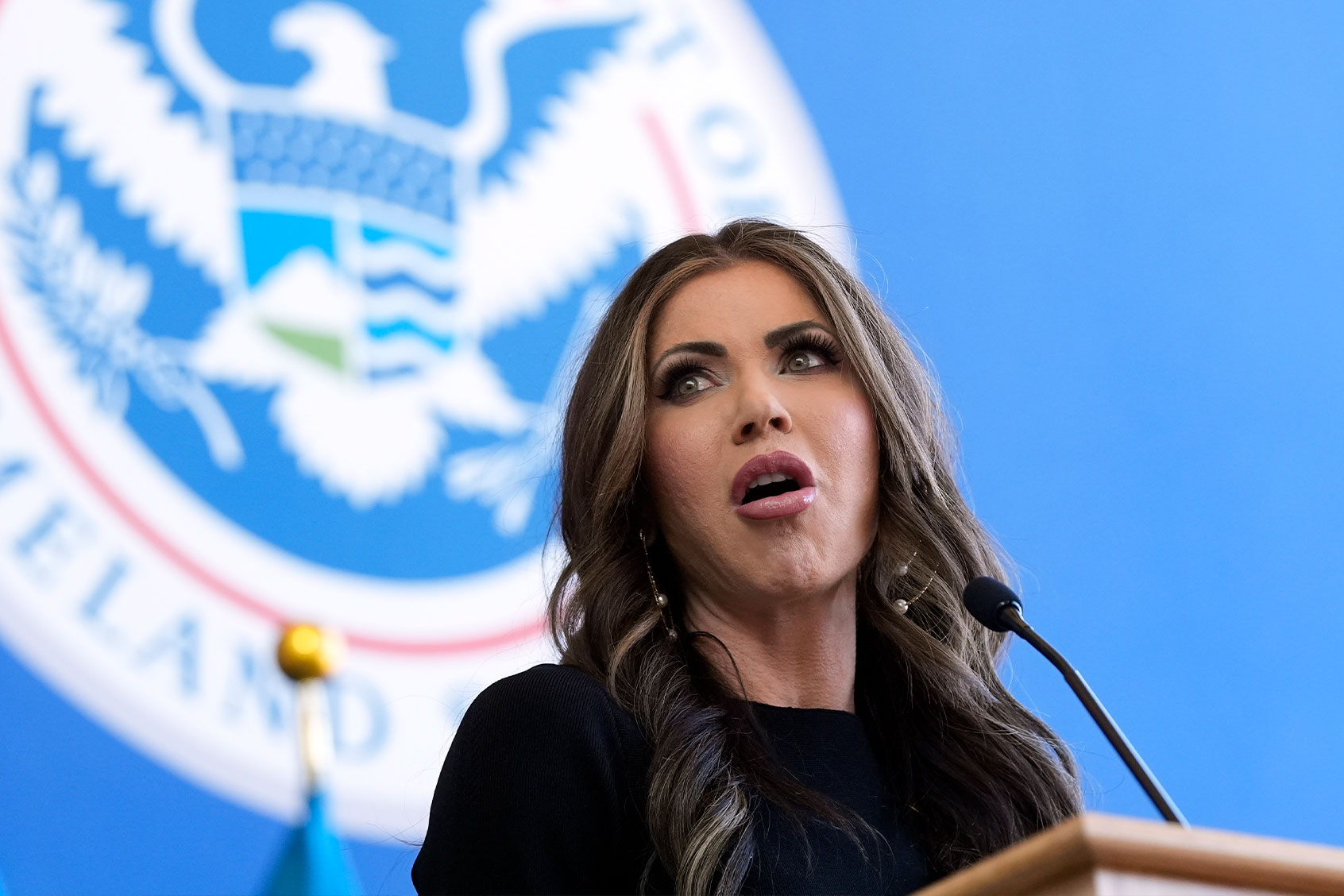
In a contentious interview on “Face the Nation,” Kristi Noem, head of the Department of Homeland Security, criticized host Margaret Brennan for publicly naming ICE agent Jonathan Ross, who was involved in a fatal shooting incident earlier this month. Noem’s strong rebuke came after Brennan inquired about Ross’s current status in Minneapolis, where he shot and killed Renee Good during a confrontation.
The incident occurred when Good allegedly used her vehicle as a weapon, prompting Ross to fire in self-defense. While video evidence shows Good attempting to flee, Noem asserted that Ross acted out of fear for his life. During the interview, Brennan began to ask if Ross had returned to duty when Noem interjected, urging her not to mention his name.
“Don’t say his name! For heaven’s sake, we shouldn’t have people continue to dox law enforcement,” Noem stated emphatically. When Brennan pointed out that Ross’s name is public information, Noem maintained her stance, insisting that the continued mention of his name could endanger him and his family.
Noem refrained from disclosing whether Ross had resumed his duties, further complicating the narrative surrounding the incident.
Controversial Detainment Responses
In addition to the discussion about Ross, Brennan raised concerns regarding the detention of Aliya Rahman and the tear-gassing of a family that included an infant. When asked if such tactics seemed excessive, Noem shifted the focus to the actions of protesters.
“That family was caught up in that situation because of violent protesters that were impeding law enforcement operations,” she argued, claiming that the family would not have faced such circumstances had the protests remained peaceful.
Noem also pointed fingers at Minnesota state leadership, specifically Governor Tim Walz and Minneapolis Mayor Jacob Frey, blaming them for allowing violence to escalate in the city. “It’s a terrible situation that that family had to go through, and I hope it never happens again,” she expressed, attributing the unrest to their failure to manage the protests effectively.
The interview has sparked significant debate over law enforcement transparency and the safety of agents involved in high-stakes situations. The dynamics of public discourse surrounding law enforcement and protests continue to evolve, particularly in the wake of recent events in Minneapolis.
This exchange highlights the complexities of discussing sensitive issues related to law enforcement, public safety, and the impact of protests on community interactions. As the situation unfolds, the implications for both policy and public perception remain a focal point for many observers.
























